 China cold storage solution provider

When planning a cold storage project, many buyers already know how many tons of products they need to store, but are unsure how large the building should be or what budget is required. This is especially common for fruit, vegetable, and meat processors using existing factory buildings or warehouses.
Taking a 100-ton cold storage as an example, below is a practical and widely used calculation method covering space requirements, storage capacity, power demand, and total investment cost.
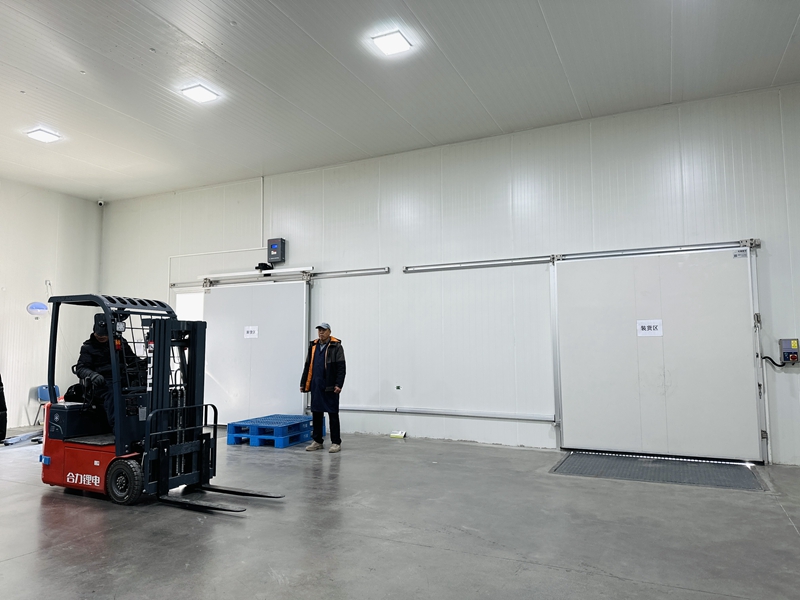
How Large Should a 100-Ton Cold Storage Be?
In commercial cold storage design, a common planning reference is:
- 1 ton of fresh produce ≈ 5 cubic meters of cold storage volume
Based on this rule:
- 100 tons of storage capacity requires at least 500 cubic meters of cold storage volume
If the cold storage is designed with a clear internal height of 4 meters, the required floor area would be:
- 500 m³ ÷ 4 m = approx. 125 m²
This size allows enough space for pallet stacking, air circulation, and forklift operation, which is critical for efficient loading and unloading.
What Can a 100-Ton Cold Storage Actually Store?
A 100-ton cold storage is typically used for:
- Potatoes, apples, onions, citrus fruits
- Other fruits and vegetables requiring fresh-keeping storage
- Short-term chilled meat storage (with adjusted configuration)
For fresh produce such as potatoes or apples, a 100-ton cold room provides a good balance between investment cost and storage flexibility, making it popular among growers, cooperatives, and small exporters.
Typical Configuration and Power Requirement
For a 100-ton fresh produce cold storage (0–5°C), a common configuration includes:
- Power supply: 380V industrial electricity
- Refrigeration capacity: approx. 15 kW
- Compressor unit: 1 set (around 20 HP, depending on brand and climate)
- Air coolers: 2 ceiling-mounted evaporators (e.g., DL series)
- Insulation: 100 mm polyurethane sandwich panels with color steel sheets
This configuration ensures stable temperature control, fast cooling, and energy-efficient operation.
If the cold storage is designed for frozen meat storage (-18°C or lower):
- Insulation thickness typically increases by 50 mm
- Evaporators are upgraded to low-temperature models (e.g., DJ series)
- Total power demand increases to around 30 kW
- Overall investment cost increases accordingly
How Much Does It Cost to Build a 100-Ton Cold Storage?
From an investment standpoint, cost varies mainly by temperature requirement and equipment configuration.
As a reference:
- Fresh produce cold storage (0–5°C)
- Total investment: USD 23,000 – 30,000
- Suitable for fruits and vegetables
- Frozen storage for meat (-18°C)
- Total investment: USD 35,000 – 45,000
- Higher insulation and power requirements
These costs typically include insulation panels, refrigeration equipment, air coolers, electrical control system, and standard installation.