 Haocool

Citrus is one of the most traded fruits in the world. But without proper cold storage, 20 to 30 percent of the crop spoils before it reaches buyers. At room temperature, oranges soften, mandarins dry out, and mould spreads quickly.
With a properly designed cold room, you can store sweet oranges for four to five months, hold mandarins for two to three months, and sell during off-season price peaks – often at two to three times the harvest price.
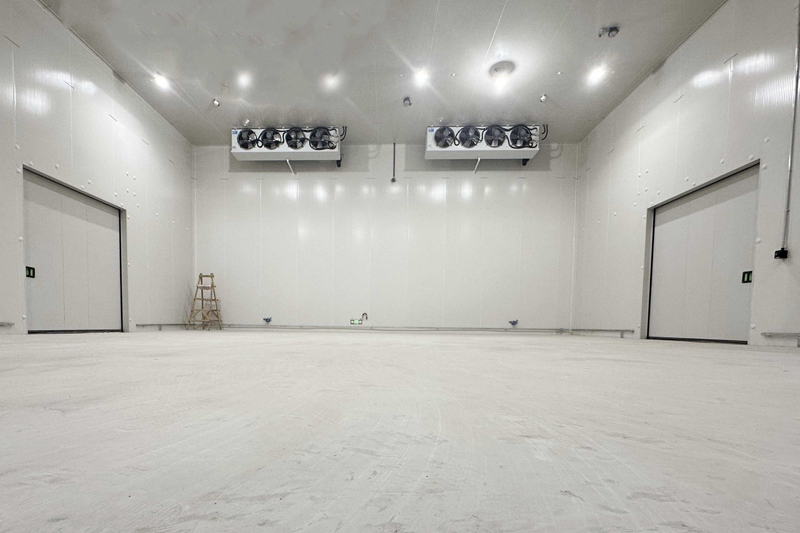
How Much Can a Citrus Cold Room Store?
Storage capacity depends on the room size and how the fruit is stacked. Here is a typical example for a 200‑square‑metre room.
| Parameter | Specification |
|---|---|
| Room size | 200 m² × 4.0 m height = 800 m³ |
| Storage format | Standard export cartons (10–15 kg per box) on EUR pallets |
| Stacking height | 6–7 layers with airflow gaps |
| Storage density | Approximately 210 kg/m³ (industry standard for ventilated citrus) |
| Usable capacity | 165 – 180 metric tons per batch |
This size is suitable for Navel oranges, Satsuma, Clementine, Ponkan, or local mandarin varieties.
Total Investment: What You Actually Pay
A complete turnkey citrus cold room of this size – 200m², 2–8°C, with humidity control – typically costs between $40,000 and $50,000 USD.
Here is what that price includes:
- Temperature control: Adjustable from 2°C to 10°C. Navel oranges store well at 2–4°C, while Ponkan mandarins prefer 6–8°C.
- Humidity control: Maintained at 85–90% relative humidity to prevent rind shrivelling without promoting mould growth.
- Insulation: 100–120mm polyurethane panels with a smooth, washable interior surface.
- Airflow: Low-velocity circulation is used because high-speed air can damage delicate citrus rinds.
- Monitoring: A cloud-based system with SMS alerts for temperature and humidity drift.
The temperature range matters. Storing citrus below its tolerance level – for example, Ponkan at 2°C – causes chilling injury. The rind develops pitting and browning, and decay sets in quickly.
Shelf Life by Variety
Different citrus varieties have different optimal temperatures and storage lives. Here is what you can expect with proper cold storage.
| Citrus Type | Optimal Temperature | Maximum Storage Duration | Market Potential |
|---|---|---|---|
| Navel / Valencia orange | 2–4°C | 3–4 months | High demand in EU and GCC during winter |
| Satsuma / Clementine | 4–6°C | 2–3 months | Very high during festive seasons |
| Ponkan / Local mandarin | 7–10°C | 7–8 weeks | Moderate, mainly regional markets |
Without cold storage, all of these lose marketability within two to three weeks.
Real Example: Citrus Co‑op in Turkey
A citrus growers’ cooperative in Mersin, Turkey, built a 200‑square‑metre cold room to serve buyers in the EU and the Gulf region. The total investment was $51,000 USD, and the facility stores 175 tons of Navel oranges.
The results were significant. Post‑harvest loss dropped from 26 percent to 5 percent. The cooperative extended its sales window from December through April. Sixty percent of the stock was sold at 2.3 times the harvest price. The investment paid for itself in ten months.