 Haocool

If you are in the cold storage business in Uzbekistan – or if you are planning to enter it – Tashkent is a market worth watching. The city’s cold chain sector is growing fast, driven by a booming population, expanding food imports, and government-backed infrastructure projects. But before you commit, you need a clear picture of the costs.
A customer recently asked us: how much does it cost to build an 800-ton cold storage in Tashkent?
Here is a practical breakdown – from the space you need, to the construction method, to the final price.
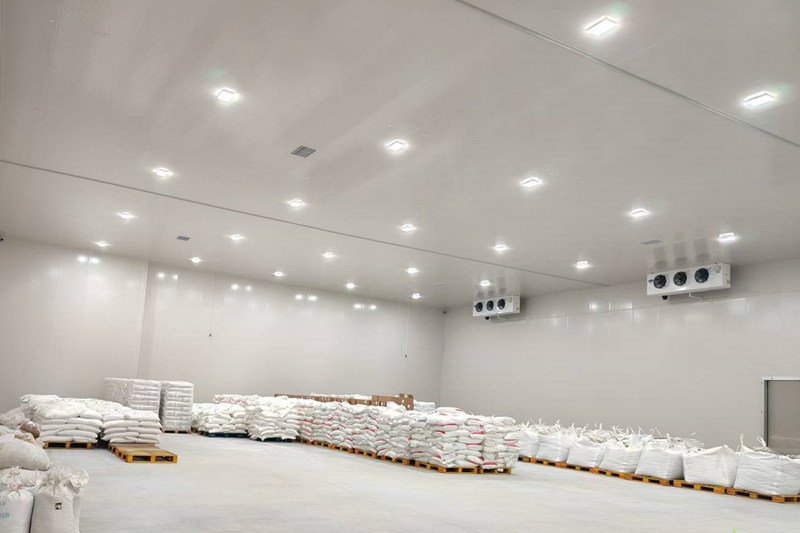
First, How Much Space for 800 Tons?
A common rule of thumb for bulk storage of general goods (fruits, vegetables, dry goods) is 5 cubic metres per ton.
For 800 tons:
- 800 tons × 5 m³/ton = 4,000 m³ of storage volume.
Assuming a ceiling height of 4 metres, the floor area you need is:
- 4,000 m³ ÷ 4 m = 1,000 m².
So an 800-ton cold storage in Tashkent typically needs about 1,000 square metres of floor space.
What Temperature Range Are We Talking About?
This project assumes a 0°C to 15°C temperature range – which covers most fresh produce, dairy, and general chilled goods. This is not a freezer (-18°C), so the insulation and refrigeration requirements are moderate.
| Parameter | Value |
|---|---|
| Storage volume | 4,000 m³ |
| Floor area | ~1,000 m² |
| Ceiling height | 4 m |
| Temperature range | 0°C – 15°C |
| Intended use | Fresh produce, dairy, general chilled goods |
Construction Method and Materials
The standard approach for a project like this in Tashkent is:
- Insulation panels: 100mm polyurethane double‑face steel panels for walls and ceiling. This thickness is sufficient for 0–15°C operation in Tashkent’s climate.
- Floor insulation: XPS (extruded polystyrene) rigid foam boards under a concrete slab. XPS is moisture‑resistant and strong enough to support forklift traffic.
- Evaporators: DL series ceiling‑mounted air coolers. DL units are designed for medium‑temperature applications and provide good air distribution.
- Refrigeration system: Depending on the number of compartments, you may need one or more condensing units. Brands like Bitzer, Copeland, or GEA are preferred for reliability, though good Chinese brands are also available at lower cost.
- Number of compartments: This is a major cost driver. The more rooms you have, the more insulation walls, doors, and independent refrigeration controls you need. For an 800‑ton facility, a typical configuration might be 2–4 rooms.
Estimated Cost in Tashkent
Based on recent cold storage projects in Tashkent and regional cost data, an 800‑ton cold storage (0–15°C, 1,000 m²) typically costs approximately $208,000 USD (roughly 2.6 billion Uzbek som, depending on the exchange rate).
Here is a rough breakdown:
| Component | Estimated Cost (USD) |
|---|---|
| Insulation panels (100mm polyurethane) & XPS floor insulation | $50,000 – 65,000 |
| Refrigeration equipment (compressors, condensers, DL evaporators) | $55,000 – 70,000 |
| Concrete floor slab (reinforced, with XPS layer) | $25,000 – 35,000 |
| Electrical and control systems | $12,000 – 18,000 |
| Installation and labour (Tashkent) | $25,000 – 35,000 |
| Engineering, design, and permits | $10,000 – 15,000 |
| Contingency and miscellaneous | $15,000 – 22,000 |
| Total (approx.) | $192,000 – 260,000 |
For a more detailed breakdown of cold storage costs, visit our cold storage construction cost page.
What Drives the Cost Up or Down in Tashkent?
1. Number of Compartments
A single large room is the cheapest option. If you need multiple rooms – for example, separate zones for different temperature requirements or different customers – the cost increases. Each additional room requires extra insulation walls, doors, and independent refrigeration controls.
2. Equipment Brand
Imported brands like Bitzer, Copeland, or GEA cost 20–30% more than good Chinese brands. They are more reliable and energy‑efficient, which matters for a facility that runs 24/7. The long‑term savings often justify the higher initial investment.
3. Floor Construction
The XPS insulation layer under the concrete slab is critical for preventing cold loss through the ground. Thicker XPS boards cost more upfront but reduce operating costs over the life of the facility. In Tashkent’s climate, where ground temperatures can be cold in winter, proper floor insulation is important.
4. Door Type and Quality
A standard insulated sliding door is cheaper than a high‑speed automatic door or a custom‑sized door. The type and number of doors directly affect the cost.
5. Site Location
Building in the city centre means higher land costs and more complex permitting. Industrial zones on the outskirts – like along the Tashkent Ring Road – often have better access and lower costs.
Practical Considerations for Tashkent
Climate
Tashkent has a continental climate with hot summers (35°C+) and cold winters (-15°C). Your refrigeration system needs to handle both extremes. In winter, the outside temperature can help with condenser efficiency, but you also need to consider heating for the compressor room to prevent oil thickening.
Power Supply
Tashkent’s power grid is generally reliable, but voltage fluctuations can be an issue. A voltage stabiliser is a good investment. For a cold storage facility, a backup generator is also recommended – a power outage on a hot summer day can raise the temperature above 15°C and damage your stock.
Permits and Regulations
Uzbekistan has specific building codes for food storage facilities. Working with a contractor who knows the local approval process can save you time and money.