 Haocool

If you are in the seafood business in Hai Phong, you already know the challenge. Vietnam is one of the world’s largest seafood exporters, but the domestic cold chain infrastructure still has gaps. Without proper freezing, fish, shrimp, and other seafood start losing quality within hours of being caught.
A dedicated seafood freezer cold storage changes that. It lets you freeze product quickly, hold it at stable temperatures, and sell when prices are right. But the first question is always the same: how much does it cost to build a 200-ton seafood freezer in Hai Phong?
Here is a practical breakdown — from capacity and space requirements to equipment choices and total investment.
First, How Much Space for 200 Tons of Seafood?
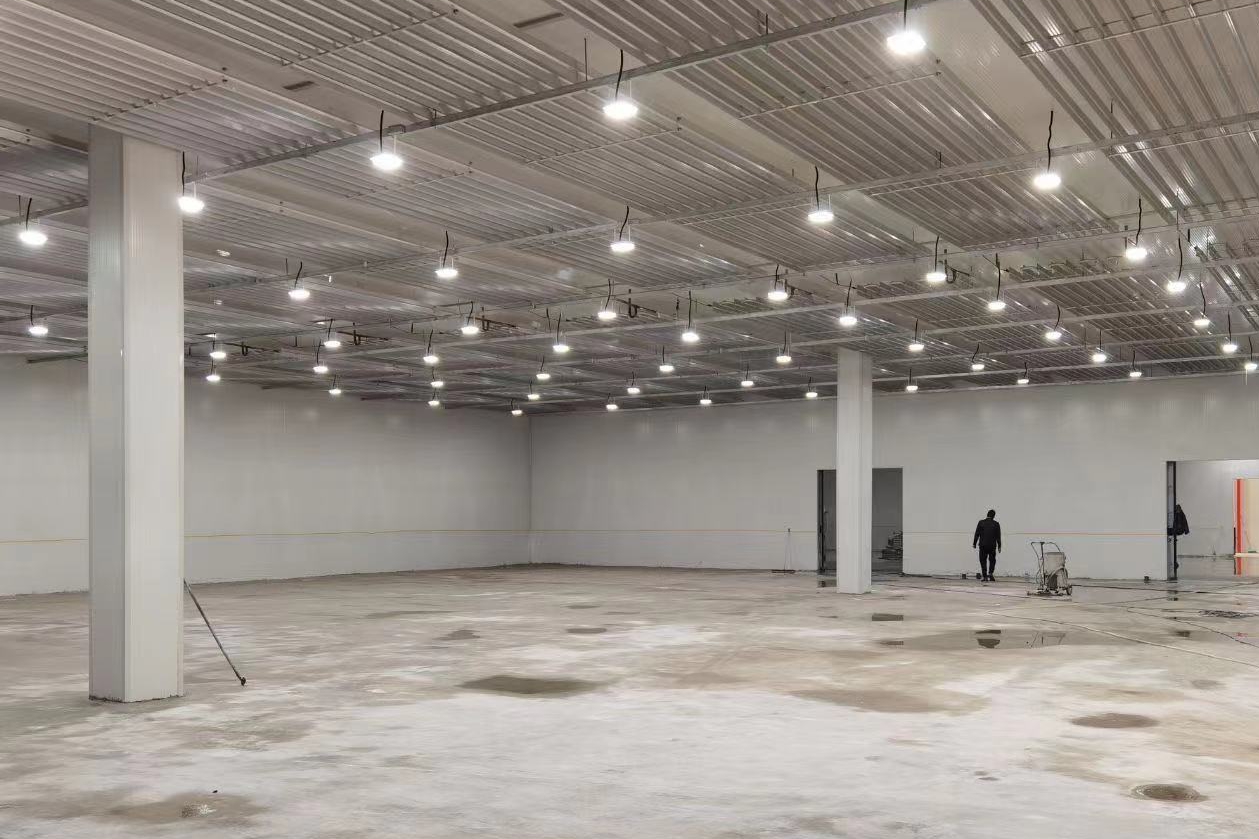
For frozen seafood stored at -18°C, the industry standard is approximately 4.5 to 5.5 cubic metres per metric ton. This accounts for palletised cartons, airflow gaps between stacks, and space for forklift manoeuvring.
For 200 tons:
- 200 tons × 5 m³/ton = 1,000 m³ of usable storage volume.
Assuming a standard clear height of 4 metres, the floor area you need is roughly:
- 1,000 m³ ÷ 4 m = 250 m² (plus space for aisles and handling).
| Parameter | Value |
|---|---|
| Storage capacity | 200 tons |
| Storage density | 4.5–5.5 m³ per ton |
| Usable volume | ~1,000 m³ |
| Ceiling height | 4 metres |
| Floor area | ~250 m² |
For a mid-sized seafood processor, exporter, or wholesaler in Hai Phong, this is a practical size. It holds enough product to supply regular export shipments or serve the domestic market consistently.
What Temperature Does a Seafood Freezer Need?
Most seafood products — fish fillets, whole fish, shrimp, squid, and octopus — freeze and store well at -18°C to -23°C. This temperature range stops bacterial growth, preserves texture, and prevents freezer burn.
At -18°C, seafood can be stored for 6 to 12 months without significant quality loss. For export-grade products, some operators prefer -23°C for an extra margin of safety.
| Parameter | Recommended Value |
|---|---|
| Temperature | -18°C to -23°C |
| Storage capacity | 200 tons |
| Volume | ~1,000 m³ |
Estimated Total Cost in Hai Phong
Based on similar projects in Vietnam, a 200-ton seafood freezer at -18°C typically costs between $51,500 and $59,000 USD (approximately 1.30 – 1.49 billion VND, using mid-2026 exchange rates of 1 USD ≈ 25,300 VND).
Here is a rough breakdown of where the money goes:
| Component | Estimated Cost (USD) | Estimated Cost (VND) |
|---|---|---|
| Insulation panels (120–150mm polyurethane) | 15,000 – 18,000 | 380 – 455 million |
| Refrigeration equipment (Bitzer/Copeland low-temperature) | 18,000 – 22,000 | 455 – 557 million |
| Evaporators and piping | 5,000 – 7,000 | 127 – 177 million |
| Electrical and control systems | 4,000 – 5,000 | 101 – 127 million |
| Doors and sealing | 2,500 – 3,500 | 63 – 89 million |
| Installation and labour (Hai Phong) | 5,000 – 6,000 | 127 – 152 million |
| Engineering, design, and permits | 2,000 – 3,000 | 51 – 76 million |
| Total (approx.) | 51,500 – 59,000 | 1.30 – 1.49 billion |
These figures assume standard specifications: 120–150mm polyurethane panels, a low-temperature condensing unit from a reputable brand like Bitzer or Copeland, hot-gas defrost evaporators, and a PLC-based temperature controller with remote monitoring.
For a more detailed breakdown of seafood cold storage solutions, visit our seafood cold storage solutions page.
What Equipment Goes into a Seafood Freezer?
A reliable seafood freezer requires several key components:
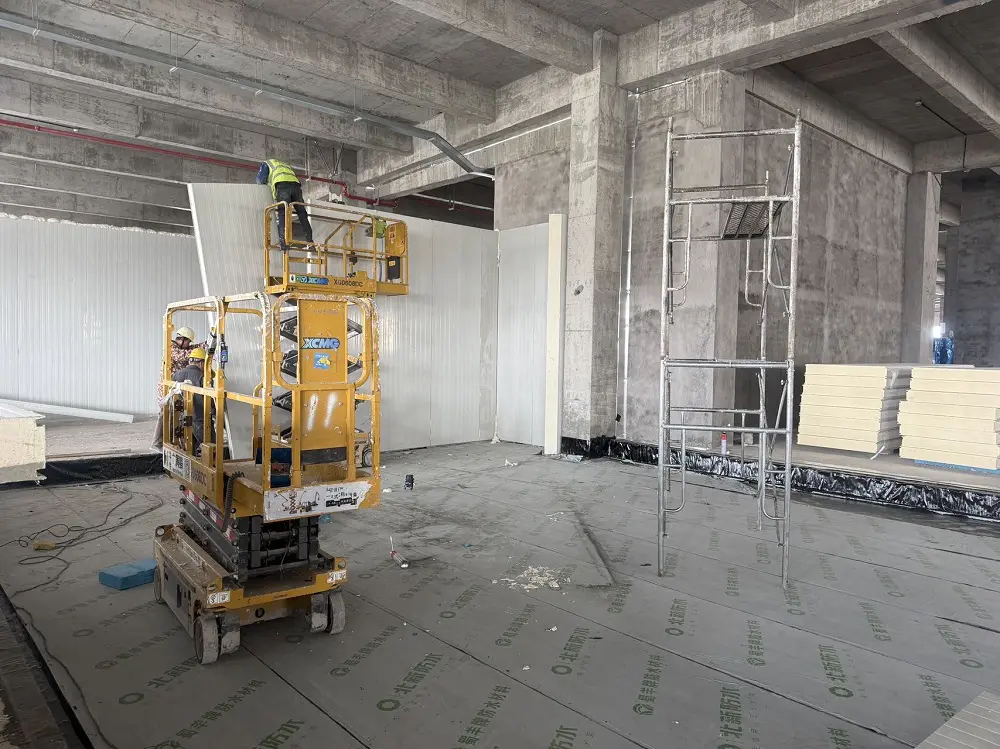
Insulation panels: For a -18°C freezer in Hai Phong’s hot and humid climate, you need at least 120mm to 150mm polyurethane double-face steel panels. Thicker panels cost more upfront but significantly reduce electricity consumption over the life of the facility.
Refrigeration equipment: For a facility of this size, you typically need a low-temperature screw or scroll compressor from a reputable brand like Bitzer, Copeland (Emerson), or GEA. Some projects use dual-circuit systems for redundancy — if one circuit fails, the other keeps the room cold.
Evaporators: High-efficiency ceiling-mounted air coolers with hot-gas defrost. Hot-gas defrost is faster and more energy-efficient than electric defrost for low-temperature applications.
Floor system: 100mm XPS insulation beneath a reinforced concrete slab to prevent frost heave. The floor must be able to support heavy forklift traffic.
Doors: Insulated electric sliding doors with air curtains to minimise cold air loss during loading and unloading.
Controls: A PLC-based system with remote monitoring, SMS alerts, and data logging. For export-grade seafood, temperature data logging is often required for traceability and quality certification.
What Factors Affect the Final Price?
Several variables can push the cost up or down by 15 to 20 percent.
Number of compartments: A single large room is cheaper than multiple smaller rooms. But many operators need separate zones — a blast freezer for quick freezing, a holding freezer for finished product, and maybe a chilled staging area. Each additional compartment adds cost for insulation walls, doors, and independent refrigeration controls.
Equipment brand: Premium brands like Bitzer or Copeland cost 20–30% more than good Chinese brands. They are more reliable and energy-efficient, which matters for a facility that runs 24/7.
Insulation thickness: Thicker panels cost more upfront but reduce electricity consumption. In Hai Phong’s hot climate, skimping on insulation is a false economy — your compressors will run harder and your electricity bill will be higher.
Site conditions: Building in Hai Phong’s industrial zones means good access to power and transport. If the site requires significant ground preparation, that adds to the budget.
Why Hai Phong Makes Sense for Seafood Cold Storage
Hai Phong is Vietnam’s largest port city and a major hub for seafood processing and export. The city is home to numerous seafood processing plants and export facilities, and it has good access to both domestic and international markets.
For seafood processors and exporters, locating your cold storage in Hai Phong offers several advantages:
- Proximity to the port — faster shipping and lower logistics costs
- Access to export routes — direct connections to major global markets
- Growing infrastructure — Hai Phong’s industrial zones are expanding, with new cold chain facilities being developed
Is a 200‑Ton Seafood Freezer Worth It?
The short answer is yes — for any serious seafood processor, exporter, or wholesaler.
Without proper cold storage, you are forced to sell immediately after processing, often at low prices. With a cold room, you can:
- Freeze product immediately after processing, locking in quality
- Store during peak production periods and sell when prices are higher
- Maintain quality for export markets that require consistent product standards
- Reduce spoilage from over 10% to under 3%
A 200‑ton seafood freezer is a practical investment for a mid‑sized operation. Many processors recover their investment within 2 to 3 years through reduced waste and better market timing.