 Haocool

In recent years, navel oranges have become increasingly popular with consumers, mainly because of their rich, sweet juice and nutritional value. However, after harvest, navel oranges continue to respire. Improper storage or prolonged exposure to room temperature can accelerate quality deterioration, resulting in wilting, decay and the loss of freshness.
So, how can navel oranges be stored to maintain their freshness and quality for as long as possible?
Cold storage can effectively extend the storage life of navel oranges and help preserve their quality. It also allows growers and distributors to store fruit during the harvest season and sell it during the off-season, potentially increasing its commercial value.
This guide explains the harvesting, pre-cooling and cold storage methods used for navel oranges, along with the recommended temperature and humidity conditions.
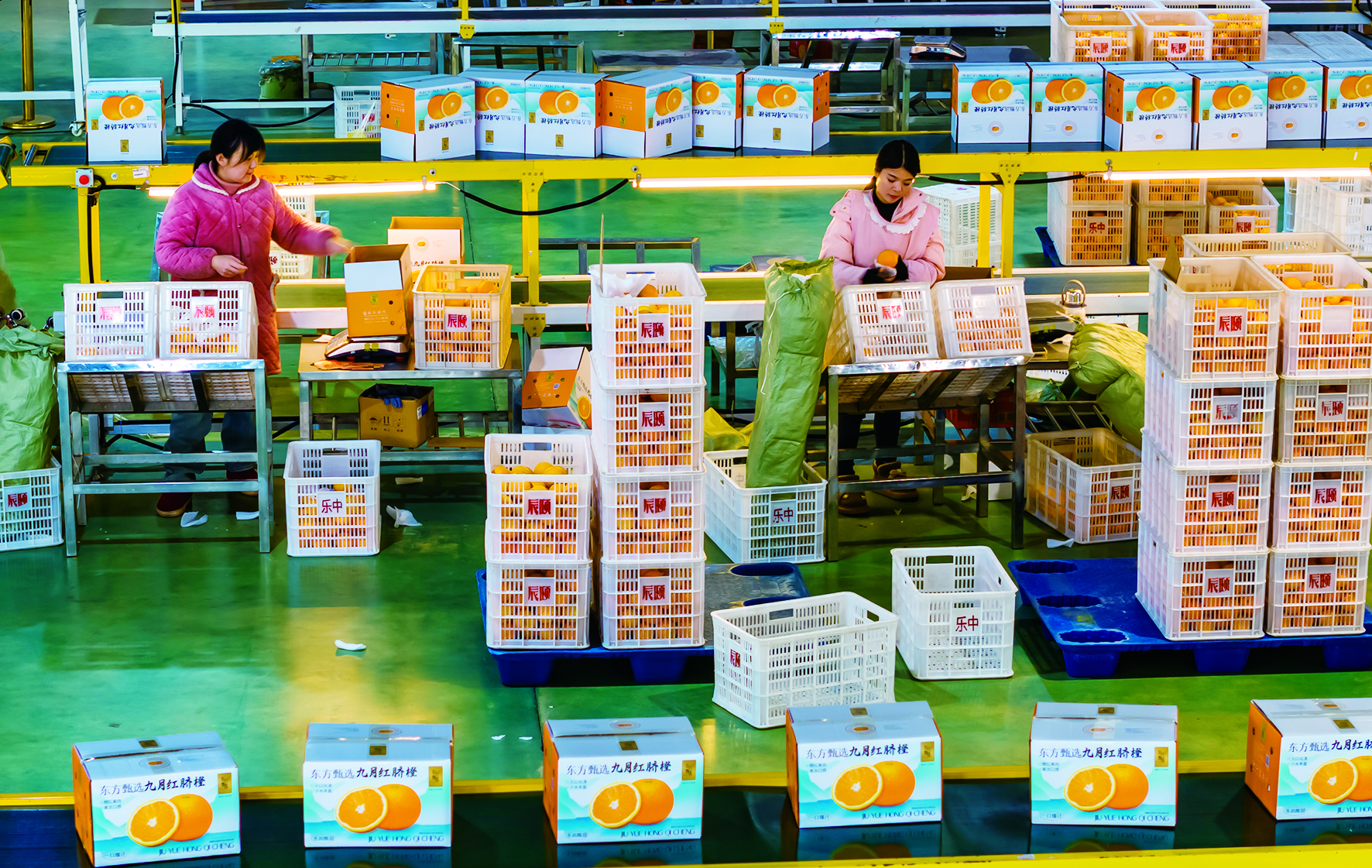
Sorting and packaging navel oranges inside a cold storage facility
Navel Orange Cold Storage Methods and Temperature Requirements
1. Harvesting
For better storage quality, navel oranges should preferably be harvested on sunny days or in the early morning after the dew has dried.
Fruit harvested at approximately 80–90% maturity, with firm flesh and no signs of softening, is generally preferred for storage, subject to the variety and intended market.
Manual harvesting is recommended where practical because it can reduce mechanical damage.
Harvesting during rainy weather should be avoided where possible, as wet fruit and poor handling conditions may increase the risk of decay during storage.
2. Sorting and Grading
After harvesting, navel oranges should be graded according to size and quality.
The sorted fruit should be placed in suitable fruit crates. Diseased, pest-damaged, deformed or mechanically damaged oranges should be removed before storage.
Careful sorting helps reduce the risk of decay spreading to healthy fruit and improves the consistency of the stored product.
3. Pre-Cooling
Pre-cooling is an important step in maintaining the quality of navel oranges before cold storage.
It helps remove field heat and bring the fruit temperature closer to the required storage temperature.
Depending on the product condition and facility configuration, pre-cooling can be carried out using forced-air cooling or by placing the fruit directly into a suitably designed cold storage room.
Faster and more uniform cooling can help improve storage performance, provided that the cooling process is appropriate for the fruit and does not cause chilling injury.
The original storage recommendation specifies that the pre-cooling period should not exceed 48 hours. The actual cooling time should be determined according to the fruit temperature, loading configuration and required cooling performance.
4. Temperature and Humidity Control
The recommended storage temperature for navel oranges is approximately 5–6°C.
The temperature should remain stable during storage. Temperatures that are too low may cause chilling injury, while excessively high temperatures can accelerate deterioration and reduce storage life.
According to the original storage guidance, temperatures below 3°C may cause chilling injury, potentially resulting in pitting, water-soaked areas or dry, sunken patches on the fruit surface. The precise chilling sensitivity depends on the variety, maturity, storage duration and handling conditions.
Relative humidity should generally be maintained at approximately 85–90% to reduce moisture loss and help prevent the fruit from becoming soft or shriveled.
If humidity is too low, an appropriate humidification method may be considered. If humidity is excessively high and condensation develops, ventilation and moisture management should be reviewed.
Humidity control should be designed to maintain suitable storage conditions without creating persistent condensation on the fruit or packaging.
Under the storage conditions described above, navel oranges may be stored for up to approximately six months, depending on variety, harvest quality, disease control, handling procedures and the stability of the storage environment.
The original guidance reports a marketable fruit rate of over 95% under suitable conditions. This should be treated as a reference result rather than a guaranteed outcome for every variety or storage facility.