 Haocool

How much does it cost to build a 150-ton cold storage facility? What is included in a complete cold storage quotation?
A 150-ton cold storage facility is suitable for fruit and vegetable storage, frozen meat, seafood, pharmaceutical products and other commercial cold-chain applications. However, the total investment depends on the storage temperature, product type, room dimensions, refrigeration capacity, insulation specification and equipment configuration.
For preliminary budgeting, a complete 150-ton cold storage project may require approximately US$45,000–135,000, depending on the application and technical requirements.
This guide explains the estimated cost of different 150-ton cold storage facilities, the main equipment included in a complete quotation and the factors that affect the final investment.
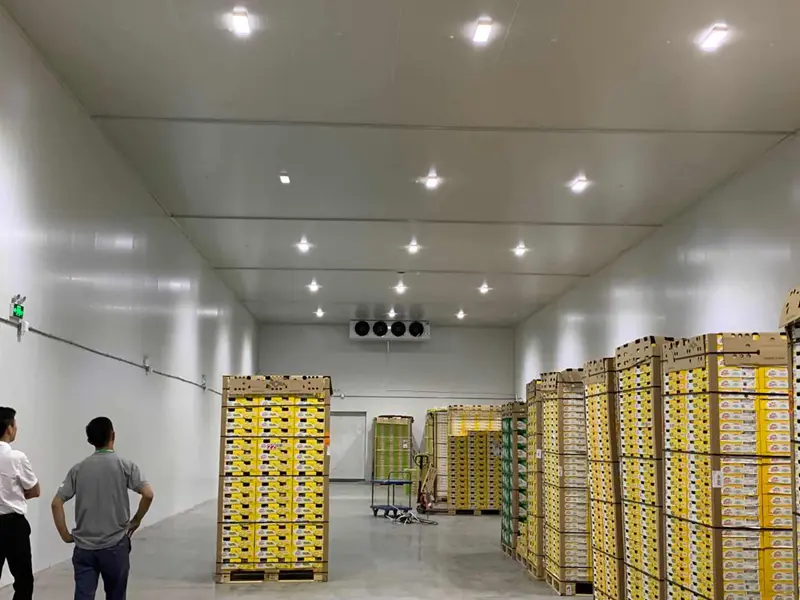
How Much Does a 150-Ton Cold Storage Facility Cost?
The investment required for a 150-ton cold storage facility varies according to the storage application and temperature requirements.
| Cold Storage Type | Typical Temperature | Approximate Investment |
|---|---|---|
| Fruit and vegetable cold storage | 0°C to +8°C | US$45,000–60,000 |
| Frozen food cold storage | Around -18°C | US$54,000–75,000 |
| Pharmaceutical cold storage | 2°C to 8°C | US$60,000–82,000 |
| Rapid-freezing cold storage | Below -25°C, project-specific | US$90,000–135,000 |
These figures are preliminary project budget estimates rather than fixed quotations. Actual costs depend on the building, storage volume, refrigeration requirements, product entering temperature, daily throughput, equipment configuration and project location.
The scope of the quotation is equally important. A cold room and refrigeration package installed in an existing building will have a different price from a complete turnkey facility that includes civil construction and supporting infrastructure.
What Determines the Cost of a 150-Ton Cold Storage Facility?
The main factors affecting a 150-ton cold storage project include:
- Storage temperature
- Product type
- Storage capacity and room volume
- Product entering temperature
- Daily inbound and outbound volume
- Required storage period
- Refrigeration capacity
- Insulation thickness
- Cold storage doors
- Flooring and foundation
- Electrical and control systems
- Humidity management
- Automation and racking
- Building structure
- Installation and commissioning
- Project location
Among these factors, temperature and refrigeration requirements have a major influence on equipment selection and initial investment.
150-Ton Fruit and Vegetable Cold Storage Cost
A 150-ton fruit and vegetable cold storage facility typically operates at 0–8°C, depending on the specific produce.
For preliminary budgeting, the estimated investment is approximately:
US$45,000–60,000
A typical project may include:
- Insulated cold room panels
- Insulated flooring where required
- Refrigeration compressors
- Condensers
- Evaporators
- Refrigerant piping and valves
- Insulated cold storage doors
- Temperature monitoring
- Humidity control where required
- Electrical and control systems
The actual configuration should be based on the fruit and vegetables being stored. Apples, oranges, leafy vegetables, potatoes and onions can have different temperature, humidity and ventilation requirements.
For projects handling freshly harvested produce, a pre-cooling area may also be necessary to remove field heat before long-term storage.
150-Ton Frozen Food Cold Storage Cost
A 150-ton frozen food cold storage facility typically operates around -18°C, although the exact temperature depends on the product and storage requirements.
For preliminary budgeting, the estimated investment is approximately:
US$54,000–75,000
Compared with a chilled cold room, frozen storage generally requires:
- Greater refrigeration capacity
- Low-temperature compressors
- Low-temperature evaporators
- Higher-performance insulation
- Effective vapor-barrier protection
- Insulated freezer doors
- Defrost systems
- Temperature monitoring and alarms
The refrigeration system must be calculated based on the actual product load and operating conditions.
A warehouse storing already-frozen food requires a different design from a facility that receives fresh products and freezes them on-site.
150-Ton Pharmaceutical Cold Storage Cost
A pharmaceutical cold storage facility typically operates at 2–8°C, depending on the products and applicable regulations.
For preliminary budgeting, the estimated investment is approximately:
US$60,000–82,000
A commercial pharmaceutical cold storage project may require:
- Precision refrigeration
- Temperature monitoring
- Humidity monitoring where required
- Continuous data recording
- High and low temperature alarms
- Remote monitoring
- Backup refrigeration where necessary
- Emergency power where required
- Access control
- Temperature mapping and validation documentation where applicable
The final specification should be based on the pharmaceutical products, target market and applicable regulatory requirements. GDP, GMP or other compliance requirements should be determined according to the actual facility and intended use rather than assumed from the storage temperature alone.
For pharmaceutical applications, monitoring, redundancy, documentation and qualification can have a substantial effect on the total investment.
150-Ton Rapid-Freezing Cold Storage Cost
A 150-ton rapid-freezing project is considerably different from a conventional frozen storage facility.
For preliminary budgeting, a specialized rapid-freezing project may require approximately:
US$90,000–135,000
Depending on the required freezing rate and product characteristics, the equipment may include:
- High-capacity refrigeration compressors
- Specialized evaporators
- Blast freezers or other suitable freezing equipment
- Refrigeration control systems
- Insulated freezing rooms
- High-performance insulated doors
- Temperature monitoring
- Defrost equipment
- Electrical and safety systems
Rapid freezing is designed to reduce the product temperature within a specified time. Frozen storage, by contrast, maintains products that have already been frozen.
If the project needs both operations, the freezing equipment and subsequent frozen storage rooms should be designed as an integrated system.
The final investment depends on product size, freezing time, daily freezing throughput, incoming product temperature and the required core temperature.
How Much Cold Storage Volume Is Needed for 150 Tons?
The required room volume depends on product density, packaging, pallet configuration and stacking height.
For preliminary planning, the following storage-volume allowances may be used:
| Product Type | Preliminary Planning Volume | Net Product Volume for 150 Tons |
|---|---|---|
| Fruit and vegetables | 4–5 m³/ton | 600–750 m³ |
| Meat and packaged food | 3–4 m³/ton | 450–600 m³ |
These values represent preliminary product-volume estimates, not the final cold room volume.
The actual design must also accommodate aisles, airflow, pallets, equipment clearances, doors and handling areas.
The required room dimensions should therefore be calculated from the storage layout rather than selected from tonnage alone.
What Equipment Is Included in a Complete 150-Ton Cold Storage Quotation?
A complete cold storage quotation can include several major systems.
1. Insulated Cold Room
The insulated envelope may include:
- Wall panels
- Ceiling panels
- Floor insulation
- Vapor barriers
- Sealing systems
- Insulated doors
The panel thickness and insulation material should be selected according to the target temperature, climate and building configuration.
2. Refrigeration System
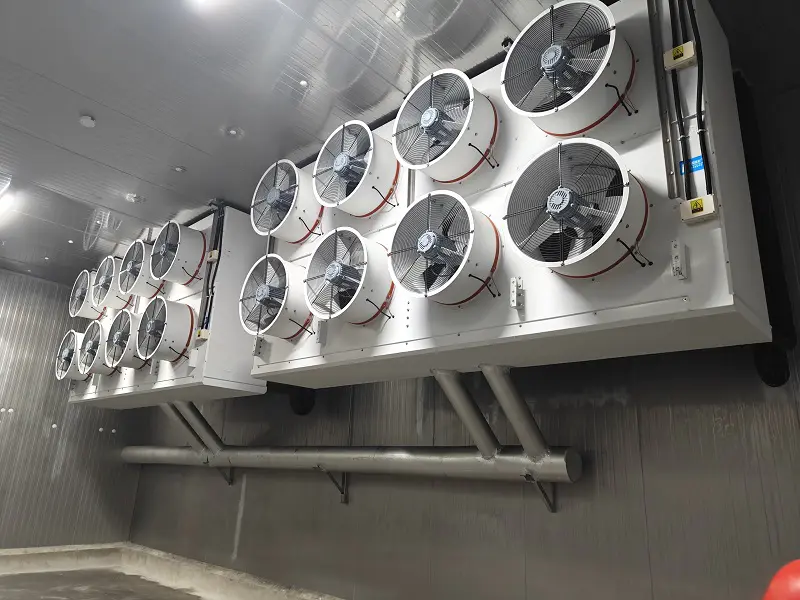
The refrigeration system may include:
- Compressors
- Condensers
- Evaporators
- Refrigerant piping
- Expansion valves
- Refrigeration controls
- Pressure protection
- Defrost equipment
The equipment capacity should be determined through a refrigeration load calculation rather than a standard package based solely on 150 tons.
3. Electrical and Control Systems
A complete project may include:
- Main electrical distribution
- Refrigeration control panels
- Temperature sensors
- Humidity sensors
- Alarm systems
- Remote monitoring
- Data recording
- Emergency protection
The required electrical capacity depends on the complete equipment configuration and operating conditions.
4. Flooring and Supporting Construction
Depending on the project, the quotation may include:
- Reinforced concrete flooring
- Floor insulation
- Vapor barriers
- Protective floor surfaces
- Foundations
- Steel structure
- Roofing
- Drainage
These items should be clearly separated in the quotation so that the customer can understand the difference between a cold room package and a complete construction project.
5. Installation and Commissioning
A complete installation package may include:
- Equipment installation
- Refrigerant piping installation
- Electrical connections
- Control system configuration
- System pressure and leak testing
- Refrigeration commissioning
- Temperature testing
- Operator training
International projects may also need shipping, customs clearance, local labor and on-site technical support.
How Much Refrigeration Capacity Is Needed for a 150-Ton Cold Storage Facility?
Refrigeration capacity cannot be calculated from storage tonnage alone.
The refrigeration load should consider:
- Product entering temperature
- Daily receiving volume
- Product cooling or freezing requirements
- Required pull-down time
- Storage temperature
- Outdoor design temperature
- Insulation performance
- Door opening frequency
- Lighting and personnel
- Evaporator fan heat
- Defrost load
- Required operating reserve
For example, a 150-ton fruit cold room receiving pre-cooled products may need substantially less refrigeration capacity than a facility that receives warm products every day.
Similarly, a rapid-freezing facility needs to be designed around freezing throughput and product core temperature rather than its final storage capacity alone.
How to Get an Accurate 150-Ton Cold Storage Full-System Quotation
To prepare a preliminary engineering design and full-system quotation, the following information is required:
| Project Information | Example |
|---|---|
| Storage capacity | 150 tons |
| Product type | Fruit / vegetables / meat / seafood / pharmaceutical |
| Storage temperature | 0–8°C / -18°C / 2–8°C / other |
| Product entering temperature | °C |
| Daily receiving volume | Tons/day |
| Daily dispatch volume | Tons/day |
| Storage period | Days / weeks / months |
| Freezing requirements | Storage only / rapid freezing |
| Packaging | Cartons / crates / pallets / bins |
| Pallet dimensions | Length × width × height |
| Maximum pallet weight | kg |
| Room dimensions | Length × width × height |
| Storage method | Floor stacking / racking / automated |
| Project location | City and country |
| Building condition | Existing / new construction |
| Automation | Manual / semi-automatic / automated |
| Project scope | Cold room / refrigeration / complete EPC |
With these details, the engineering team can evaluate the required room volume, refrigeration load, equipment configuration, electrical demand, installation scope and total project budget.
150-Ton Cold Storage Investment and Operating Costs
The construction cost is only one part of a cold storage investment.
A complete feasibility study should also consider:
- Total initial investment
- Storage capacity
- Annual utilization
- Product throughput
- Electricity consumption
- Labor costs
- Maintenance costs
- Storage or rental revenue
- Product loss reduction
- Expected annual operating profit
- Payback period
A seasonal fruit cold store, a frozen meat warehouse and a rapid-freezing facility all have different operating models. Their investment returns should therefore be calculated according to actual utilization, energy consumption, throughput and revenue.
Request a 150-Ton Cold Storage Quote Today
Contact us for a customized 150-ton cold storage design and full-system quotation based on your product type, storage capacity, temperature requirements, daily throughput and project location.
We provide cold storage design, refrigeration systems, insulated structures, freezing solutions, electrical and control systems, installation, commissioning and complete turnkey EPC solutions for commercial cold-chain projects.