 Haocool

How much does it cost to build a 300 m² salmon cold storage facility? What is the estimated cost of the refrigeration equipment, insulated panels and installation?
The total construction and installation cost of a 300 m² frozen seafood cold storage facility is not fixed. For preliminary budgeting, a project of this size may require approximately US$127,000–143,000, depending on the refrigeration configuration, insulation system, storage conditions and installation requirements.
This estimate is intended as a general planning reference. The actual investment will depend on the required storage capacity, product entering temperature, refrigeration load, equipment specifications, building conditions and project location.
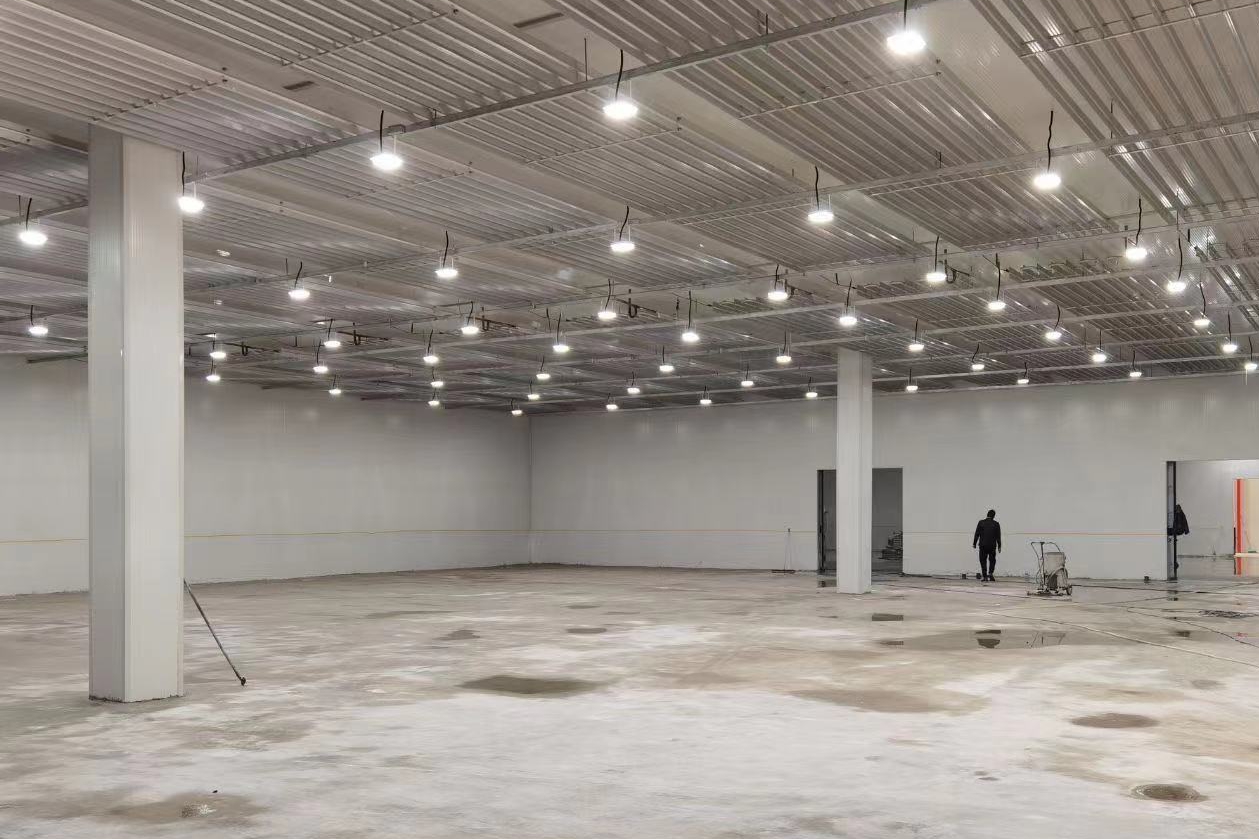
Interior view of a salmon cold storage facility
How Much Does a 300 m² Salmon Cold Storage Facility Cost?
For a 300 m² cold storage facility designed for frozen salmon and other seafood, the estimated investment is approximately:
US$127,000–143,000
The final cost depends on several factors, including:
- Required storage temperature
- Storage capacity and room height
- Refrigeration equipment configuration
- Insulated panel thickness
- Compressor capacity and efficiency
- Number and type of evaporators
- Electrical and control systems
- Installation materials and labor
- Building conditions
- Project location
A complete project quotation may include the insulated cold room, refrigeration equipment, piping, electrical controls, installation and commissioning. Civil construction, racking, shipping, taxes and other supporting works should be clarified separately.
Key Factors Affecting Salmon Cold Storage Construction Cost
1. Storage Temperature
Frozen salmon and other frozen seafood are commonly stored at -18°C or below, depending on the product, required storage period and applicable requirements.
For a commercial frozen seafood warehouse, the design temperature may be set between -18°C and -25°C according to the operating specification.
Lower storage temperatures generally require more demanding refrigeration equipment and thermal insulation.
The refrigeration system should therefore be selected according to the actual product load and operating conditions rather than room area alone.
2. Refrigeration Equipment Configuration
The refrigeration system is one of the main components affecting the total construction cost.
A 300 m² frozen cold storage facility may require:
- Refrigeration compressors
- Condensing units
- Low-temperature evaporators
- Refrigerant piping and valves
- Temperature sensors
- Electrical control panels
- Defrost systems
- Refrigeration protection devices
Depending on the room dimensions, product load and required cooling performance, the project may use compressor units with a capacity of several dozen horsepower and multiple evaporators.
However, the actual equipment capacity cannot be determined from floor area alone. The engineering calculation must consider room volume, product entering temperature, daily throughput, outdoor design conditions, door opening frequency and required pull-down time.
Selecting equipment based only on nominal horsepower may result in excessive investment or insufficient refrigeration performance.
3. Insulated Cold Room Construction
High-performance insulation is essential for maintaining stable low temperatures and reducing refrigeration energy consumption.
A typical design may use 120 mm or 150 mm polyurethane insulated panels, depending on the operating temperature and thermal-performance requirements.
The insulated structure may include:
- Wall panels
- Ceiling panels
- Floor insulation
- Vapor barriers
- Panel joint sealing
- Insulated freezer doors
The insulation specification directly affects heat gain, refrigeration load and long-term operating costs.
For a frozen seafood warehouse, the floor and vapor-barrier design also require careful consideration to reduce moisture migration, condensation and frost-related problems.
4. Electrical Controls and System Integration
The refrigeration system needs a suitable electrical and control configuration.
A typical installation may include:
- PLC-based electrical control panel
- Temperature sensors
- Compressor protection
- Evaporator fan controls
- Defrost control
- High-temperature alarms
- Refrigeration status monitoring
The exact configuration should be determined by the equipment selected and the operational requirements of the facility.
For commercial seafood storage, continuous temperature monitoring and alarm functions can help operators identify temperature deviations and respond before product quality is affected.
How to Calculate Refrigeration Requirements for a 300 m² Salmon Cold Store
The required refrigeration capacity cannot be accurately estimated from floor area alone.
The design should consider:
- Internal room dimensions and clear height
- Required storage temperature
- Incoming salmon temperature
- Daily receiving and dispatch volume
- Product freezing requirements
- Outdoor design temperature
- Insulation performance
- Door opening frequency
- Lighting and equipment heat
- Evaporator fan heat
- Defrost requirements
A facility storing salmon that has already been frozen requires a different refrigeration configuration from a facility that receives fresh salmon and freezes it on-site.
If the project includes rapid freezing, the freezing equipment and the subsequent frozen storage rooms should be designed according to their separate process requirements.
What Equipment Is Included in a 300 m² Salmon Cold Storage Project?
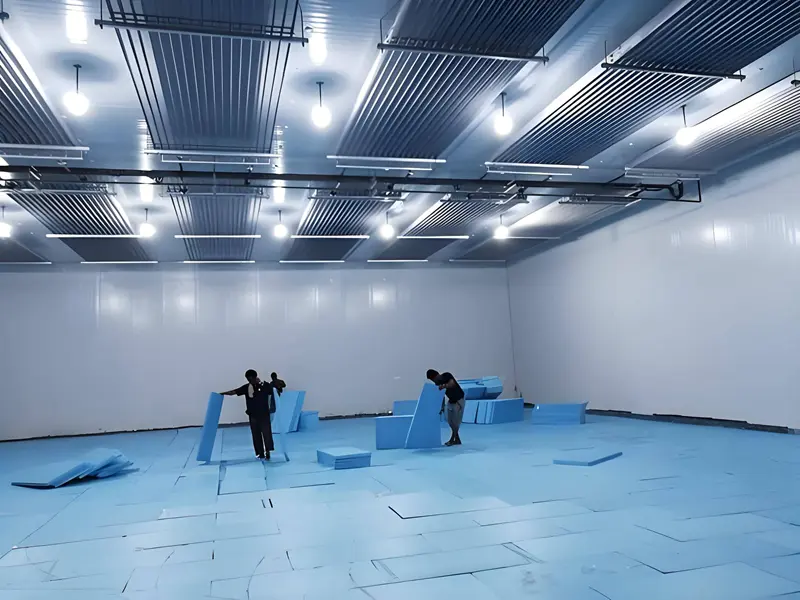
Installation of XPS extruded polystyrene boards on the floor of a salmon cold storage facility
A complete frozen seafood cold storage installation may include the following components.
| System | Typical Scope |
|---|---|
| Insulated envelope | PU/PIR wall and ceiling panels, sealing materials |
| Floor system | Insulation and vapor barrier where required |
| Refrigeration | Compressors, condensers, evaporators, piping and valves |
| Cold room doors | Insulated freezer doors |
| Electrical controls | PLC panel, sensors and protection devices |
| Temperature monitoring | Temperature display, recording and alarms |
| Installation | Equipment installation, piping and electrical connections |
| Commissioning | System testing, adjustment and operational verification |
The final quotation should clearly identify which items are included and which are excluded.
For example, a quotation covering refrigeration equipment and insulated panels installed inside an existing warehouse is different from a complete project that also includes foundations, steel structures, loading docks and other civil works.
How to Reduce the Cost of a Salmon Cold Storage Project
Reducing the initial investment should not compromise temperature stability, product quality or system reliability.
Optimize the Storage Layout
Choose suitable room dimensions, pallet arrangements and stacking heights to achieve the required capacity without building an unnecessarily large cold room.
Match Refrigeration Capacity to the Actual Load
Proper equipment sizing helps balance the initial investment, cooling performance and long-term energy consumption.
Select Appropriate Insulation
Insulation thickness should be determined by the design temperature and local conditions rather than selecting panels solely by purchase price.
Reduce Heat Infiltration
Suitable freezer doors and efficient loading procedures can reduce warm-air entry and unnecessary refrigeration demand.
Consider Operating Costs
Electricity consumption, maintenance requirements and equipment reliability should all be considered when comparing refrigeration systems.
The lowest initial price does not necessarily provide the lowest total cost over the operating life of the facility.
What Information Is Needed for a 300 m² Salmon Cold Storage Quotation?
To prepare a preliminary engineering design and quotation, provide the following information:
| Project Information | Details Required |
|---|---|
| Floor area | 300 m² |
| Product | Salmon / frozen seafood / other |
| Storage temperature | -18°C to -25°C or project-specific |
| Storage capacity | Tons or pallets |
| Clear height | Meters |
| Product entering temperature | °C |
| Daily receiving volume | Tons per day |
| Daily dispatch volume | Tons per day |
| Storage period | Days, weeks or months |
| Product condition | Fresh / chilled / already frozen |
| Freezing requirement | Storage only / rapid freezing |
| Storage method | Floor stacking / pallet racking |
| Project location | City and country |
| Building condition | Existing building / new construction |
| Project scope | Cold room / refrigeration / installation / complete EPC |
These details allow the engineering team to determine the required room volume, refrigeration load, equipment configuration, insulation specification and estimated project investment.
For more information about seafood freezing, refrigeration systems and frozen seafood storage, see our Seafood Cold Storage Solutions.
Request a 300 m² Salmon Cold Storage Quote Today
Contact us for a customized 300 m² salmon cold storage design and quotation based on your storage temperature, required capacity, product condition, refrigeration requirements and project location.
We provide cold storage design, refrigeration equipment, insulated panels, freezer doors, electrical controls, installation, commissioning and complete turnkey cold-chain solutions for commercial seafood storage projects.