 Haocool

Disclaimer: This technical guide is for reference only. All cold storage designs must be calculated and adjusted according to local meteorological data, production workflow and site conditions. We provide custom EPC cold storage solutions instead of one-size-fits-all standard designs.
Southeast Asia features a typical tropical climate with high ambient temperature and high relative humidity. Some coastal areas also suffer from salt spray corrosion. Cold storage facilities for food processing plants have different requirements from ordinary fruit and vegetable cold rooms. The overall layout must align with food production workflows, on-site heat gain, personnel access and frequent cargo turnover. Designs used for temperate regions in China cannot be copied directly for Southeast Asian projects.
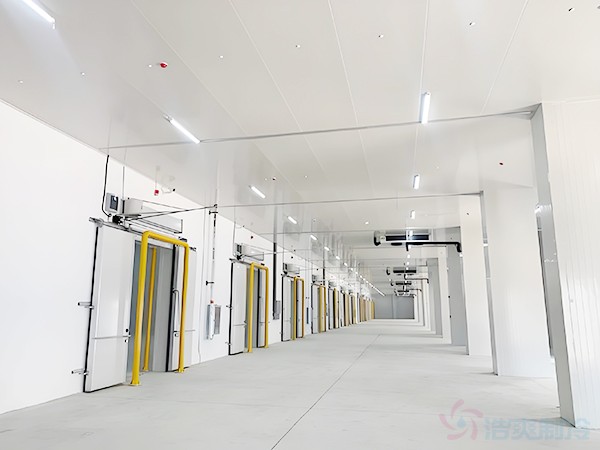
Food processing plant cold‑storage design adapted for Southeast Asia tropical high‑humidity climate
1. Confirm Local Ambient Design Conditions
The first step for refrigeration load calculation is to collect local meteorological parameters, including summer design dry-bulb temperature, wet-bulb temperature and relative humidity.
Meteorological indicators vary greatly across key cities such as Bangkok, Ho Chi Minh City, Jakarta and Kuala Lumpur. Many engineering teams adopt conventional design parameters from home markets, which will lead to excessive condensing pressure in hot seasons, frequent high-pressure alarms on refrigeration units, slow temperature pull-down and excessive power consumption.
For coastal sites, extra salt spray protection is mandatory. Condenser casings, fan supports, electrical control cabinets and metal hardware inside the cold room need anti-corrosion treatment. Anti-corrosion coatings and stainless steel components are preferred.
2. Multi-Temperature Zones Aligned with Food Processing Workflow
Food processing plants rarely rely on a single storage temperature. A combined multi-temperature zone setup is commonly adopted:
- Raw material buffer cold room: 0℃ ~ 4℃, for receiving fresh raw materials and stabilizing incoming temperature fluctuation
- Pre-cooling area in processing workshop: rapid temperature reduction to control the core temperature of materials
Finished product chill storage: 0℃ ~ 4℃ - Finished product freezer: -18℃ ~ -25℃; -35℃ blast freezers are required for some seafood processing lines
- Packaging airlock buffer corridor: minimizes direct mixing of hot and humid outdoor air with cold indoor air to reduce condensation and cold loss
Temperature zones should follow the production sequence: raw material receiving → pre-cooling → processing → blast freezing → finished goods storage. This layout cuts back repeated cargo handling and reduces door opening frequency.
3. Building Envelope, Vapour Barrier & Moisture Prevention (Critical for Southeast Asia)
In hot and humid tropical regions, reversed or damaged vapour barriers are the top cause of water absorption in insulation foam and premature insulation failure.
- Install vapour barriers on the warm side (outer side) to block penetration of moist hot air into insulation layers
- Panel joints, suspension points and pipe penetration points are typical thermal bridge areas. Sealing and supplementary insulation reinforcement are required here
- Cold room door recommendation: high-speed rolling doors, impact-resistant sliding doors paired with air curtains. Ordinary sliding doors allow massive hot humid air inflow when kept open, resulting in heavy frost build-up inside
- Floor insulation plus waterproof and moisture-proof layers. For sites with high groundwater levels, elevated structures and drainage systems are necessary to prevent floor bulging and moisture ingress
4. Refrigeration System Selection & Heat Dissipation Strategy
Heat rejection becomes a major challenge for air-cooled condensers under tropical conditions.
- For workshops with poor natural ventilation, air-cooled units alone are not ideal. Water-cooled or evaporative condensers are recommended where feasible, to lower condensing temperature and improve unit COP
- Compressor capacity margin: compared with projects in temperate zones, reserve an extra 15%–25% refrigeration load buffer to cope with extreme hot weather
- Defrost strategy: frost accumulates much faster in high-humidity areas than inland sites. Electric defrost consumes high power. A combined hot gas defrost or water defrost setup is preferred, with optimized defrost cycles to avoid unnecessary energy waste from over-frequent defrosting
- Refrigerant, piping and valve components shall be selected for high ambient conditions. Control systems come with high-pressure protection, overload protection and remote monitoring functions
5. Core Energy-Saving Design Principles
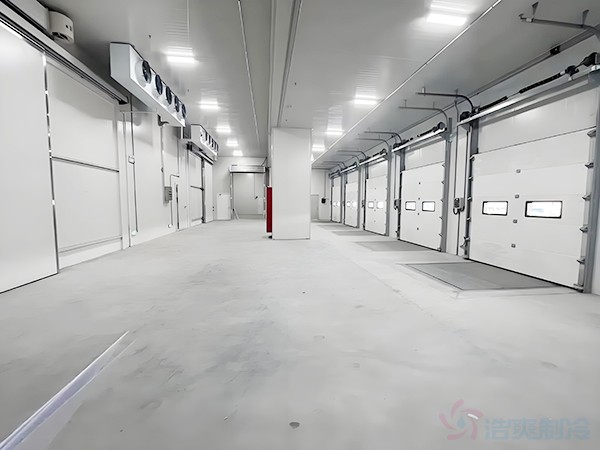
southeast asia food factory cold storage tropical design
Many clients assume energy saving only depends on compressors. Energy efficiency for tropical cold storage is a systematic solution:
- Limit cold room door opening duration via buffer airlocks, air curtains, high-speed doors and interlock access control
- Match system capacity properly to avoid oversized units running under partial load; variable-frequency screw compressors work well for food factories with fluctuating cooling loads
- Optimize air distribution: arrange evaporators to avoid direct airflow onto goods, ensuring uniform room temperature and eliminating local hot spots
- Waste heat recovery: recover condensation heat from compressors to supply hot water for workshop cleaning and sanitation for eligible projects
- Intelligent control system: automatically adjust fan speed, defrost logic and unit startup/shutdown based on room temperature, return gas temperature and outdoor temperature & humidity. Remote monitoring enables early fault alerts to prevent cargo loss caused by unexpected shutdown
6. Construction, Commissioning & Operation Guidelines
- Schedule construction outside the local rainy season and keep proper moisture protection on site. Foaming and adhesive bonding work are sensitive to high humidity
- Final commissioning shall not only test no-load cooling performance. Continuous running tests under simulated loading, cargo movement and frequent door opening are required
- Onsite operation training for local maintenance teams. Tropical cold room routine inspection focuses on condenser cleaning, vapour barrier integrity, door seal condition and unobstructed drainage pipelines
- Spare part preparation: spare key valves, seals and fan motors are suggested, as spare part supply chains are limited in many Southeast Asian countries
7. Conclusion
The core objective of cold storage design for Southeast Asian food plants is not merely hitting target low temperatures. The design must maintain stable temperature control under persistent high heat, high humidity and frequent door openings, restrain corrosion and frost, and keep long-term operating electricity costs manageable.
Every project needs independent load calculation, process routing planning and customized anti-moisture & anti-corrosion solutions. Generic standard designs often lead to recurring breakdowns and steep running costs later on.
If you have an ongoing food processing cold storage EPC project in Southeast Asia, send us your site layout drawings, product categories, production capacity and target temperature requirements for a custom proposal and quotation.