 Haocool

How much does it cost to build a -35°C blast freezer?
When planning a -35°C blast freezing cold storage facility, many businesses are concerned about the total construction investment. Compared with conventional refrigerated storage, a -35°C blast freezer has higher requirements for refrigeration equipment, insulation systems, defrosting, electrical controls and construction quality.
Therefore, its cost cannot be accurately estimated using a fixed price per square meter. The actual investment should be calculated according to the product type, freezing capacity, required freezing time, room dimensions and site conditions.
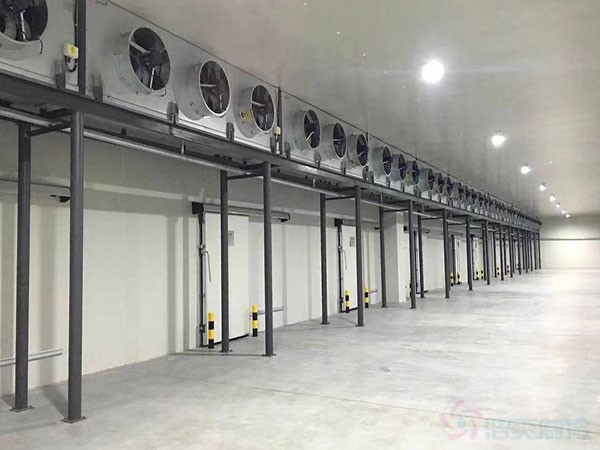
What Are the Main Cost Components of a -35°C Blast Freezer?
The construction cost of a -35°C blast freezer generally consists of several major components:
- Insulated cold room structure
- Refrigeration system
- Electrical control system
- Defrost system
- Installation materials
- Labor and installation costs
The insulated structure mainly includes PIR or PUR insulated panels, cold storage doors, floor insulation and frost-protection measures.
The refrigeration system generally includes compressors, condensers, evaporators, refrigeration valves, piping and refrigerant.
Since -35°C is a low-temperature blast freezing application, several construction details are particularly important, including:
- Cold room airtightness
- Frost prevention around doorways
- Insulation of pipes passing through walls
- Freeze protection for drainage systems
- Proper sealing of insulated panel joints
If these details are not handled properly, a project with a lower initial construction cost may experience higher energy consumption, slower cooling performance and excessive frost formation during operation.
How Is the Cost of a Blast Freezer Calculated?
The cost of a blast freezer should generally be calculated based on the required refrigeration capacity rather than floor area alone.
The following information must first be established:
- Product type
- Product entering temperature
- Target product discharge temperature
- Required freezing capacity per hour or per day
- Required freezing time
Different products have different moisture contents, packaging methods and incoming temperatures. These factors can significantly affect the amount of refrigeration required.
For example, freezing unpackaged seafood, packaged meat and processed food products involves different heat loads and airflow requirements.
The refrigeration system should therefore be designed according to the actual product load and required freezing performance.
Key Factors Affecting the Construction Cost of a -35°C Blast Freezer
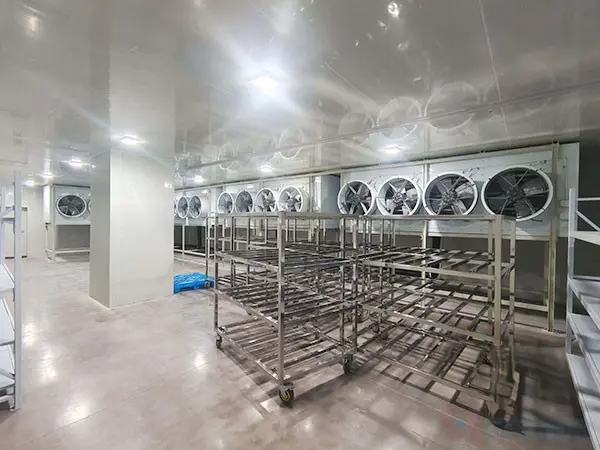
1. Freezing Method
The freezing method is one of the important factors affecting the total investment.
Common options include:
- Conventional air-blast freezing
- Tunnel freezing
- Spiral freezing
These solutions differ in equipment configuration, airflow organization, automation level and production capacity.
A conventional small blast freezer is generally suitable for food processing operations with relatively low batch volumes.
Tunnel freezers and spiral freezers are more suitable for continuous production processes with higher throughput requirements.
The appropriate system should be selected according to product characteristics, production capacity, available space and investment budget.
2. Production Capacity and Freezing Time
Production capacity and required freezing time have a direct impact on the refrigeration system configuration.
Even when two blast freezers have the same floor area, the facility requiring a shorter freezing time will generally need:
- Greater refrigeration capacity
- Higher evaporator heat-transfer performance
- More effective airflow distribution
- More reliable defrost design
As a result, the overall blast freezer construction cost will increase.
The design should distinguish between the amount of product that can be stored and the amount of product that can be frozen within a specified period.
These are different operating indicators and should not be treated as the same capacity.
3. Site Conditions
Site conditions also influence construction complexity and total investment.
Important considerations include:
- Whether sufficient electrical capacity is available
- Whether the condenser has suitable heat-rejection space
- Whether existing floors require additional insulation and frost protection
- Whether drainage systems need freeze-protection measures
- Whether the building provides sufficient space for equipment installation and maintenance
Projects involving the renovation of existing factories may also require additional assessments of:
- Structural conditions
- Fire protection
- Electrical systems
- Equipment lifting and installation access
If major modifications are required, these additional construction works will increase the overall project cost.
How to Get an Accurate Quotation for a -35°C Blast Freezer
To obtain a quotation that is closer to the actual project cost, it is recommended to establish the following basic information first:
| Project Information | Details Required |
|---|---|
| Product type | Meat / seafood / poultry / processed food |
| Required freezing capacity | Tons per hour or tons per day |
| Product entering temperature | °C |
| Target product core temperature | °C |
| Required freezing time | Minutes or hours |
| Storage temperature | Around -35°C |
| Cold room dimensions | Length × width × height |
| Freezing method | Air-blast / tunnel / spiral |
| Available power supply | Voltage and electrical capacity |
| Building condition | Existing factory / new construction |
| Project location | City and country |
| Project scope | Blast freezer / refrigeration / complete installation |
For a -35°C blast freezer, the cost should not be estimated simply by applying a price per square meter.
A more accurate quotation requires a comprehensive evaluation of the refrigeration load, equipment selection, insulation structure, defrost system and site installation conditions.
The more clearly these project requirements are defined, the more accurate the quotation will be, making it easier to control future operating costs and ensure reliable system performance.