 Haocool

If you grow or trade guavas in Pakistan, you already know the challenge. Guavas are delicate. They bruise easily, lose moisture fast, and start to spoil within days at room temperature. Without proper cold storage, you are forced to sell immediately after harvest, often at the lowest prices of the season.
A well‑designed cold room changes that. It keeps your guavas fresh, extends your selling window, and protects your profit margin.
But the first question is always the same: how much does a 150‑ton guava cold room cost in Lahore?
Here is a practical breakdown — from space requirements and storage conditions to total investment.
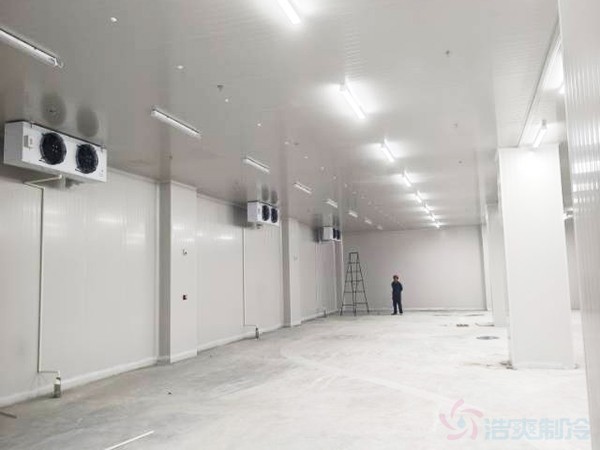
What Temperature and Humidity Does a Guava Cold Room Need?
Guavas are tropical fruits, but they store best at cooler temperatures — just not too cold. Below 5°C, they suffer from chilling injury: the skin becomes pitted, the flesh turns brown, and the fruit loses flavour. Above 10°C, they ripen too quickly and spoil.
The sweet spot for guava storage is 8–10°C (46–50°F) with 85–95% relative humidity. At these conditions, guavas can stay fresh for 2 to 5 weeks.
| Parameter | Recommended Value |
|---|---|
| Temperature | 8–10°C (46–50°F) |
| Relative humidity | 85–95% |
| Maximum safe storage | 2–5 weeks |
A standard fresh‑keeping cold room — not a freezer — is all you need for guavas. No controlled atmosphere or blast freezing is required for most commercial storage.
How Much Space for 150 Tons of Guavas?
Guavas are typically packed in 5–10 kg cartons or crates, stacked on pallets with airflow gaps between layers. The storage density for fresh guavas is roughly 5 to 6 cubic metres per metric ton.
For 150 tons:
- 150 tons × 5 m³/ton = 750 m³ (on the lower end)
- 150 tons × 6 m³/ton = 900 m³ (on the higher end)
With a standard clear height of 4 metres, the floor area you need is roughly:
- 750 m³ ÷ 4 m = 188 m² (lower end)
- 900 m³ ÷ 4 m = 225 m² (higher end)
| Parameter | Value |
|---|---|
| Storage capacity | 150 tons |
| Storage density | 5–6 m³ per ton |
| Usable volume | 750 – 900 m³ |
| Ceiling height | 4 metres |
| Floor area | 190 – 225 m² |
For a mid‑sized guava grower, cooperative, or distributor in Lahore, this is a practical size. It holds about one full harvest season’s worth of premium guavas, or enough to supply local markets and export orders consistently.
Estimated Total Cost in Lahore
Based on similar projects in Pakistan, a 150‑ton guava cold room at 8–10°C typically costs between $44,000 and $51,500 USD (approximately 12.2 – 14.3 million Pakistani Rupees, using mid‑2026 exchange rates of 1 USD ≈ 277 PKR).
Here is a rough breakdown of where the money goes:
| Component | Estimated Cost (USD) | Estimated Cost (PKR) |
|---|---|---|
| Insulation panels (100mm polyurethane, double‑face steel) | 12,000 – 15,000 | 3.3 – 4.2 million |
| Refrigeration equipment (medium‑temperature condensing unit) | 14,000 – 18,000 | 3.9 – 5.0 million |
| Evaporators and piping | 4,000 – 6,000 | 1.1 – 1.7 million |
| Electrical and control systems | 3,000 – 4,000 | 830,000 – 1.1 million |
| Doors and sealing | 2,000 – 3,000 | 550,000 – 830,000 |
| Installation and labour (Lahore) | 5,000 – 7,000 | 1.4 – 1.9 million |
| Engineering, design, and permits | 2,000 – 3,000 | 550,000 – 830,000 |
| Contingency and miscellaneous | 2,000 – 3,000 | 550,000 – 830,000 |
| Total (approx.) | 44,000 – 51,500 | 12.2 – 14.3 million |
These figures assume standard specifications: 100mm polyurethane panels, a medium‑temperature condensing unit from a reputable brand like Copeland or Bitzer, and basic temperature controls with humidity management.
What Equipment Goes into a Guava Cold Room?
A reliable guava cold room requires several key components:
Insulation panels: For an 8–10°C cold room in Lahore’s climate, 100mm polyurethane double‑face steel panels are sufficient. Thicker panels (120mm) cost more upfront but reduce electricity consumption over the life of the facility.
Refrigeration equipment: A medium‑temperature condensing unit from a reputable brand like Copeland (Emerson), Bitzer, or GEA. Scroll compressors are common for this application because they are quiet, efficient, and reliable.
Evaporators: Ceiling‑mounted air coolers with electric defrost. The number and size depend on the room layout. For guavas, maintaining high humidity (85–95%) is critical to prevent shrivelling.
Humidity control: A humidifier or a floor‑watering system to keep humidity at the right level. Guavas lose moisture quickly in dry air.
Controls: A basic digital thermostat with humidity monitoring is affordable. Many operators choose PLC‑based systems with remote monitoring for better visibility.
What Factors Affect the Final Price?
Several variables can push the cost up or down by 15 to 20 percent.
Temperature range: A room designed for 8–10°C is less expensive than one for 0–5°C because it requires thinner insulation and less powerful refrigeration.
Equipment brand: Premium brands like Bitzer or Copeland cost 20–30% more than good Chinese brands. They are more reliable and energy‑efficient, which matters for a facility that runs 24/7.
Number of compartments: A single large room is cheaper than multiple smaller rooms. But if you need separate zones for different guava grades or other products, expect to pay more for additional insulation walls and independent controls.
Site conditions: Building in Lahore’s industrial zones means good access to power and transport. If the site requires significant ground preparation, that adds to the budget.
Why Lahore Makes Sense for a Guava Cold Room
Lahore is a major agricultural and commercial hub in Pakistan. The city is well‑connected to guava‑growing regions and has access to domestic and export markets.
The cold storage market in Pakistan is growing. The government recently launched a PKR 7.1 billion Social Impact Financing Facility to support the development of agricultural warehouses, silos, and cold‑storage infrastructure across the country. Under this initiative, private capital will be mobilised for cold storage projects, making investment more accessible.
For guava growers and distributors, locating a cold room in Lahore offers several advantages:
- Proximity to supply — guavas arrive quickly from nearby growing regions
- Access to markets — Lahore is a major consumer market and export hub
- Growing infrastructure — Pakistan’s cold chain sector is expanding, with new financing and government support
Is a 150‑Ton Guava Cold Room Worth It?
The short answer is yes — for any serious guava grower, cooperative, or distributor.
Without proper cold storage, guavas last only a few days at room temperature. With a well‑built cold room at 8–10°C, you can extend shelf life to 2 to 5 weeks. That gives you time to:
- Store during the harvest glut and sell when prices recover
- Supply supermarkets and exporters with consistent quality
- Reduce spoilage from over 20% to under 5%
A 150‑ton cold room is a practical investment for a mid‑sized operation. Many growers recover their investment within 2 to 3 seasons through reduced waste and better market timing.