 Haocool

If you are in the seafood business in Bangladesh, you already know the challenge. Freshness is everything. Fish and shrimp start to lose quality the moment they are caught. Without proper freezing, you are forced to sell immediately — often at whatever price the market offers.
A dedicated fish and shrimp freezer cold room changes that. It lets you freeze product quickly, hold it at stable temperatures, and sell when prices are right. But the first question is always the same: how much does a 100-ton turnkey seafood freezer cold room cost in Chittagong?
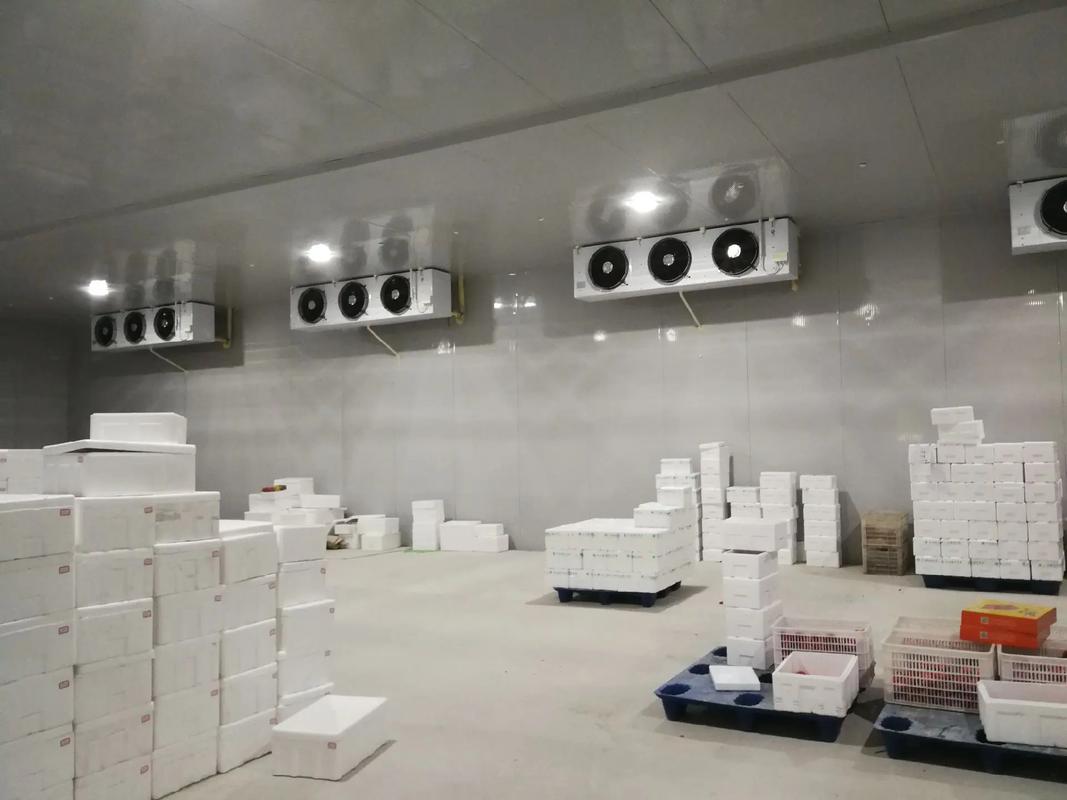
How Seafood Is Stored — A Quick Overview
Before we get into costs, it helps to understand how different types of seafood are typically stored.
- Fresh fish, shrimp, and shellfish can be kept in sealed bags or plastic containers with ice in a regular refrigerator. Shrimp and shellfish stay fresh for about 3 to 4 days, while fish can last 5 to 7 days.
- Live shellfish (like clams, mussels, or crabs) can survive for 7 to 10 days in a refrigerator set at 1–3°C, as long as they are kept moist.
- For long-term storage, shellfish, crabs, and fish are best frozen at -18°C. Pack them in airtight containers with water, and they can last 4 to 6 months. When you need to use them, thaw them overnight in the refrigerator or rinse under running water.
For commercial operators, the long-term frozen storage method is the one that matters most. That is where a proper cold room comes in.
How Much Space for 100 Tons of Fish and Shrimp?
For frozen seafood stored at -18°C, the industry standard is approximately 5 cubic metres per metric ton. This accounts for palletised cartons, airflow gaps between stacks, and space for forklift manoeuvring.
For 100 tons:
- 100 tons × 5 m³/ton = 500 m³ of usable storage volume.
Assuming a standard clear height of 4 metres, the floor area you need is roughly:
- 500 m³ ÷ 4 m = 125 m² (plus space for aisles and handling).
| Parameter | Value |
|---|---|
| Storage capacity | 100 tons |
| Storage density | ~5 m³ per ton |
| Usable volume | ~500 m³ |
| Ceiling height | 4 metres |
| Floor area | ~125 m² |
For a mid-sized seafood processor, exporter, or wholesaler in Chittagong, this is a practical size. It holds enough product to supply regular export shipments or serve the domestic market consistently.
What Temperature Does a Seafood Freezer Cold Room Need?
Most seafood products — fish fillets, whole fish, shrimp, squid, and octopus — freeze and store well at -18°C. This temperature range stops bacterial growth, preserves texture, and prevents freezer burn.
At -18°C, seafood can be stored for 4 to 6 months without significant quality loss. For export-grade products, some operators prefer -20°C for an extra margin of safety, which would require thicker insulation and more powerful refrigeration.
What Equipment Goes into a 100-Ton Seafood Freezer Cold Room?
A reliable seafood freezer cold room requires several key components:
Insulation panels: For a -18°C freezer in Chittagong’s hot and humid climate, you need at least 150mm polyurethane double-face steel panels. Thicker panels cost more upfront but significantly reduce electricity consumption over the life of the facility. Using thinner panels will lead to higher energy bills and less stable temperatures.
Refrigeration equipment: For a facility of this size, you typically need a low-temperature condensing unit from a reputable brand like Bitzer, Copeland (Emerson), or Panasonic. These brands are known for reliability and energy efficiency. While they cost more upfront, they have lower failure rates, quieter operation, and longer lifespans. Cheaper units may save money initially but often result in higher maintenance costs and more downtime.
Evaporators: High-efficiency ceiling-mounted air coolers with hot-gas defrost. Hot-gas defrost is faster and more energy-efficient than electric defrost for low-temperature applications.
Floor system: 100mm XPS insulation beneath a reinforced concrete slab to prevent frost heave. The floor must be able to support heavy forklift traffic.
Doors: Insulated sliding doors with good sealing to minimise cold air loss during loading and unloading.
Controls: A PLC-based system with remote monitoring and temperature logging. For export-grade seafood, temperature data logging is often required for traceability and quality certification.
Estimated Total Cost in Chittagong
Based on similar projects in Bangladesh, a 100-ton turnkey seafood freezer cold room at -18°C typically costs between $44,000 and $51,500 USD.
Here is a rough breakdown of where the money goes:
| Component | Estimated Cost (USD) | Estimated Cost (BDT) |
|---|---|---|
| Insulation panels (150mm polyurethane) | 12,000 – 15,000 | 1.48 – 1.85 million |
| Refrigeration equipment (Bitzer/Copeland low-temperature) | 15,000 – 18,000 | 1.85 – 2.22 million |
| Evaporators and piping | 4,000 – 5,000 | 494,000 – 617,000 |
| Electrical and control systems | 3,000 – 4,000 | 370,000 – 494,000 |
| Doors and sealing | 2,000 – 3,000 | 247,000 – 370,000 |
| Installation and labour (Chittagong) | 5,000 – 6,000 | 617,000 – 741,000 |
| Engineering, design, and permits | 2,000 – 3,000 | 247,000 – 370,000 |
| Contingency and miscellaneous | 1,000 – 2,000 | 123,000 – 247,000 |
| Total (approx.) | 44,000 – 51,500 | 5.4 – 6.4 million |
These figures assume standard specifications: 150mm polyurethane panels, a low-temperature condensing unit from a reputable brand, hot-gas defrost evaporators, and a PLC-based temperature controller.
For detailed seafood cold room solutions, visit our dedicated seafood cold storage page.
What Factors Affect the Final Price?
Several variables can push the cost up or down by 15 to 20 percent.
Storage capacity and size: The overall size of the cold room directly affects cost. Larger facilities require more insulation materials, refrigeration equipment, and accessories. For a 100-ton facility, the basic equipment set is still required, so the cost per ton is higher than for larger facilities.
Temperature requirements: Lower temperature settings require more powerful refrigeration systems and thicker insulation, increasing overall cost. A -18°C freezer costs significantly more than a 0–5°C chiller. The difference can be 20–30% of the total cost.
Insulation panel thickness: For a -18°C freezer, you need at least 150mm panels. Thicker panels cost more upfront but save energy in the long run. In Chittagong’s hot climate, skimping on insulation is a false economy — your compressors will run harder and your electricity bill will be higher.
Equipment brand: Premium brands like Bitzer or Copeland cost 20–30% more than good Chinese brands. They are more reliable and energy-efficient, which matters for a facility that runs 24/7. The long-term savings often justify the higher initial investment.
Number of compartments: A single large room is cheaper than multiple smaller rooms. But many operators need separate zones — a blast freezer for quick freezing, a holding freezer for finished product. Each additional compartment adds cost for insulation walls, doors, and independent refrigeration controls.
Site conditions: Building in Chittagong’s industrial zones means good access to power and transport. If the site requires significant ground preparation or is in a remote area with higher transport costs, that adds to the budget.
Why Chittagong Makes Sense for a Seafood Cold Room
Chittagong is Bangladesh’s premier port city and the hub of the country’s seafood export industry. The city is home to numerous seafood processing plants and export facilities, with direct connections to global markets. Bangladesh’s seafood exports are growing, and cold chain infrastructure is critical to maintaining quality for international buyers.
For seafood processors and exporters, locating your cold room in Chittagong offers several advantages:
- Proximity to the port — faster shipping and lower logistics costs
- Access to export routes — direct connections to major global markets
- Skilled workforce — Chittagong has a well-established seafood processing industry with experienced workers
- Growing infrastructure — cold chain facilities are expanding to meet export demand