 Haocool

If you are in the pharmaceutical, biotech, or medical research sector, you already know the stakes. Vaccines, insulin, blood products, clinical trial materials, and biological samples are not just temperature‑sensitive — they are irreplaceable. A single temperature excursion can destroy years of research or render a batch of life‑saving medicine useless.
In Dubai, where summer temperatures regularly exceed 45°C, maintaining the cold chain is a serious engineering challenge. The UAE Ministry of Health requires pharmaceutical storage facilities to meet Good Distribution Practice (GDP) standards, which mandate continuous temperature monitoring, validated systems, and rigorous documentation. This is not a “nice to have” — it is a regulatory requirement.
So, how much does it cost to build a GDP‑compliant Pharmaceutical cold storage warehouse in Dubai? And what do you actually get for your investment?
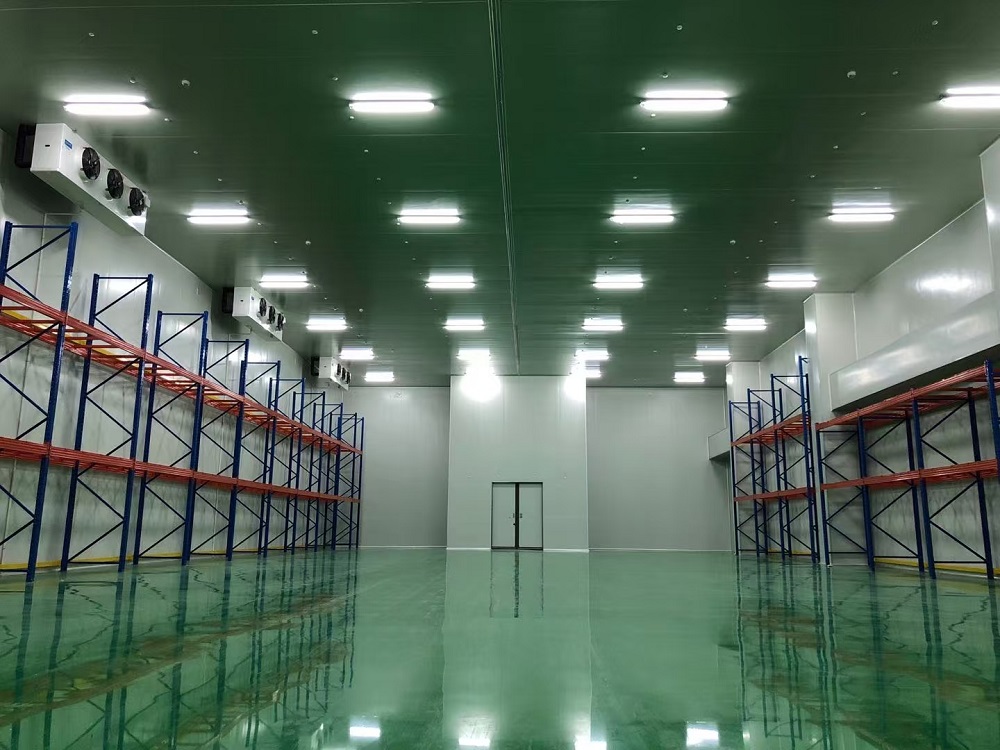
What Does “GDP‑Compliant” Mean for a Cold Storage Facility?
Good Distribution Practice (GDP) is a set of quality system requirements that ensure medicinal products are consistently stored, transported, and handled under suitable conditions. For a cold storage warehouse, this means:
- Temperature control: Storage areas must maintain specified temperature ranges (typically 2–8°C for cold rooms, -20°C for freezers, and 15–25°C for ambient) with a calibrated accuracy of ±0.5°C.
- Continuous monitoring: Temperature and humidity must be logged 24/7 with resolution of 0.1°C.
- Alarm systems: Immediate alerts for any deviation from set parameters.
- Validation: All systems — refrigeration, monitoring, alarms — must be validated and documented.
- Audit readiness: Full documentation for regulatory inspections by the UAE Ministry of Health.
Facilities like the Aramex healthcare hub in Dubai South (5,600 m²) and Kuehne+Nagel’s 42,000 m² fulfilment centre are built to these standards. These are large‑scale operations, but the same principles apply to smaller Pharmaceutical cold storage facilities.
Cost Estimates for Pharmaceutical cold storage in Dubai
Pharmaceutical cold storage is more expensive than standard commercial cold rooms. The additional costs come from:
- Redundant refrigeration systems (one main, one backup)
- 24/7 temperature and humidity monitoring with data loggers
- Validation and documentation for GDP/GMP compliance
- Backup power (generator or UPS)
- Higher‑grade insulation and finishes (easy‑to‑clean, non‑shedding surfaces)
Based on similar projects in the UAE and regional market data, here are estimated turnkey costs for GDP‑compliant Pharmaceutical cold storage in Dubai.
| Size | Estimated Cost (USD) | Estimated Cost (AED) |
|---|---|---|
| 100 m² | $35,000 – 50,000 | 128,000 – 184,000 |
| 200 m² | $60,000 – 70,000 | 220,000 – 257,000 |
| 500 m² | $115,000 – 138,000 | 422,000 – 506,000 |
These figures assume a temperature range of 2–8°C (pharmaceutical cold room), dual refrigeration systems, GDP‑compliant controls and monitoring, and turnkey installation including insulation panels, refrigeration equipment, controls, and commissioning.
For context, a standard 300m³ (approximately 100m²) pharmaceutical cold storage in Dubai typically costs $42,000 – $56,000 USD. Adding GDP compliance features — redundant systems, enhanced monitoring, validation documentation — adds roughly 20–30% to the base cost.
For detailed Pharmaceutical cold storage designs & solutions, visit our dedicated Pharmaceutical cold storage page.
What Equipment Goes into a GDP‑Compliant Pharmaceutical cold storage?
A reliable Pharmaceutical cold storage requires several key components, all of which must meet GDP standards.
Insulation panels: For a 2–8°C cold room in Dubai’s extreme heat, 100mm to 120mm polyurethane double‑face steel panels are standard. The panels must have a smooth, non‑shedding surface that is easy to clean and sanitise.
Refrigeration system: GDP compliance requires dual refrigeration systems — one primary and one backup. If the primary system fails, the backup must automatically take over to maintain temperature. Premium brands like Bitzer, Copeland (Emerson), or GEA are preferred for their reliability and energy efficiency.
Temperature monitoring: Continuous monitoring with calibrated sensors (accuracy ±0.5°C) and data logging. The system must record temperature at least every 10 minutes and retain records for inspection.
Alarm system: Immediate alerts — by SMS, email, or phone — for any temperature deviation, power failure, or equipment fault.
Backup power: A generator or UPS system to maintain operation during power outages. In Dubai, the grid is generally reliable, but backup power is a GDP requirement for pharmaceutical storage.
Floor system: Seamless, easy‑to‑clean flooring with anti‑static properties. The floor must be able to support heavy pallet loads and withstand regular cleaning with disinfectants.
Doors: Insulated doors with good sealing to minimise cold air loss. For GDP‑compliant facilities, doors should have access control to restrict entry to authorised personnel.
Validation documentation: Full documentation of system design, installation, and performance testing. This includes temperature mapping to demonstrate uniform temperature distribution throughout the storage area.
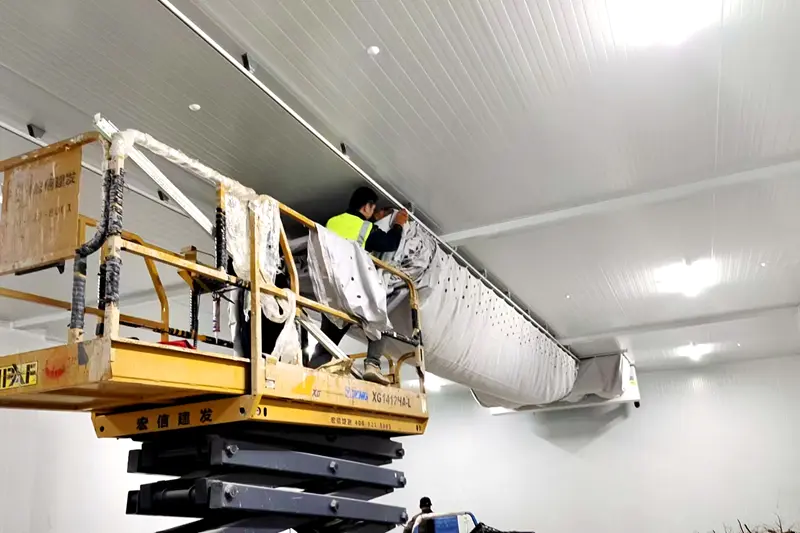
What Factors Affect the Final Price?
Several variables can push the cost up or down by 15 to 20 percent.
GDP vs. GMP requirements: Good Distribution Practice (GDP) focuses on storage and distribution, while Good Manufacturing Practice (GMP) applies to production. GDP‑compliant cold storage is less expensive than GMP‑grade facilities, but both require rigorous temperature control and documentation.
Temperature range: A 2–8°C cold room costs less than a -20°C freezer or an ultra‑low temperature (-80°C) unit. Lower temperatures require thicker insulation, more powerful refrigeration, and more robust monitoring.
Number of compartments: A single large room is cheaper than multiple smaller rooms. But many biomedical facilities need separate zones — a 2–8°C cold room, a -20°C freezer, and a 15–25°C ambient storage area. Each additional zone adds cost for insulation walls, doors, and independent refrigeration controls.
Equipment brand: Premium brands cost 20–30% more than good Chinese brands. They are more reliable and energy‑efficient, which matters for a facility that runs 24/7. The long‑term savings often justify the higher initial investment.
Automation level: A fully automated facility with conveyor systems, automated storage and retrieval, and integrated inventory management costs significantly more than a manually operated warehouse.
Location within Dubai: Building in Dubai South, Jebel Ali Free Zone, or Dubai Investment Park has different land costs, regulatory requirements, and access to utilities. Free zones like Dubai South offer advantages for pharmaceutical logistics — Aramex and Kuehne+Nagel have both established GDP‑compliant healthcare hubs there.
Is a GDP‑Compliant Pharmaceutical cold storage Worth It?
The short answer is yes — for any pharmaceutical company, biotech firm, medical research institution, or logistics provider handling temperature‑sensitive products.
Without GDP‑compliant storage, you risk:
- Product loss from temperature excursions
- Regulatory non‑compliance and potential fines
- Damage to your reputation and brand
- Inability to supply hospitals, clinics, and pharmacies
With a well‑built GDP‑compliant cold storage, you can:
- Store products safely for extended periods
- Meet regulatory requirements for the UAE and international markets
- Supply customers with confidence
- Reduce waste and improve inventory management
A GDP‑compliant Pharmaceutical cold storage is a practical investment for any business handling temperature‑sensitive healthcare products.