 Haocool

What temperature is best for egg cold storage, and how much does a 1,000 m³ egg cold storage facility cost?
For egg producers, wholesalers, distributors, and food logistics companies, proper cold storage is essential for maintaining egg quality and extending storage life. A well-designed egg cold storage system needs more than a refrigeration unit. Temperature control, humidity management, insulation, ventilation, flooring, doors, electrical systems, and storage layout all need to work together.
In this guide, we explain the recommended egg cold storage temperature, how to estimate storage capacity, the main components of an egg cold room, and the factors that determine the cost of a 1,000 m³ egg cold storage facility.
If you are planning a new egg cold room or a complete refrigerated warehouse, we can provide a customized design and quotation based on your storage capacity, product flow, local climate, and operating requirements.
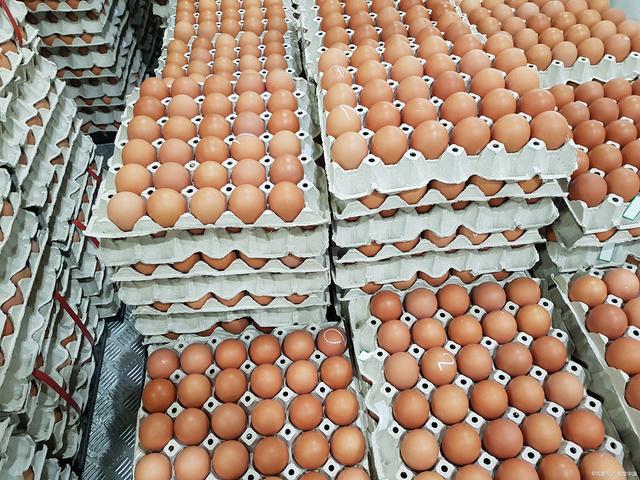
What Temperature Is Best for Egg Cold Storage?
For many refrigerated egg storage applications, a temperature of approximately 0°C to +4°C is commonly used.
However, the exact storage temperature should be determined according to the type of eggs, packaging, required storage duration, incoming product temperature, applicable food-safety requirements, and local regulations.
The key objective of an egg cold storage system is not simply to achieve a low temperature. It is to maintain a stable and uniform temperature throughout the storage area.
A properly designed egg cold room should provide:
- Stable temperature control
- Uniform air circulation
- Appropriate humidity management
- Reliable refrigeration capacity
- Continuous temperature monitoring
- Adequate insulation
- Controlled door opening and closing
Avoiding large temperature fluctuations is particularly important because repeated changes in temperature can contribute to condensation and affect storage conditions.
What Humidity Is Suitable for Egg Storage?
Humidity should be considered together with temperature when designing an egg cold room.
A relative humidity range of approximately 75%–85% may be suitable for many egg storage applications. However, the optimal humidity level depends on the product and storage conditions.
Excessively low humidity can increase moisture loss, while excessive humidity and condensation may create undesirable storage conditions.
For this reason, the refrigeration and ventilation systems should be designed according to both the temperature and humidity requirements of the eggs.
How Much Can a 1,000 m³ Egg Cold Storage Hold?
The volume of a cold room does not directly determine how many tons of eggs it can store.
The actual capacity depends on:
- Egg packaging dimensions
- Carton or tray configuration
- Pallet dimensions
- Stacking height
- Storage racks
- Required aisles
- Handling equipment
- Receiving and dispatch areas
- Required air circulation
- Product turnover
For example, a 1,000 m³ cold room designed for floor-stacked cartons will have a different usable capacity from a pallet-racking warehouse.
Therefore, when designing an egg cold storage warehouse, we recommend calculating capacity based on tons, pallets, daily throughput, storage duration, and product dimensions, rather than using room volume alone.
Need to estimate your egg cold storage capacity?
Provide us with your required storage tonnage, pallet size, daily receiving volume, and storage period. We can help determine the appropriate cold-room dimensions and storage layout.
1,000 m³ Egg Cold Storage Cost
oplus_2097152
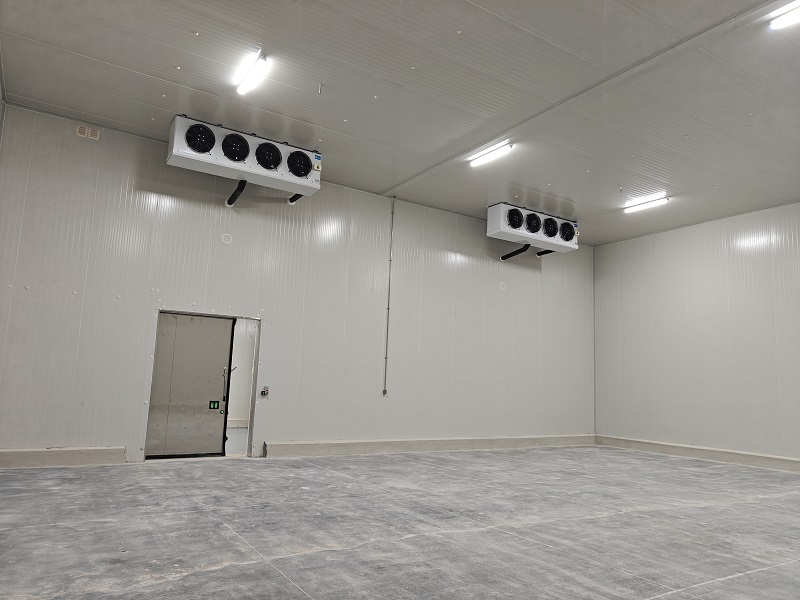
The cost of a 1,000 m³ egg cold storage depends on the project configuration, location, temperature requirements, refrigeration capacity, insulation specifications, and installation conditions.
As a preliminary reference, a basic 1,000 m³ egg cold storage project may be in the range of approximately:
US$55,000–$76,000
This is an indicative budget range rather than a fixed quotation. Actual project costs can vary significantly depending on the equipment configuration and scope of supply.
For example, the total investment can change if the project requires:
- Higher-performance insulation
- Larger refrigeration capacity
- Multiple temperature zones
- Pallet racking
- Automated storage systems
- Larger loading areas
- Additional cold storage doors
- Advanced temperature monitoring
- Backup power systems
- Special flooring
- International shipping and installation
- Complete turnkey EPC construction
For an accurate egg cold storage price, the project should be designed according to the actual storage and operating requirements.
What Determines the Cost of an Egg Cold Room?
1. Cold Storage Size
The larger the storage volume, the more insulation panels, refrigeration equipment, electrical systems, flooring, doors, and installation work are required.
However, increasing the room volume does not necessarily increase storage capacity proportionally. An efficient layout can significantly improve usable storage space.
2. Insulation Panels
PU and PIR sandwich panels are commonly used for refrigerated storage facilities.
The required panel thickness depends on:
- Target temperature
- Local outdoor temperature
- Energy-efficiency requirements
- Cold-room size
- Operating conditions
Better insulation can increase the initial investment but may reduce heat gain and long-term refrigeration energy consumption.
3. Refrigeration System
The refrigeration system is one of the major components of an egg cold room.
The required refrigeration capacity depends on:
- Cold-room volume
- Target temperature
- Outdoor ambient temperature
- Product entering temperature
- Daily product intake
- Pull-down requirements
- Door opening frequency
- Lighting and internal heat loads
- Insulation performance
A refrigeration system should be selected according to the calculated heat load rather than simply choosing equipment based on room volume.
4. Cold Storage Doors
Door design can have a significant effect on cold-room operation.
Depending on the warehouse layout, an egg cold storage facility may use insulated hinged doors, sliding doors, or high-cycle doors.
Facilities with frequent forklift movement may benefit from doors designed for high-frequency operation to reduce cold-air loss.
5. Cold Storage Flooring
The floor should be designed according to the expected loading and material-handling equipment.
A typical refrigerated floor may include:
- Reinforced concrete
- Thermal insulation
- Vapor barrier
- Waterproofing
- Wear-resistant surface
If forklifts or pallet trucks are used, the floor structure should be checked against the actual wheel loads and operating conditions.
6. Temperature Monitoring and Automation
Temperature monitoring is essential for commercial egg storage.
A modern monitoring system can provide:
- Real-time temperature measurement
- High- and low-temperature alarms
- Temperature data logging
- Remote monitoring
- Refrigeration control
- Historical data records
For larger facilities, centralized monitoring and automation can improve operational control and reduce the risk of undetected temperature deviations.
Egg Cold Storage Equipment List
A complete egg cold storage project may include the following equipment and systems:
| System | Main Components |
|---|---|
| Insulation | PU/PIR sandwich panels |
| Refrigeration | Compressors, condensers, evaporators |
| Refrigerant circuit | Pipes, valves and controls |
| Temperature control | Controllers and sensors |
| Monitoring | Data logging and alarm system |
| Doors | Insulated cold-room doors |
| Flooring | Insulation, vapor barrier and reinforced floor |
| Electrical | Power distribution and wiring |
| Lighting | Cold-room lighting |
| Ventilation | Air circulation and ventilation systems |
| Storage | Pallet racking or shelving, if required |
| Handling | Pallet trucks or forklifts, if required |
The final equipment list should be determined after the refrigeration load and warehouse layout have been calculated.
Egg Cold Storage Design: What Information Is Required?
Before preparing a detailed quotation, an engineering company normally needs several key project parameters.
Product Information
- Type of eggs
- Packaging method
- Carton/tray dimensions
- Pallet dimensions
- Product temperature when entering the cold room
Storage Requirements
- Required storage capacity in tons
- Number of pallets
- Required storage duration
- Daily receiving volume
- Daily dispatch volume
- Required temperature
- Required humidity
Building Information
- Available land or building area
- Cold-room dimensions
- Building height
- Location and local climate
- Existing building drawings
- Available electrical power
Operational Information
- Forklift or pallet truck usage
- Number of loading doors
- Receiving and dispatch requirements
- Working hours
- Future expansion plans
This information allows the refrigeration load, cold-room dimensions, electrical requirements, and equipment configuration to be calculated more accurately.
How Much Electricity Does an Egg Cold Storage Use?
Electricity consumption cannot be accurately estimated from room volume alone.
For example, two 1,000 m³ cold rooms can have very different energy consumption if they operate under different conditions.
Important factors include:
- Target temperature
- Outdoor ambient temperature
- Product entering temperature
- Daily product throughput
- Door opening frequency
- Insulation thickness
- Refrigeration system efficiency
- Condenser conditions
- Evaporator temperature
- Operating schedule
For this reason, the required refrigeration capacity and electrical power should be calculated during the engineering stage.
A properly designed refrigeration system can reduce unnecessary energy consumption while maintaining stable storage conditions.
How to Reduce Egg Cold Storage Construction and Operating Costs
The cheapest equipment is not necessarily the lowest-cost solution over the lifetime of the warehouse.
A better approach is to optimize the entire system.
Optimize the Storage Volume
Do not build more refrigerated volume than the actual storage requirement.
Improve the Warehouse Layout
Efficient product flow can reduce unnecessary handling space and improve operational efficiency.
Select Appropriate Insulation
Insulation directly affects heat gain and refrigeration demand.
Correctly Size the Refrigeration System
An oversized system can increase initial investment, while an undersized system may struggle to maintain the required temperature.
Reduce Door-Related Heat Loss
Proper door selection and warehouse layout can reduce unnecessary cold-air loss.
Consider Lifecycle Cost
Compare not only the equipment purchase price but also expected electricity consumption, maintenance requirements, equipment life, and replacement costs.
Turnkey Egg Cold Storage Solution
For larger projects, a complete turnkey egg cold storage solution can integrate the building, insulation, refrigeration, electrical system, flooring, doors, monitoring, and installation.
Depending on the project requirements, the scope can include:
Project planning → Cold storage design → Load calculation → Equipment selection → Manufacturing → Delivery → Installation → Testing → Commissioning
For larger egg distribution centers, additional systems such as pallet racking, material-handling equipment, warehouse management systems, and automation can also be incorporated into the project.
Why Work With a Cold Storage Engineering Company?
Choosing refrigeration equipment is only one part of building an egg cold storage facility.
The refrigeration system needs to be coordinated with:
- Cold-room dimensions
- Insulation
- Product loading
- Air circulation
- Electrical supply
- Doors
- Flooring
- Warehouse operations
- Temperature monitoring
An engineering-based approach helps ensure that the complete system works together rather than treating each component as an independent purchase.
Get a Quote for Your Egg Cold Storage Project
Planning a new egg cold storage, egg cold room, or refrigerated distribution warehouse?
We can help with:
- Cold storage design
- Refrigeration load calculation
- Equipment selection
- Cold-room layout
- Storage capacity planning
- Electrical load estimation
- Temperature monitoring
- Installation and commissioning
- Turnkey cold storage solutions
Send Us Your Project Requirements
To prepare a preliminary design and budget quotation, please provide:
1. Required storage capacity: _ tons / _ pallets
2. Cold storage volume or dimensions:* m³
3. Required temperature: __ °C
4. Daily receiving volume: _ tons/day
5. Product entering temperature: _ °C
6. Project location: _
7. New construction or existing building: _
8. Pallet dimensions: _
9. Required storage duration: _ days/months
Our engineering team can then evaluate the required cold storage capacity, refrigeration capacity, electrical power, equipment configuration, and estimated project cost.
Request an Egg Cold Storage Quote Today
Contact us for a customized egg cold storage design and quotation based on your actual storage capacity, operating conditions, and project location.