 Haocool

If you are in the poultry business in Pakistan — whether you raise broilers, layers, or process chicken for meat — you already know the challenge. Fresh poultry spoils fast without proper cold storage. At room temperature, chicken starts losing quality within hours. Without reliable freezing, you are forced to sell immediately after processing, often at whatever price the market offers.
A customer in Lahore recently asked us: how much does it cost to build a 500-ton poultry cold storage?
Here is a practical breakdown — from capacity and space requirements to equipment choices and total investment.
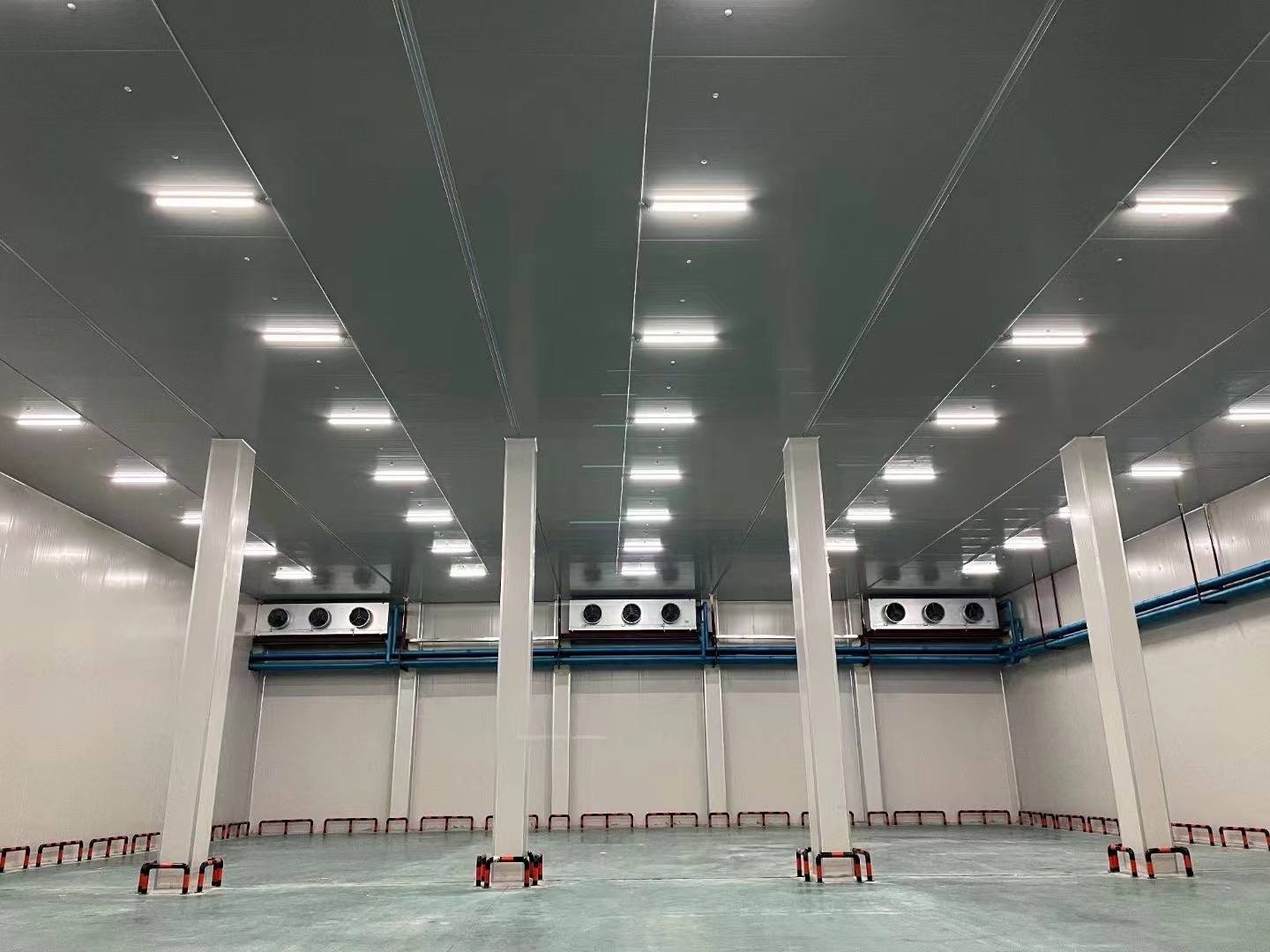
Why Poultry Needs Specialised Cold Storage
Poultry is more perishable than red meat. Chicken, duck, and goose meat have higher moisture content and are more susceptible to bacterial growth. The standard temperature for long-term poultry storage is -18°C, which stops bacterial growth and preserves quality for 6 to 12 months.
At -18°C, the meat stays safe, the texture remains firm, and the colour and flavour are preserved. Some processors prefer -20°C for an extra margin of safety, especially for export-grade products.
How Much Space for 500 Tons of Poultry?
Frozen poultry is typically packed in cartons or vacuum-sealed bags, stacked on pallets with airflow gaps between layers. The storage density for frozen poultry is roughly 4 to 5 cubic metres per metric ton.
For 500 tons:
- 500 tons × 4.5 m³/ton = 2,250 m³ of usable storage volume.
- With a standard clear height of 4 metres, the floor area you need is roughly:
- 2,250 m³ ÷ 4 m = 562.5 m² (about 560–600 m² including aisles and handling space).
| Parameter | Value |
|---|---|
| Storage capacity | 500 tons |
| Storage density | 4–5 m³ per ton |
| Usable volume | ~2,250 m³ |
| Ceiling height | 4 metres |
| Floor area | ~560 – 600 m² |
For a mid-sized poultry processor or distributor in Lahore, this is a practical size. It holds about a week’s worth of production for a medium-scale processing plant, or a significant inventory for wholesale distribution.
Estimated Total Cost in Lahore
Based on recent projects in Pakistan, a 500-ton poultry cold storage at -18°C typically costs between $110,000 and $140,000 USD (approximately 30.5 – 38.8 million Pakistani Rupees, using mid‑2026 exchange rates of 1 USD ≈ 277 PKR).
For context, a 100-ton cold room in Pakistan with 4-metre high walls (400 m³ volume) costs roughly $48,000–$62,000 USD. Scaling up to 500 tons increases the cost proportionally, but the per‑ton cost often decreases as the facility gets larger.
Here is a rough breakdown of where the money goes:
| Component | Estimated Cost (USD) | Estimated Cost (PKR) |
|---|---|---|
| Insulation panels (120–150mm polyurethane) | 35,000 – 45,000 | 9.7 – 12.5 million |
| Refrigeration equipment (Bitzer/Copeland low-temperature) | 40,000 – 50,000 | 11.1 – 13.9 million |
| Floor system and building structure | 12,000 – 18,000 | 3.3 – 5.0 million |
| Electrical and control systems | 8,000 – 12,000 | 2.2 – 3.3 million |
| Doors and dock equipment | 5,000 – 8,000 | 1.4 – 2.2 million |
| Installation and labour (Lahore) | 8,000 – 10,000 | 2.2 – 2.8 million |
| Engineering, design, and permits | 2,000 – 4,000 | 550,000 – 1.1 million |
| Total (approx.) | 110,000 – 140,000 | 30.5 – 38.8 million |
These figures assume standard specifications: 120–150mm polyurethane panels, a low-temperature condensing unit from a reputable brand like Bitzer or Copeland, hot-gas defrost evaporators, and a PLC-based temperature controller.
For a more detailed breakdown of poultry and meat cold storage solutions, visit our meat cold storage solutions page.
What Equipment Goes into a Poultry Cold Storage?
A reliable poultry cold storage requires several key components:
Insulation panels: For a -18°C freezer in Lahore’s hot climate (summer temperatures regularly exceed 40°C), you need at least 120mm to 150mm polyurethane double-face steel panels. Thicker panels cost more upfront but significantly reduce electricity consumption over the life of the facility.
Refrigeration equipment: For a facility of this size, you typically need a low-temperature screw or scroll compressor from a reputable brand like Bitzer, Copeland (Emerson), or GEA. For a 500-ton facility, a 30–40 HP condensing unit is typical. Some projects use dual-circuit systems for redundancy — if one circuit fails, the other keeps the room cold.
Evaporators: High-efficiency ceiling-mounted air coolers with hot-gas defrost. Hot-gas defrost is faster and more energy-efficient than electric defrost for low-temperature applications.
Floor system: 100mm XPS insulation beneath a reinforced concrete slab to prevent frost heave. The floor must be able to support heavy forklift traffic.
Doors: Insulated electric sliding doors with air curtains to minimise cold air loss during loading and unloading. For a poultry facility, you may also need a dock leveller for efficient truck loading.
Controls: A PLC-based system with remote monitoring, SMS alerts, and data logging. For export-grade poultry, temperature data logging is often required for traceability and quality certification.
What Factors Affect the Final Price?
Several variables can push the cost up or down by 15 to 20 percent.
Number of compartments: A single large room is cheaper than multiple smaller rooms. But many operators need separate zones — a blast freezer for quick freezing, a holding freezer for finished product, and maybe a chilled staging area. Each additional compartment adds cost for insulation walls, doors, and independent refrigeration controls.
Equipment brand: Premium brands like Bitzer or Copeland cost 20–30% more than good Chinese brands. They are more reliable and energy-efficient, which matters for a facility that runs 24/7.
Insulation thickness: Thicker panels cost more upfront but reduce electricity consumption. In Lahore’s hot climate, skimping on insulation is a false economy — your compressors will run harder and your electricity bill will be higher.
Site conditions: Building in Lahore’s industrial zones means good access to power and transport, but land costs are higher than in more remote areas. If the site requires significant ground preparation, that adds to the budget.
The Poultry Industry in Pakistan — Why Cold Storage Matters
Pakistan’s poultry industry is one of the largest in the region, producing over 1.3 million metric tons of chicken meat annually. The industry has grown significantly, with organised poultry production accounting for about 70% of total meat output.
However, the lack of modern cold chain infrastructure remains a challenge. Without proper cold storage, a significant portion of poultry products is lost to spoilage. The government is working to address this — the Pakistan Cold Chain Development Project has been established to promote the development of cold chain infrastructure across the country.
For a poultry processor in Lahore, a 500-ton cold storage is a strategic asset. It gives you control over your supply chain, reduces spoilage, and allows you to buy and sell at the right time.
Is a 500‑Ton Poultry Cold Storage Worth It?
The short answer is yes — for any serious poultry processor, distributor, or exporter.
Without proper cold storage, you are forced to sell immediately after processing, often at low prices. With a cold room, you can:
- Freeze product immediately after processing, locking in quality
- Store during peak production periods and sell when prices are higher
- Maintain quality for export markets that require consistent product standards
- Reduce spoilage from over 10% to under 3%
A 500‑ton cold storage is a practical investment for a mid‑sized poultry operation. Many processors recover their investment within 2 to 3 years through reduced waste and better market timing.