 Haocool

If you are planning a cold storage project, the cost of a 7,500 cubic metre facility is likely one of your first questions. And it is a good question — because there is no single answer. The final investment depends on what you are storing, how cold you need it, what materials you choose, and where you are building.
Here is a practical breakdown of what goes into the cost of a 7,500m³ cold storage facility, and what you can expect to pay.
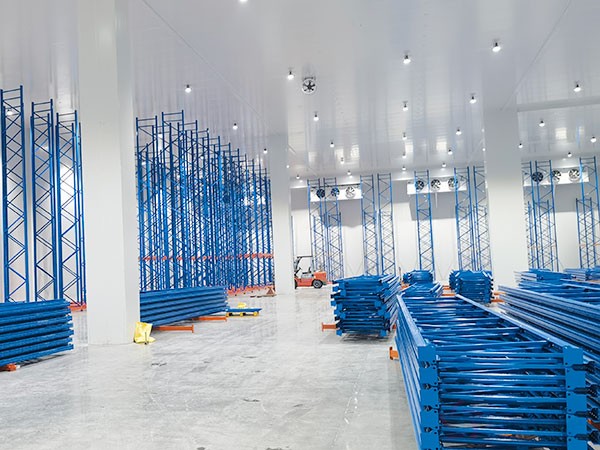
First, What Does 7,500m³ Look Like?
A 7,500 cubic metre cold storage facility is a substantial piece of infrastructure. Assuming a standard clear height of 6 metres, the floor area would be approximately 1,250 square metres. If the ceiling is lower (e.g., 4 metres), the footprint would be larger — around 1,875 square metres.
For context, this is roughly the size of a medium-sized logistics warehouse, capable of storing:
- Fresh produce: approximately 1,500–1,700 tons (at 4.5–5 m³ per ton)
- Frozen meat or seafood: approximately 1,800–2,100 tons (at 3.5–4 m³ per ton)
- Mixed goods: 1,600–1,900 tons depending on product mix
This scale is suitable for regional distribution centres, food processing facilities, or cold chain logistics hubs serving a city or cluster of cities.
What Determines the Cost of a 7,500m³ Cold Storage?
Several factors drive the final price. Here are the most important ones.
1. Temperature Requirements
This is the single biggest cost driver. A 0–5°C chiller for fresh produce costs significantly less than a -18°C freezer or a -35°C blast freezer.
The refrigeration system typically represents 35–45% of the total project cost, and lower temperatures require more powerful compressors, thicker insulation, and more robust systems.
| Temperature Range | Unit Cost (per m³) | Total Cost (7,500 m³) | Typical Application |
|---|---|---|---|
| 0–8°C (Fresh chiller) | $56 | ~$420,000 | Fruits and vegetables, dairy |
| -18°C (Frozen storage) | $70 | ~$525,000 | Meat, seafood, frozen food |
| -30°C to -35°C (Blast freezer) | $98 | ~$735,000 | IQF, rapid freezing |
2. Insulation Materials
Polyurethane (PUR) and polyisocyanurate (PIR) panels are the most common choices for cold storage walls and ceilings. PIR offers better thermal performance but costs more.
Panel thickness is critical. For a -18°C freezer, you typically need 150mm or thicker. For a 0–5°C chiller, 100mm is usually sufficient. Thicker panels cost more upfront but reduce long-term energy consumption — a trade-off worth considering.
The insulation system (walls, ceiling, floor, doors) typically accounts for 30–40% of total project cost, similar to the refrigeration system.
3. Refrigeration Equipment
The brand and type of equipment make a big difference. Premium brands like Bitzer, Copeland, or GEA cost 20–30% more than good Chinese brands. They are also more reliable and energy-efficient, which matters for a facility that runs 24/7.
For a 7,500m³ facility, you are likely looking at:
- Parallel screw compressor systems for efficiency and redundancy
- Multiple evaporators for even air distribution
- PLC-based controls with remote monitoring and alarms
4. Number of Temperature Zones
A single large cold room is cheaper than multiple smaller rooms with different temperatures. But many operators need separate zones — chilled storage, frozen storage, a staging area, and perhaps a blast freezer. Each additional zone adds cost for partition walls, doors, and independent refrigeration controls.
5. Location and Site Conditions
Building in a major city means higher labour costs but better access to equipment suppliers and technicians. Remote areas may have lower labour costs but higher transport fees for materials. Climate also matters — a facility in a hot region needs more powerful condensers and better insulation.
6. Automation Level
A manually operated warehouse is cheaper to build than an automated one. If you need conveyor systems, automated storage and retrieval, or a Warehouse Management System (WMS), expect to pay significantly more.
Estimated Total Investment
Based on current market data and industry benchmarks, a 7,500m³ cold storage facility typically falls into the following ranges:
| Configuration | Estimated Total Cost (USD) |
|---|---|
| Basic fresh chiller (0–5°C) | $380,000 – 460,000 |
| Frozen storage (-18°C) | $470,000 – 580,000 |
| Multi-temperature (chiller + freezer) | $550,000 – 680,000 |
| With blast freezer (-35°C) | $660,000 – 810,000 |
These figures are based on the unit cost benchmarks provided above, with a +/- 10% adjustment for regional variations, equipment brand choices, and site-specific conditions.
For comparison, a 1,000m² cold storage warehouse (approximately 5,000–6,000m³) typically costs $280,000–$350,000 USD. Scaling up to 7,500m³ benefits from economies of scale — the per-cubic-metre cost decreases as the facility gets larger because fixed costs (engineering, controls, core equipment) are spread over more volume.
Note: Prices and exchange rates change. These estimates are based on mid‑2026 market data. Always request a detailed proposal for your specific project.
What Is Included in These Estimates?
A full turnkey cold storage project typically includes:
- Insulation system: walls, ceiling, floor insulation, cold room doors, sealing
- Refrigeration system: compressors, condensers, evaporators, piping, refrigerant
- Electrical and controls: control panels, sensors, wiring, monitoring systems
- Installation: labour, transport, commissioning
- Engineering: design, project management, permits
These estimates exclude land acquisition, building structure (if not already in place), and ongoing operating costs.
Cost-Saving Strategies
While a 7,500m³ cold storage is a major investment, there are ways to control costs without sacrificing quality:
- Choose the right temperature range — do not build a -18°C freezer if you only need 0–5°C storage.
- Use energy-efficient equipment — higher upfront costs often pay back within 2–3 years through lower electricity bills.
- Optimise layout — minimise aisle space and maximise usable storage volume.
- Plan for future expansion — oversize the electrical and piping systems now to avoid costly retrofits later.
- Work with an experienced contractor — a well-designed system reduces both capital and operating costs.