 Haocool

If you are a grape grower or exporter in Uzbekistan, you already know the challenge. Grapes are delicate, high‑value fruit that can lose quality quickly without proper cold storage. In a country where temperatures swing from freezing winters to scorching summers, having reliable cold storage is not just a convenience — it is a necessity.
Fergana Valley is one of Uzbekistan’s most important agricultural regions, producing large quantities of table grapes and raisins for both domestic consumption and export. But without proper cold storage, growers are forced to sell during the harvest glut, often at low prices. A well‑designed grape cold storage changes that.
So, how much does a 300‑ton grape cold storage cost in Fergana? And what factors drive the price?
What Is the Estimated Cost?
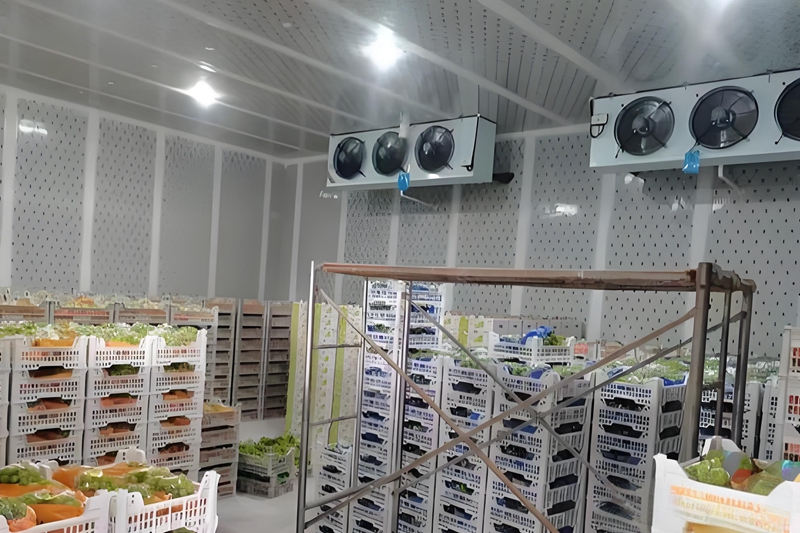
Based on real projects and market data, a 300‑ton grape cold storage in Fergana typically costs between $55,000 and $69,000 USD (approximately 680 – 850 million Uzbek som). For reference, a 2,000m² grape cold storage project in Uzbekistan came to roughly $340,000 USD, covering about 2,000m² of cold rooms plus processing and packing areas. Your 300‑ton facility is smaller, so the total cost is proportionally lower.
How Much Space for 300 Tons of Grapes?
Grapes are typically stored in standard 8–10 kg export cartons, stacked on pallets with airflow gaps between layers. The storage density for grapes is roughly 4.5 to 5.5 cubic metres per metric ton.
For 300 tons:
- 300 tons × 5 m³/ton = 1,500 m³ of usable storage volume.
- With a standard clear height of 4 metres, the floor area you need is roughly:
- 1,500 m³ ÷ 4 m = 375 m² (plus space for aisles and handling).
| Parameter | Value |
|---|---|
| Storage capacity | 300 tons |
| Storage density | 4.5–5.5 m³ per ton |
| Usable volume | ~1,500 m³ |
| Ceiling height | 4 metres |
| Floor area | ~375 m² |
For a mid‑sized grape farm or exporter in Fergana, this is a practical size. It holds about one full harvest season’s worth of premium table grapes, or a significant portion of a large vineyard’s production.
What Factors Affect the Cost of a Grape Cold Storage?
Several variables can push the cost up or down by 15 to 20 percent. Here are the main ones.
1. Geographic Location
Fergana’s climate and location affect the choice of materials and equipment. The region experiences hot summers and cold winters, so the refrigeration system must handle both extremes. The cost of transporting materials and equipment to Fergana also affects the final price.
2. Temperature Requirements
The required temperature is a major cost driver. For grape storage, the ideal range is 0°C to 5°C depending on the variety. Lower temperatures require thicker insulation panels and more powerful refrigeration systems. If you need a blast freezer for quick‑freezing grapes for export, the cost is significantly higher.
3. Number of Compartments
A single large room is cheaper than multiple smaller rooms. But many operators need separate zones — for example, a pre‑cooling room for freshly harvested grapes, a main storage room, and a staging area for packing and loading. Each additional compartment adds cost for insulation walls, doors, and independent refrigeration controls.
4. Facility Size
Larger facilities cost more overall, but the cost per ton often decreases as the scale increases. A 300‑ton cold storage is mid‑sized, so you benefit from economies of scale compared to a 50‑ton facility.
5. Refrigeration System and Brand
The choice of refrigeration equipment has a significant impact on cost. Premium brands like Bitzer, Copeland, or GEA cost 20–30% more than good Chinese brands. They are more reliable and energy‑efficient, which matters for a facility that runs 24/7 during the storage season. For a 300‑ton grape cold storage, you typically need a medium‑temperature condensing unit in the 15–30 HP range.
6. Special Functions
If you need a controlled atmosphere (CA) room for extended storage — which is common for premium export grapes — the cost is significantly higher. A CA room adds gas control equipment, airtight construction, and more sophisticated monitoring, increasing the total investment by 40–60%.
What Equipment Goes into a Grape Cold Storage?
A reliable grape cold storage requires several key components:
Insulation panels: For a 0–5°C cold room in Fergana’s climate, 100mm polyurethane double‑face steel panels are typically sufficient. Thicker panels (120mm) cost more upfront but reduce electricity consumption over the life of the facility.
Refrigeration equipment: A medium‑temperature condensing unit from a reputable brand like Copeland, Bitzer, or GEA. Scroll compressors are common for this application because they are quiet, efficient, and reliable.
Evaporators: Ceiling‑mounted air coolers with electric defrost. The number and size depend on the room layout and airflow requirements. For grapes, it is important to maintain high humidity (90–95%) without causing condensation on the fruit.
Controls: A PLC‑based system with remote monitoring and SMS alerts. For export grapes, temperature and humidity data logging is often required for traceability and quality certification.
Why Fergana Makes Sense for Grape Cold Storage
Fergana Valley is the heart of Uzbekistan’s grape production. The region’s fertile soil and favourable climate produce grapes of excellent quality, and the government is actively supporting agricultural exports. Uzbekistan has been investing heavily in cold chain infrastructure, with new storage facilities being built across the country to support fruit and vegetable exports.
A cold storage in Fergana gives you several advantages:
- Proximity to production — your grapes go from the vine to the cold room quickly, preserving quality
- Access to export routes — Fergana is connected to major transport corridors for export to Russia, Europe, and Asia
- Government support — Uzbekistan’s agricultural development programmes are focused on expanding cold chain infrastructure
Is a 300‑Ton Grape Cold Storage Worth It?
The short answer is yes — for any serious grape grower or exporter.
Without proper cold storage, you are forced to sell immediately after harvest, when prices are at their lowest. With a cold room, you can:
- Hold grapes for 3 to 6 months at 0–5°C, depending on the variety
- Store during the harvest season and sell during off‑season when prices are higher
- Maintain quality for export markets that require consistent product standards
- Reduce spoilage from over 10% to under 5%
A 300‑ton cold storage is a practical investment for a mid‑sized vineyard. Many growers recover their investment within 2 to 3 seasons through reduced waste and better pricing.