 Haocool

If you are in the fruit business in northern Vietnam, you already know the challenge. Vietnam’s fruit and vegetable export sector reached a record US$8.5 billion in 2025, but the lack of proper Cold Room infrastructure continues to hold the industry back. Without reliable Cold Room, growers are forced to sell during the harvest glut, often at the lowest prices of the year.
Lao Cai is a strategic gateway for fruit exports. The China-Vietnam cold-chain railway connects Yunnan directly to Lao Cai, carrying fresh produce from production bases to consumers. For fruit growers and traders in this region, having a dedicated Cold Room facility is not a luxury — it is a competitive necessity.
But the first question is always the same: how much does a 200-ton fruit Cold Room cost in Lao Cai?
Here is a practical breakdown — from space requirements and equipment choices to total investment.
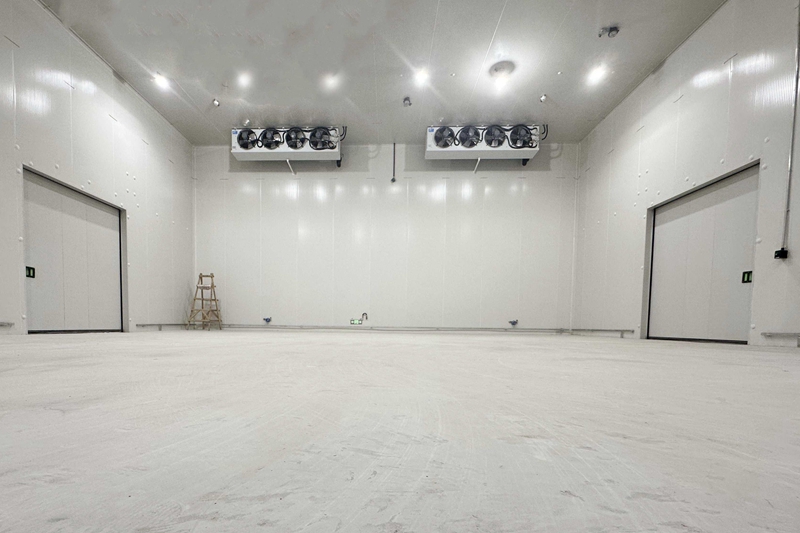
First, How Much Space for 200 Tons of Fruit?
Fruit is bulkier than frozen meat. For fresh produce stored at 0–10°C, the industry standard is approximately 5 to 6 cubic metres per metric ton. This accounts for palletised cartons, airflow gaps between stacks, and space for forklift manoeuvring.
For 200 tons:
- 200 tons × 5 m³/ton = 1,000 m³ of usable storage volume (on the lower end of the estimate).
Assuming a standard clear height of 3 metres, the floor area you need is roughly:
- 1,000 m³ ÷ 3 m = 333 m².
| Parameter | Value |
|---|---|
| Storage capacity | 200 tons |
| Storage density | 5–6 m³ per ton |
| Usable volume | ~1,000 m³ |
| Ceiling height | 3 metres |
| Floor area | ~333 m² |
This is a practical size for a mid-sized fruit grower, cooperative, or trader operating out of Lao Cai.
What Temperature Does a Fruit Cold Room Need?
For most common fruits — apples, pears, citrus, and tropical varieties — the ideal storage temperature is 0°C to 10°C, depending on the specific fruit. A general-purpose fruit cold room is typically set at 0–5°C for longer storage or 5–10°C for shorter-term holding.
Higher temperatures (10–15°C) are suitable for tropical fruits like bananas, mangoes, and papayas, which suffer from chilling injury below 10°C. For a general-purpose fruit Cold Room in Lao Cai, a 0–10°C adjustable range offers the most flexibility.
Humidity is equally important. Most fruits store best at 85–95% relative humidity to prevent shrivelling and moisture loss.
What Equipment Goes into a Fruit Cold Room?
A reliable fruit Cold Room requires several key components:
Insulation panels: For a 0–10°C cold room in northern Vietnam’s climate, 100mm polyurethane double-face steel panels are typically sufficient. Thicker panels (120mm) cost more upfront but reduce electricity consumption over the life of the facility.
Refrigeration equipment: For a facility of this size, a medium-temperature condensing unit from a reputable brand like Copeland (Emerson), Bitzer, or GEA is recommended. Scroll compressors are common for this application because they are quiet, efficient, and reliable.
Evaporators: Ceiling-mounted air coolers with electric defrost. The number and size depend on the room layout and airflow requirements.
Controls: A basic digital thermostat is affordable, but many operators choose PLC-based systems with remote monitoring and SMS alerts for better visibility.
| Component | Specification |
|---|---|
| Insulation panels | 100mm polyurethane, double-face steel |
| Compressors | Copeland/Bitzer medium-temperature scroll |
| Evaporators | Ceiling-mounted air coolers with defrost |
| Controls | Digital thermostat or PLC with remote monitoring |
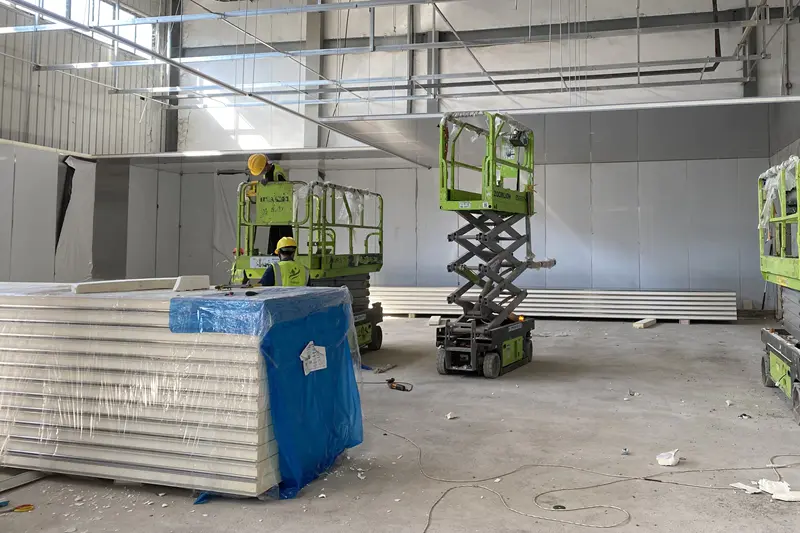
Estimated Total Cost in Lao Cai
Based on market data from similar projects in Vietnam and Southeast Asia, a 200-ton fruit Cold Room (approximately 333 m², 1,000 m³) typically costs between $55,000 and $69,000 USD (approximately 1.4 – 1.75 billion VND, depending on exchange rates).
For context, fruit Cold Room in Vietnam typically ranges from $52 to $87 per ton of capacity, and a 200 m² cold room in Southeast Asia can hold roughly 200 tons of fruit with a total investment of around $50,000–$90,000 USD. Storage costs in the region range from $0.03 to $0.09 per kg per month.
Here is a rough breakdown of where the money goes:
| Component | Estimated Cost (USD) |
|---|---|
| Insulation panels (100mm polyurethane) | $15,000 – 20,000 |
| Refrigeration equipment (compressors, condensers, evaporators) | $18,000 – 25,000 |
| Electrical and control systems | $4,000 – 6,000 |
| Doors and sealing | $3,000 – 5,000 |
| Installation and labour (Lao Cai) | $8,000 – 10,000 |
| Engineering, design, and permits | $4,000 – 6,000 |
| Contingency and miscellaneous | $3,000 – 5,000 |
| Total (approx.) | $55,000 – 69,000 |
What Factors Affect the Final Price?
Several variables can push the cost up or down by 15 to 20 percent.
Temperature range: A room designed for 0–5°C costs more than one for 5–10°C because it requires thicker insulation and more powerful refrigeration. If you need to store tropical fruits at 10–15°C, the cost is lower.
Equipment brand: Premium brands like Bitzer or Copeland cost 20–30% more than good Chinese brands. They are more reliable and energy-efficient, which matters for a facility that runs 24/7.
Number of compartments: A single large room is cheaper than multiple smaller rooms. But if you need separate zones for different fruit varieties with different temperature requirements, expect to pay more for additional insulation walls and independent controls.
Site conditions: Building in Lao Cai’s industrial zones means good access to power and transport, but if the site requires significant ground preparation, that adds to the budget.
Why Lao Cai Makes Sense for Fruit Cold Room
Lao Cai is a natural hub for fruit trade between Vietnam and China. The China-Vietnam railway cold-chain express can carry fresh produce from Yunnan to Lao Cai in just 20 hours, and Cold Room trains now operate regularly on this route.
For fruit growers and traders, locating your Cold Room in Lao Cai offers several advantages:
- Proximity to the border — faster access to the Chinese market
- Rail connectivity — reduced transport costs and shorter transit times
- Growing export demand — Vietnam’s fruit exports are rising rapidly, with China remaining the largest destination