 Haocool

If you are in the cosmetics industry, you already know that temperature and humidity are not just technical details – they directly affect the quality of your products. Creams separate. Serums lose potency. Perfumes degrade. Without proper storage, even the best formulations can become unsellable.
That is why a well‑designed cosmetics cold storage is essential. It is not just a cold room – it is a quality control tool that protects your brand, your customers, and your bottom line.
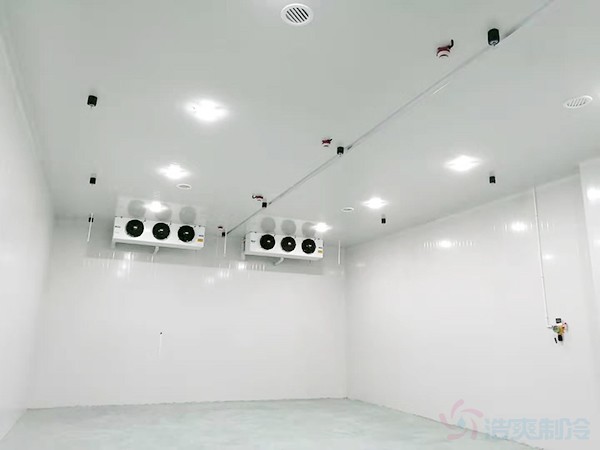
Actual photo of the interior of a cosmetics cold storage facility
Cosmetics Cold Storage Design Overview
A proper cosmetics cold storage starts with understanding what you are storing. Different products have different requirements.
Most cosmetic products fall into one of two temperature ranges:
- 2°C to 8°C – for temperature‑sensitive active ingredients, certain serums, and biological formulations.
- 12°C to 18°C – for many creams, lotions, perfumes, and finished goods that need moderate cooling.
Humidity is equally important. The recommended range for most cosmetics storage is 45% to 65% relative humidity (RH) . Too dry, and creams can lose moisture or crack. Too humid, and labels peel, powders clump, and mould can form.
A professional design should include:
- Precise temperature control with minimal fluctuation (±1°C or better)
- Efficient refrigeration systems matched to the specific cooling load
- High‑quality insulation to maintain stable conditions and reduce energy consumption
- Smart layout that maximises storage capacity while allowing easy access and proper air circulation
Insulation and Refrigeration – What Works Best
For cosmetics cold storage, the standard choice is high‑density polyurethane panels with double‑face steel cladding. Panel thickness depends on the temperature range:
- For 2–8°C rooms, 100mm panels are usually sufficient.
- For 12–18°C rooms, 75–100mm panels work well.
- Thicker panels (120mm+) may be needed if the facility is in a very hot climate or if the cold room is outdoors.
The refrigeration system should include:
- Reliable compressors – brands like Bitzer, Copeland, or GEA are preferred for their reliability and efficiency.
- Even air distribution – using multiple evaporator fans or ducted systems to avoid hot or cold spots.
- Defrost systems – automatic defrost cycles to prevent ice buildup on coils.
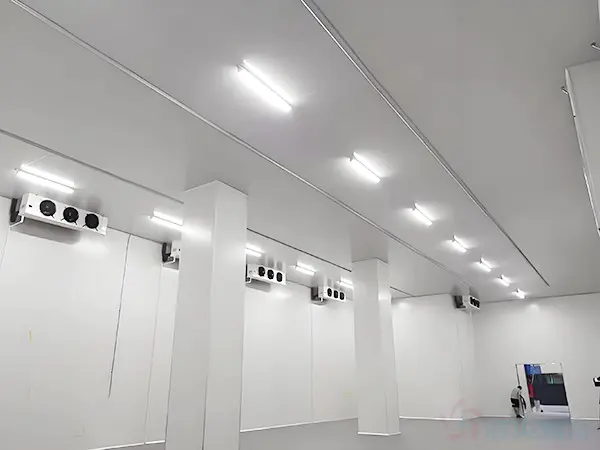
Actual photo of the interior of a cosmetics cold storage facility
Regulatory and Compliance Requirements
Cosmetics cold storage must meet certain standards – not just for product quality, but for regulatory compliance. In many markets, this means following GMP (Good Manufacturing Practice) guidelines.
Key requirements include:
- Materials that are safe and non‑reactive – insulation and interior surfaces must not off‑gas or shed particles.
- Low‑noise operation – especially if the cold room is in a shared facility or near workspaces.
- 24/7 monitoring and alarms – temperature and humidity must be continuously logged, with alerts for any deviations.
- Clear zoning and access control – separate areas for raw materials, finished goods, and samples, with clear labelling and traceability.
Some facilities also need explosion‑proof or ATEX‑rated components if they store products containing volatile solvents or alcohol‑based perfumes.
Practical Layout Tips
A well‑designed cosmetics cold storage is not just about the equipment – it is about how you use the space. Consider these layout principles:
- Leave space between pallets – for air circulation and easy access.
- Use adjustable shelving – to accommodate different pack sizes.
- Create separate zones – for incoming inspection, quarantine, regular storage, and dispatch.
- Install a temperature‑stabilised staging area – so products don’t warm up while waiting to be loaded.
Common Mistakes to Avoid
- Skipping temperature mapping – you need to know the actual temperature distribution across the whole room, not just at one point.
- Using the wrong insulation – cheap panels or insufficient thickness lead to condensation, mould, and higher energy bills.
- Ignoring humidity – many people focus only on temperature and forget that humidity control is just as important.
- Not planning for expansion – if your business grows, your cold storage should be able to grow with it.
Is a Cosmetics Cold Storage Worth It?
For any business that handles temperature‑sensitive cosmetic products, the answer is yes. The cost of building a cold storage is a fraction of the cost of a product recall, a failed batch, or a damaged brand reputation.
A well‑built cosmetics cold storage also gives you flexibility – you can import or produce in bulk, store products over longer periods, and supply your customers consistently, without worrying about seasonal temperature swings.