 Haocool

If you are in the fresh produce business in the UAE, you already know the challenge. Dubai’s summer temperatures regularly exceed 45°C, and without proper cold storage, a shipment of watermelons can spoil before it ever reaches a customer.
Watermelons are tricky. They are 90% water, sensitive to temperature swings, and prone to chilling injury if stored too cold. A well-designed watermelon cold storage solves these problems – it keeps the fruit at the right temperature and humidity, extends shelf life, and preserves quality for weeks.
A customer recently asked us about building a 1,000-ton watermelon cold storage near Jebel Ali Port in Dubai. His question was straightforward: how much is this going to cost?
Here is a practical breakdown – from the size you need, to the storage conditions, to the final price.
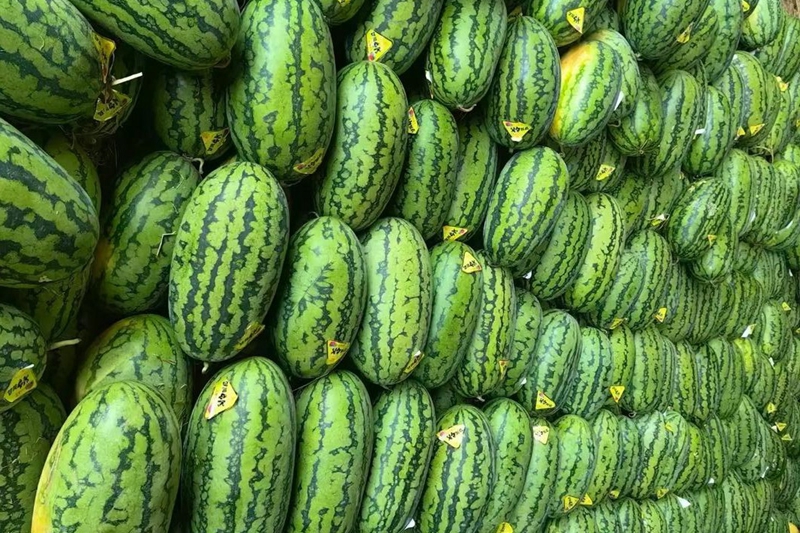
First, How Much Space for 1,000 Tons of Watermelons?
Watermelons are bulky. They don’t stack neatly, and they need space for air circulation to maintain even temperature and prevent moisture buildup.
A common rule of thumb for bulk watermelon storage is 5–6 cubic metres per ton, depending on how the fruit is stacked (in bins, on pallets, or loose).
For 1,000 tons:
- Net storage volume: 1,000 tons × 5.5 m³/ton = 5,500 m³
- With aisle space and clearance for air circulation, you need about 6,000 m³ of total volume.
Assuming a standard ceiling height of 5 metres, the floor area needed is roughly:
- 6,000 m³ ÷ 5 m = 1,200 m².
So a 1,000-ton watermelon cold storage is typically around 1,200 square metres – give or take, depending on how you stack your watermelons and whether you need forklift aisles.
What Temperature and Humidity Does a Watermelon Cold Storage Need?
Watermelons are sensitive to both heat and cold.
Temperature: The ideal storage temperature for most watermelon varieties is 8–10°C (46–50°F). Some seedless varieties can go slightly lower, around 5–7°C, but below that, you risk chilling injury – the rind develops water-soaked spots, and the flesh loses flavour. Above 10°C, watermelons ripen faster and start to decay.
Humidity: Keep relative humidity at 85–90%. If the air is too dry, watermelons lose moisture, the rind shrivels, and the fruit loses weight. If it is too wet, mould grows.
Ventilation: Watermelons breathe even after harvest. They produce heat and ethylene gas, which can accelerate ripening. A proper cold room needs good air circulation – usually with axial fans or ducted air distribution – to prevent localised warm spots and remove excess ethylene.
| Parameter | Recommended Value |
|---|---|
| Temperature | 8°C – 10°C (46–50°F) |
| Relative humidity | 85% – 90% |
| Ventilation | Continuous, with even air distribution |
Estimated Cost for a 1,000-Ton Watermelon Cold Storage at Jebel Ali
Based on recent cold storage projects in Dubai and regional market data, a 1,200 m² watermelon cold storage at Jebel Ali Port typically costs between $153,000 and $180,000 USD (approximately 560,000 – 660,000 AED).
Here is a rough breakdown:
| Component | Estimated Cost (USD) |
|---|---|
| Insulation panels (100mm polyurethane, double‑face steel) | $40,000 – 48,000 |
| Refrigeration equipment (compressors, evaporators, condensers) | $48,000 – 55,000 |
| Electrical and control systems | $15,000 – 20,000 |
| Installation and labour (Jebel Ali) | $25,000 – 30,000 |
| Engineering, design, and permits | $10,000 – 15,000 |
| Contingency and miscellaneous | $15,000 – 20,000 |
| Total (approx.) | $153,000 – 188,000 |
To put this in perspective, a 3,000 m² fresh produce cold storage in Dubai was recently completed with a total investment of $370,000 USD. Your 1,200 m² watermelon cold storage is smaller, so the per‑square‑metre cost is slightly higher, but the total investment is much more manageable.
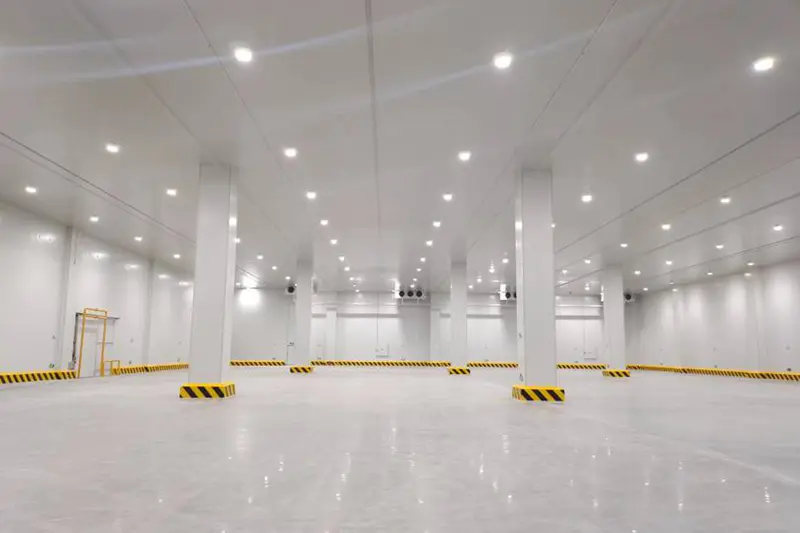
What Drives the Cost Up or Down in Dubai?
1. Location – Jebel Ali Free Zone
Building inside the Jebel Ali Free Zone (Jafza) has advantages – duty-free import of equipment, streamlined customs, and excellent port access. But it also means higher land costs and specific building regulations. A major cold storage facility in Jafza with 40,000 pallet positions recently required a $35 million USD investment. Your 1,000-ton facility is much smaller, but the location still affects labour and material costs.
2. Insulation Panel Thickness
For an 8–10°C watermelon room, 100mm polyurethane panels are usually sufficient. Thicker panels (120mm or 150mm) cost more upfront – about 10–15% extra – but reduce electricity consumption. In Dubai’s extreme heat, skimping on insulation is a false economy.
3. Equipment Brand
Premium brands like Bitzer, Copeland, or GEA cost 20–30% more than good Chinese or regional brands. They are more reliable and energy‑efficient, which matters for a facility that runs 24/7 in Dubai’s heat. The long‑term savings often justify the higher initial investment.
4. Backup Power – Essential in Dubai
Dubai’s power grid is generally reliable, but a backup generator is strongly recommended for any cold storage facility. A single power outage on a 45°C day can ruin a whole shipment. Budget an additional $15,000–25,000 for a diesel generator sized to run your entire cold storage.
Practical Considerations for Jebel Ali
Port Access and Logistics
Jebel Ali is one of the busiest ports in the world. Being close to the port means shorter transport times for imported watermelons – but it also means higher land costs and stricter building codes. Make sure your cold storage has good truck access and enough loading bays for efficient turnarounds.
Humidity Control
Dubai is dry. Without proper humidification, your watermelon cold storage will struggle to maintain 85–90% RH. You will need either a humidifier or a floor-watering system. This adds to both equipment cost and ongoing operating expenses.
Temperature Stability
Dubai’s summer heat puts extra strain on refrigeration systems. Your equipment needs to be sized for peak summer conditions, not just average temperatures. Undersized systems will struggle to maintain 8–10°C on the hottest days.
Is a 1,000-Ton Watermelon Cold Storage Worth It?
Dubai is a major hub for fruit imports and re‑exports. Watermelons come in from India, Pakistan, Iran, and other countries, and are distributed across the UAE and the wider Gulf region.
Without proper cold storage, watermelons lose quality within days. With a well‑built cold storage, you can:
- Store watermelons for 2–3 weeks at 8–10°C
- Reduce spoilage from over 20% to under 5%
- Sell during off‑season when prices are higher
- Supply supermarkets, hotels, and wholesalers year‑round
For a mid‑sized fruit importer or distributor, a 1,000‑ton watermelon cold storage at Jebel Ali Port is a sound investment. Most operators recover their investment within 2 to 3 years.