 Haocool

If you are looking at a 5,000 square metre cold storage project in Lagos, you are probably dealing with a serious operation — wholesale distribution, import-export, or large-scale food processing. And you are probably wondering: what is this going to cost?
The short answer is that a 5,000m² cold storage in Lagos typically falls between $775,000 and $850,000 USD. But that number can move significantly depending on what you are storing, how cold you need it, and what kind of equipment you choose.
Here is a practical breakdown of what goes into that cost and what you need to think about before you start.
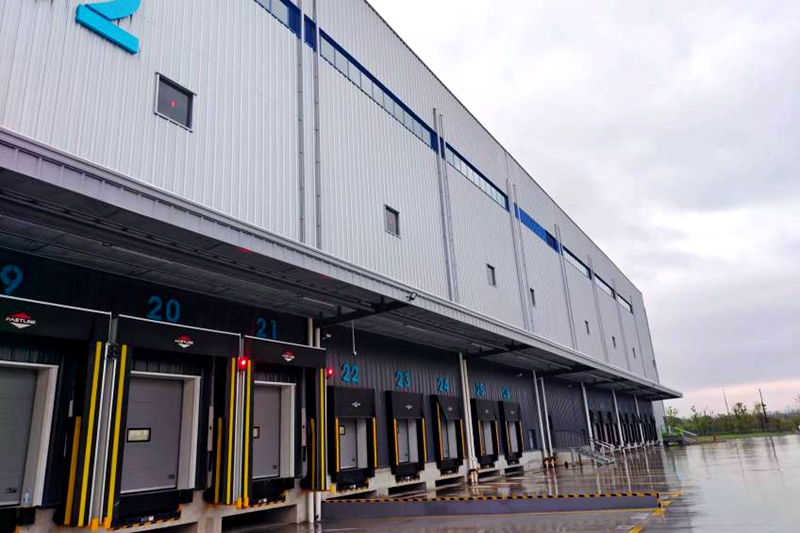
How Much Can a 5,000m² Cold Storage Hold?
With a typical ceiling height of 5 metres, a 5,000m² facility gives you about 25,000 cubic metres of storage volume. How many tons that translates to depends on what you are storing:
- Fruits and vegetables (fresh produce): roughly 4–5 m³ per ton → about 5,000–6,250 tons
- Frozen meat and seafood (-18°C): roughly 3–4 m³ per ton → about 6,250–8,300 tons
For a mixed-use facility, a realistic working estimate is around 4,000–4,500 tons of combined product.
What Does a 5,000m² Cold Storage Cost in Lagos?
Based on similar large-scale projects, the total investment for a 5,000m² cold storage in Lagos is approximately:
| Cost Component | Estimated Range (USD) |
|---|---|
| Building shell & insulation | $250,000 – 300,000 |
| Refrigeration equipment (compressors, evaporators, condensers) | $200,000 – 250,000 |
| Electrical & control systems | $80,000 – 120,000 |
| Installation & labour (Lagos) | $100,000 – 130,000 |
| Engineering, design & permits | $50,000 – 70,000 |
| Contingency & miscellaneous | $95,000 – 130,000 |
| Total (approx.) | $775,000 – 850,000 |
That works out to roughly $155 – $170 per square metre for a multi-temperature facility. For context, a 100m² -18°C freezer in Nigeria costs around $39,000–$55,000, and a 300m² seafood blast freezer in Lagos runs $76,000–$97,000. The per-square-metre cost comes down as the project gets bigger.
Why the Cost Range? Key Factors That Move the Number
1. Temperature Zones
Large cold storages usually have multiple temperature zones — fresh produce rooms, frozen storage, blast freezers, maybe even a pharmaceutical section. Each zone costs differently:
| Storage Type | Temperature | Cost per m² (USD) |
|---|---|---|
| Fruit and vegetable cold storage | 0°C to 5°C | $125 – 170 |
| Meat and seafood freezer | -18°C to -25°C | $155 – 200 |
| Blast freezer | -35°C | $280 – 350 |
| Pharmaceutical cold storage | 2°C to 8°C | $200 – 230 |
Lower temperatures require thicker insulation — 150mm instead of 100mm — and more powerful compressors. That adds to both equipment cost and installation complexity.
2. Insulation Panel Quality
Polyurethane double-face steel panels are the standard. Thicker panels (150mm vs 100mm) cost more upfront — about 10–15% extra — but they save electricity over the life of the facility. In Lagos, where electricity is expensive, skimping on insulation is a false economy.
3. Equipment Brand
Premium brands like Bitzer, Copeland, or Hanbell cost 20–30% more than good Chinese brands. They are more reliable, more energy-efficient, and have better local support in Nigeria. For a facility that runs 24/7, the extra upfront cost often pays for itself within a few years.
4. Number of Compartments
More rooms mean more insulation walls, more doors, and more refrigeration controls. If you need separate zones for different products — or if you want to open only one small door at a time to save energy — expect to pay more.
5. Location within Nigeria
Lagos is the commercial hub, so labour and transport costs are higher than in some other regions. But you also have better access to equipment suppliers, spare parts, and skilled technicians. Building in a more remote area might save on labour but add significant transport costs for materials.
The Lagos Reality: Power and Backup
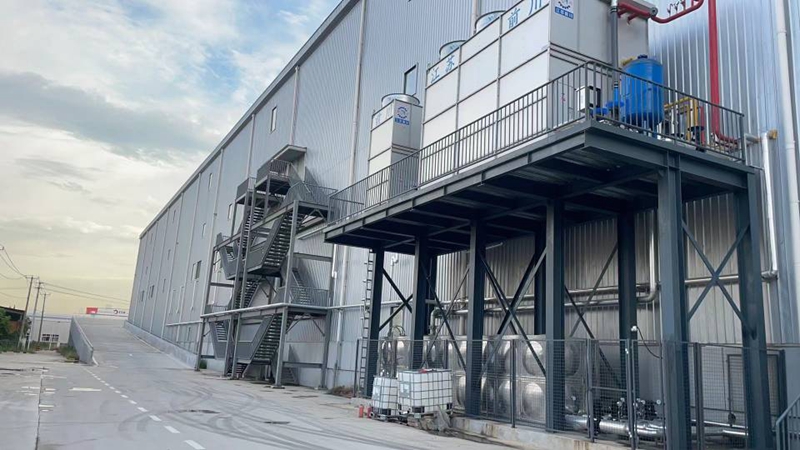
This is not optional — it is essential. Lagos has an unreliable power grid. Any large cold storage in Nigeria needs a serious backup plan:
- Diesel or gas generator: A 5,000m² facility will need a generator in the 250–400 kVA range, depending on the refrigeration load. Budget $50,000–80,000 for a good quality unit.
- Voltage stabiliser: Fluctuations damage compressors. A stabiliser is mandatory.
- Solar hybrid (optional): Some operators add solar to reduce diesel costs, but that is a separate investment.
Add these to your budget. They are not optional extras.
What About Operating Costs?
The build cost is only half the story. A 5,000m² cold storage in Lagos will have significant ongoing expenses:
- Electricity: This is your biggest recurring cost. In Lagos’s heat, cooling accounts for most of your power bill. Expect to spend $50,000–80,000 per year on electricity, depending on efficiency and usage.
- Generator fuel: If you run on generator power for any significant time, fuel costs add up fast.
- Maintenance: Budget about 2–3% of the build cost annually — roughly $15,000–25,000 per year — for servicing compressors, cleaning coils, and replacing worn parts.
Is It Worth the Investment?
For most large distributors and import-export operations in Lagos, the answer is yes. Without proper cold storage, you lose product to spoilage — often 20% or more of your inventory. With a well-built facility, you can:
- Reduce spoilage to under 5%
- Store products during surplus and sell during shortage periods
- Access higher off-season prices
- Supply customers year-round
Many operators recover their investment within 3 to 5 years.