 Haocool

If you are in the food business in the Philippines – whether you handle meat, seafood, dairy, or processed goods – you have probably faced the same challenge: keeping products cold in a tropical climate is expensive, and without proper storage, your losses add up fast.
A customer recently asked us: how much does it cost to build a 200‑ton food cold storage in the Philippines?
Here is a practical breakdown – from the type of cold room you need, to the size, materials, and equipment that drive the final price.
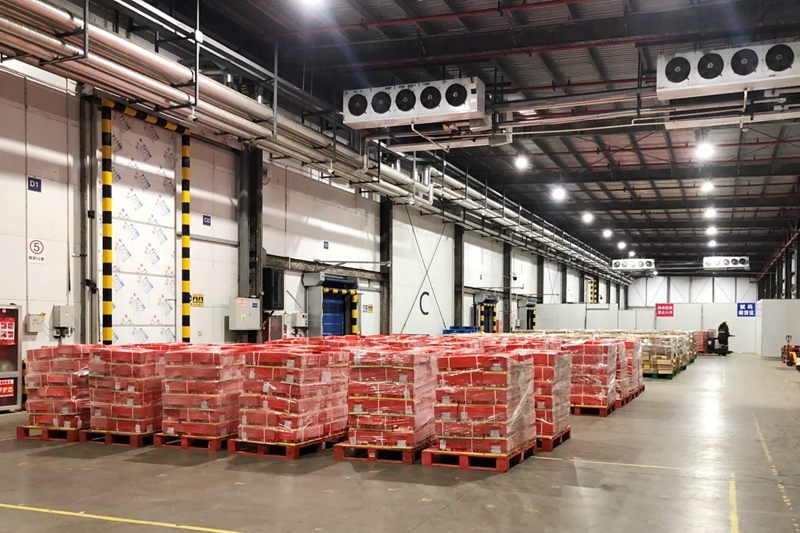
First, What Type of Cold Storage Do You Need?
Food cold storages are not all the same. The temperature you need determines the cost.
Fresh‑keeping cold storage (0–5°C) is for fruits and vegetables, dairy, and other chilled products. This is the most common type and the most affordable to build and run.
Frozen cold storage (-18°C and below) is for meat, seafood, frozen ready meals, and ice cream. Lower temperatures mean thicker insulation, more powerful compressors, and a higher price tag.
Some operations need both – a chiller room for short‑term storage and a freezer for longer‑term frozen stock. That adds cost, but it gives you flexibility.
How Much Space for 200 Tons of Food?
A common rule of thumb for bulk food storage is 4 cubic metres per ton. That includes the product itself, pallets, and space for air circulation.
For 200 tons:
- 200 tons × 4 m³/ton = 800 m³ of storage volume.
Assuming a standard ceiling height of 4 metres, the floor area you need is roughly:
- 800 m³ ÷ 4 m = 200 m².
So a 200‑ton food cold storage is typically around 200 square metres – give or take, depending on how you stack your products and whether you need aisles for forklifts.
Estimated Cost in the Philippines
Based on current market data in the Philippines, a 200‑ton food cold storage (around 200 m²) typically costs between $41,000 and $55,000 USD (roughly 2.3 – 3.1 million PHP, depending on exchange rates).
That is for a standard setup with 100–150mm polyurethane panels, a medium‑temperature condensing unit (or low‑temperature for freezers), basic controls, and installation. It does not include land, building structure, or backup generator.
| Storage Type | Temperature | Estimated Cost (200 m²) | Cost per m² |
|---|---|---|---|
| Fresh‑keeping cold storage | 0°C to 5°C | ~$41,000 – 48,000 USD | ~$205 – 240 |
| Frozen cold storage | -18°C to -25°C | ~$48,000 – 55,000 USD | ~$240 – 275 |
To put this in perspective, a 2,000–3,000 m² cold storage warehouse in Cebu costs an estimated P80–100 million ($1.4–1.8 million) to build. A 400 m² facility funded by the Department of Agriculture costs nearly P15 million. Your 200 m² project is smaller, so the per‑square‑metre cost is higher, but the total investment is much more manageable.
For a full range of solutions, visit our Food Cold Storage Construction Solution page.
What Drives the Cost Up or Down?
1. Temperature Requirements
This is the single biggest factor. A 0–5°C chiller uses 100mm insulation panels and a standard medium‑temperature compressor. A -18°C freezer needs at least 150mm panels, a larger compressor, and floor heating to prevent frost heave. The difference can be 20–30% of the total cost.
2. Insulation Panel Quality and Thickness
Polyurethane double‑face steel panels are the standard. Thicker panels cost more upfront but reduce electricity consumption over the life of the facility. In the Philippines’ hot and humid climate, skimping on insulation is a false economy – your compressor will run harder and your electricity bill will be higher.
| Panel Thickness | Typical Use | Cost Impact |
|---|---|---|
| 100mm | 0–5°C fresh rooms | Lower upfront cost |
| 120mm | 0–5°C with better efficiency | Moderate |
| 150mm | -18°C freezers | Higher upfront cost, lower energy bills |
3. Equipment Brand
Premium brands like Bitzer, Copeland, or GEA cost 20–30% more than good Chinese or regional brands. They are more reliable and energy‑efficient, which matters for a facility that runs 24/7. The long‑term savings often justify the higher initial investment.
4. Number of Compartments
A single large room is cheaper than multiple smaller rooms. But if you need separate zones – for example, a chiller for fresh goods and a freezer for frozen stock – expect to pay more for additional insulation walls, doors, and independent controls. A multi‑compartment facility also needs more complex refrigeration piping and electrical work.
5. Refrigeration System Type
Smaller cold storages typically use direct expansion (DX) systems with a single condensing unit and evaporators inside the room. Larger or more complex facilities may use secondary coolant systems or screw compressors for better efficiency at scale. Each option has a different price point.
6. Site Location in the Philippines
Building in Metro Manila or Cebu means higher labour costs but better access to equipment suppliers and technicians. Remote areas may have lower labour costs but higher transport fees for materials. The Philippines’ tropical climate also means your system needs to handle high ambient temperatures year‑round.
Practical Considerations for the Philippines
Power Supply
The Philippines has one of the highest electricity costs in Southeast Asia. Your cold storage will run 24/7, so energy efficiency is not just a nice‑to‑have – it directly affects your operating costs.
A voltage stabiliser or automatic voltage regulator is a good investment. Power fluctuations are common and can damage compressors.
Backup Power
For food storage, a power outage is a disaster. A diesel generator sized to run your entire cold storage is strongly recommended. Budget an additional $8,000–15,000 for a generator, depending on the load.
Imported vs. Local Materials
Most refrigeration equipment in the Philippines is imported. That means shipping costs, customs duties, and lead times. Working with a contractor who has established supply chains can save you time and money.