 Haocool

If you are looking at a 5,000 square metre cold storage project in Surabaya, you are probably dealing with a serious operation – wholesale distribution, food processing, or import-export logistics. Surabaya is one of Indonesia’s key logistics hubs, with cold storage resources concentrated in economic centres like Surabaya and Jakarta. But building a facility of this scale is a major investment, and the first question is always: how much is this going to cost?
Here is a practical breakdown – from the size you need, to the factors that drive the price, to a realistic budget estimate.
Estimated Total Cost: Around $900,000 USD
For a 5,000m² multi-temperature cold storage warehouse in Surabaya, the total investment typically falls in the range of $775,000 – $900,000 USD (roughly 12.5 – 14.6 billion Indonesian Rupiah, depending on exchange rates).
That works out to about $155 – $180 per square metre, which is consistent with industry benchmarks for large cold storage projects in Southeast Asia. For reference, a 5,000m² fresh produce cold storage in China typically costs $110–150 per m², and a similar project in the Philippines cost around $860,000 for a 5,200m² facility.
Here is a rough breakdown of where that money goes:
| Cost Component | Estimated Cost (USD) |
|---|---|
| Insulation panels & building envelope | $150,000 – 200,000 |
| Refrigeration equipment (compressors, evaporators, condensers) | $250,000 – 300,000 |
| Electrical and control systems | $80,000 – 120,000 |
| Concrete floor slab & site preparation | $100,000 – 130,000 |
| Installation and labour (Surabaya) | $100,000 – 130,000 |
| Engineering, design, and permits | $50,000 – 70,000 |
| Contingency and miscellaneous | $45,000 – 50,000 |
| Total (approx.) | $775,000 – 900,000 |
These figures assume a standard ceiling height of around 4–6 metres, 100–150mm polyurethane insulation panels, and mid‑range equipment brands. The total does not include land acquisition or ongoing operating costs.
What Affects the Cost Most?
1. Temperature Requirements – The Biggest Factor
The temperature you need is the single biggest cost driver. A facility that only stores fresh produce at 0–5°C costs significantly less than one that includes -18°C freezers or -35°C blast freezers.
Here is how the cost per square metre breaks down by temperature zone:
| Storage Type | Temperature | Cost per m² (USD) |
|---|---|---|
| Fruit and vegetable cold storage | 0°C to 5°C | $125 – 170 |
| Meat cold storage | -18°C to -25°C | $155 – 200 |
| Seafood cold storage | -18°C to -25°C | $155 – 200+ |
| Pharmaceutical cold storage | 2°C to 8°C (GMP) | $200 – 230 |
For a mixed‑use facility with both chilled and frozen zones, the average cost per m² will fall somewhere in the middle. If you only need a single temperature zone, you can lower the total cost significantly.
2. Number of Compartments
A single large room is cheaper than multiple smaller rooms. But most large warehouses need separate zones – a loading dock, a chilled room for fresh produce, a freezer for frozen goods, and maybe a blast freezer for quick freezing. Each additional compartment adds cost for extra insulation walls, doors, and independent refrigeration controls.
3. Equipment Brand and Quality
The refrigeration system is the heart of any cold storage, and it typically accounts for 35–45% of the total project cost. Premium brands like Bitzer, Copeland, or GEA cost 20–30% more than good Chinese or regional brands, but they are more reliable and energy‑efficient. For a facility that runs 24/7, the long‑term savings often justify the higher initial investment.
4. Insulation Panel Thickness
For a 0–5°C room, 100mm polyurethane panels are usually sufficient. For -18°C freezers, you need at least 150mm. Thicker panels cost more upfront – about 10–15% extra – but reduce electricity consumption over the life of the facility. In Surabaya’s tropical climate, skimping on insulation is a false economy.
Practical Considerations for Surabaya
Climate
Surabaya has a tropical monsoon climate with high temperatures and humidity year‑round. Your refrigeration system needs to be sized for peak conditions, not just average temperatures. Undersized systems will struggle to maintain temperature on the hottest days, and energy consumption in Indonesia can account for 40–60% of operating costs.
Power Supply
Indonesia’s electricity grid is generally reliable in urban areas like Surabaya, but voltage fluctuations are common. A voltage stabiliser or automatic voltage regulator is a good investment. For a cold storage facility, a backup generator is also recommended – a power outage on a hot day can ruin an entire shipment.
Local Market Context
Indonesia’s cold chain market is growing rapidly, valued at around $3.7 billion in 2025 and projected to reach $7.59 billion by 2032. Surabaya is one of the key logistics hubs, with cold storage resources concentrated in economic centres. Demand for cold storage in Indonesia significantly outstrips supply – the country has about 400 million pallet positions in demand but only 286 million available, a gap of nearly 30%. This supply shortage creates strong rental income potential for new cold storage facilities.
Minimum Investment Requirements
For foreign‑owned logistics businesses in Indonesia, the minimum investment value is IDR 2.5 billion (approximately $700,000) per KBLI code per location, excluding land and building value. A 5,000m² cold storage project in Surabaya would comfortably exceed this threshold.
How Much Can a 5,000m² Cold Storage Hold?
Storage capacity depends on what you are storing and how high you stack it. Assuming a 4‑metre ceiling height, a 5,000m² facility gives you about 20,000 m³ of storage volume.
| Product Type | Estimated Capacity (tons) |
|---|---|
| Frozen meat | 4,000 – 5,000 |
| Vegetables / fruit | 5,000 – 6,500 |
| Frozen seafood | 3,500 – 4,500 |
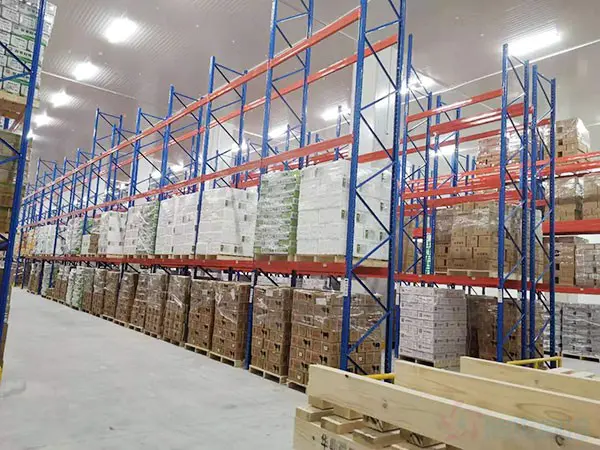
These figures assume efficient stacking with standard pallet racking. Actual capacity will vary based on your specific storage system.
Is a 5,000m² Cold Storage Worth It in Surabaya?
The short answer is yes – for anyone who handles fresh produce, frozen food, or pharmaceuticals in volume.
Indonesia’s cold chain demand is growing fast. The market is projected to grow at a CAGR of around 10.8% from 2025 to 2032. Surabaya, as a major port city and logistics hub, is well‑positioned to capture this growth. With a well‑built cold storage, you can:
- Reduce post‑harvest losses from over 20% to under 5%
- Store products during surplus and sell during shortage periods
- Access higher off‑season prices
- Supply supermarkets, restaurants, and export markets year‑round
A similar 5,200m² project in the Philippines achieved a payback period of 2–3 years. In Indonesia’s tighter market, returns could be even faster.