 Haocool

If you are a fruit and vegetable trader, wholesaler, or cooperative in Bangladesh, you already know the problem. The country produces vast quantities of fresh produce, but post-harvest losses remain a persistent challenge. Inadequate cold storage infrastructure means a significant portion of the crop never reaches consumers.
The Bangladesh Cold Chain Market was valued at USD 1.10 billion in 2025 and is expected to reach USD 2.03 billion by 2033. Yet, the country currently has about 2.7 million tonnes of cold storage capacity across over 300 sites, which still falls short of meeting demand. The government has announced plans to establish 2,000 mini cold storages within the next one to two years.
For a mid-sized fruit and vegetable operation in Dhaka, a 180-ton cold room is a practical entry point. It is large enough to handle a meaningful volume of produce but not so massive that it becomes unmanageable. But the first question is always the same: how much does a 180-ton fruit and vegetable cold room cost in Dhaka?
How Much Space for 180 Tons of Fruit & Vegetables?
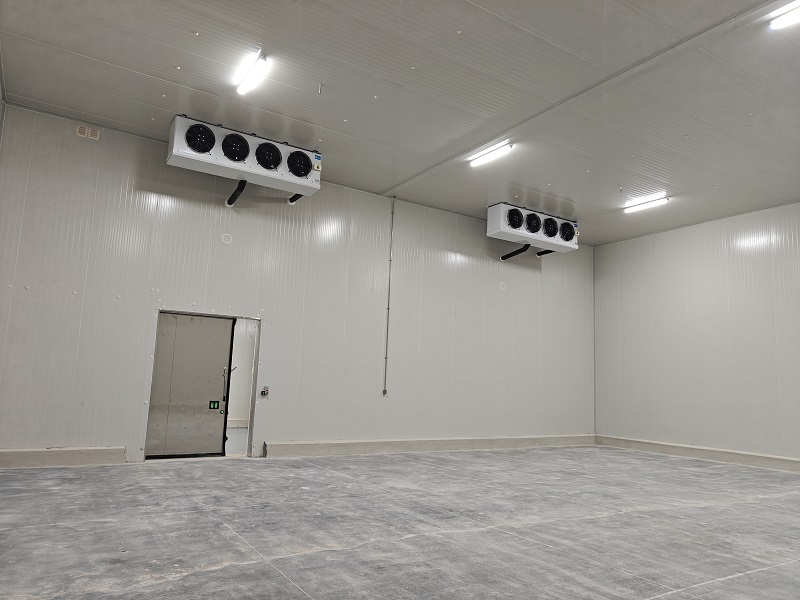
Fresh produce is bulkier than frozen meat. For fruits and vegetables stored at 0–5°C, the industry standard is approximately 5 to 6 cubic metres per metric ton. This accounts for palletised cartons, airflow gaps between stacks, and space for forklift manoeuvring.
For 180 tons:
- 180 tons × 5 m³/ton = 900 m³ of usable storage volume (on the lower end).
- With a standard clear height of 4 metres, the floor area you need is roughly:
- 900 m³ ÷ 4 m = 225 m² (on the lower end).
- At the higher end (6 m³/ton), you need about 1,080 m³ ÷ 4 m = 270 m².
| Parameter | Value |
|---|---|
| Storage capacity | 180 tons |
| Storage density | 5–6 m³ per ton |
| Usable volume | 900 – 1,080 m³ |
| Ceiling height | 4 metres |
| Floor area | 225 – 270 m² |
For a mid-sized fruit and vegetable trader or wholesaler in Dhaka, this is a practical size.
Estimated Total Cost in Dhaka
Based on similar projects in Bangladesh, a 1,000m³ cold storage (roughly 100–150 tons) costs between $48,600 and $62,500 USD. A 100‑ton turnkey seafood freezer cold room at -18°C typically costs between $44,000 and $51,500 USD. Scaling up to 180 tons increases the cost proportionally, but the per‑ton cost often decreases as the facility gets larger.
A 180‑ton fruit and vegetable cold room at 0–5°C typically costs between $41,000 and $48,500 USD (approximately 5.1 – 6.0 million BDT, using a mid‑2026 exchange rate of 1 USD ≈ 123.5 BDT).
Here is a rough breakdown of where the money goes:
| Component | Estimated Cost (USD) | Estimated Cost (BDT) |
|---|---|---|
| Insulation panels (100mm polyurethane, double-face steel) | 12,000 – 15,000 | 1.48 – 1.85 million |
| Refrigeration equipment (compressors, condensers, evaporators) | 14,000 – 17,000 | 1.73 – 2.10 million |
| Electrical and control systems | 4,000 – 5,500 | 494,000 – 680,000 |
| Doors and sealing | 3,000 – 4,000 | 370,000 – 494,000 |
| Installation and labour (Dhaka) | 5,000 – 6,000 | 617,000 – 741,000 |
| Engineering, design, and permits | 2,000 – 3,000 | 247,000 – 370,000 |
| Contingency and miscellaneous | 1,000 – 2,000 | 123,000 – 247,000 |
| Total (approx.) | 41,000 – 48,500 | 5.1 – 6.0 million |
These figures assume standard specifications: 100mm polyurethane panels, a medium-temperature condensing unit from a reputable brand like Copeland or Bitzer, and a PLC-based temperature controller with humidity management.
For a more detailed breakdown of fruit and vegetable cold storage solutions, visit our fruit and vegetable cold storage solutions page.
What Factors Affect the Final Price?
Several variables can push the cost up or down by 15 to 20 percent.
Temperature range: A room designed for 0–5°C costs more than one for 5–10°C because it requires more precise control and thicker insulation. If you need to store tropical fruits at 10–15°C, the cost is lower.
Equipment brand: Premium brands like Bitzer or Copeland cost 20–30% more than good Chinese brands. They are more reliable and energy-efficient, which matters for a facility that runs 24/7.
Number of compartments: A single large room is cheaper than multiple smaller rooms. But if you need separate zones for different products with different temperature requirements, expect to pay more for additional insulation walls and independent controls.
Humidity control: Many fruits and vegetables require high humidity (85–95%) to prevent shrivelling. Adding a humidification system adds $2,000–4,000 to the total cost.
Location within Dhaka: Building in central Dhaka means higher labour and transport costs, but better access to equipment suppliers and technicians. Building on the outskirts can reduce costs but may add transport time for goods.
Why Dhaka Makes Sense for a Fruit & Vegetable Cold Room
Dhaka is the largest consumer market in Bangladesh, with over 20 million people in the greater metropolitan area. The city’s wholesale markets handle thousands of tons of fresh produce every day. Cold storage is critical to meeting the growing demands of Bangladesh’s middle class and diversifying export opportunities.
A cold room in or near Dhaka gives you several advantages:
- Proximity to the market — faster delivery to retailers and consumers
- Access to transport — Dhaka is connected to major highways and the port of Chittagong
- Growing demand — Bangladesh’s middle class is expanding, and demand for fresh, quality produce is rising
Is a 180‑Ton Cold Room Worth It?
The short answer is yes — for any fruit and vegetable trader, wholesaler, or cooperative who wants to reduce post-harvest losses and capture better prices.
Without proper cold storage, produce losses in Bangladesh can reach 30–40%. With a well-built cold room, you can reduce spoilage to under 5%, extend your selling window, and sell when prices are high rather than during the harvest glut. For a mid-sized fruit and vegetable operation in Dhaka, a 180‑ton cold room pays for itself within 2 to 3 years through reduced waste and better market timing.