 China cold storage solution provider

Cold chain logistics cold storage is an essential part of today’s global supply chain. It is specifically designed to store and handle temperature-sensitive products such as food, pharmaceuticals, fresh produce, and chemicals. By maintaining a stable low-temperature environment, cold storage facilities ensure product freshness, safety, and shelf-life throughout transportation and distribution.
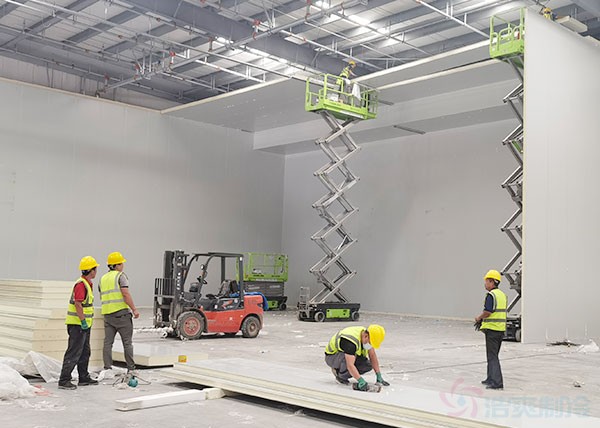
Key Features of Cold Chain Logistics Cold Storage
Cold chain cold rooms are designed for large-scale, continuous, and precise temperature control. Main characteristics include:
1. Wide Temperature Range
Depending on what goods are stored, temperature levels typically include:
- Chilled storage: 0°C to +5°C
- Low-temperature storage: –18°C
- Deep-freeze storage: –25°C to –30°C
Products like meat, seafood, ice cream, vaccines, and medical supplies require stable low temperatures.
2. High Construction & Operating Cost
Lower temperatures require:
- Thicker insulation panels
- Larger-capacity compressors
- Professional control systems
This means deep-freeze warehouses cost significantly more than standard chiller rooms.
3. High-Efficiency Storage & Handling
Cold chain warehouses are built for:
- Fast loading & unloading
- Accurate inventory control
- 24/7 stable temperature monitoring
This ensures minimal product loss and maximum operational efficiency.
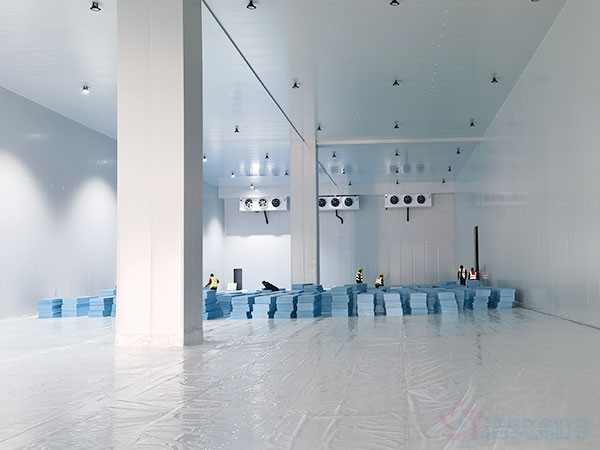
Construction Cost of a Large Logistics Cold Storage
Cold chain warehouse prices vary depending on temperature level, size, insulation materials, refrigerant type, compressor brand, and room divisions.
Below is a realistic cost range based on Haocool’s engineering experience:
Example Budget for a 1,000 m² Logistics Cold Storage
- 0°C Chiller Warehouse:
Approx. USD 155,000 - –18°C Freezer Warehouse:
Approx. USD 200,000
Why the difference?
Because freezer rooms require:
- Thicker insulation panels (usually 150–200 mm)
- Larger-power compressors
- More complex defrosting systems
How Much Product Can a 1,000 m² Cold Storage Hold?
Storage capacity is calculated by cubic meters (m³), based on the usable height.
A standard cold warehouse has a height of 5–6 meters.
Assuming 5.5 meters usable height:
Total Volume:
1,000 m² × 5.5 m ≈ 5,500 m³
Practical Storage Capacity:
Due to aisles, pallets, and airflow spacing, around 70–80% is usable.
➡ Usable storage ≈ 3,850–4,400 m³
Converting to product weight:
- Vegetables/Fruits: 350–400 tons
- Meat/Seafood: 420–480 tons
- Mixed goods on pallets: 400–480 tons
So a typical 1,000 m² logistics cold storage can store 300–400 tons of products depending on type.
This storage-to-cost ratio is often the key decision-making factor for international customers.
Investment Return Example
Project Location: Dubai, UAE
Cold Storage Capacity: 5,500 m³ (1,000 m² × 5.5 m height)
Temperature: –18°C
Refrigeration Equipment: Haocool freezer system, 150 mm PU panels, scroll compressor units
Total Investment: USD 210,000
Storage Capacity: 450 tons of frozen meat/seafood
Average Energy Consumption: 85–95 kWh per day per 100 m²
Payback Period: 1.8–2.2 years, depending on rental rate and product turnover