 China cold storage solution provider

Pears are delicate—prone to water loss, browning, and rapid softening after harvest. At ambient temperatures, they spoil in 7–10 days. But with proper cold storage, you can extend shelf life to 70+ days, ship by sea (not air), and access premium markets in the GCC, EU, or China.
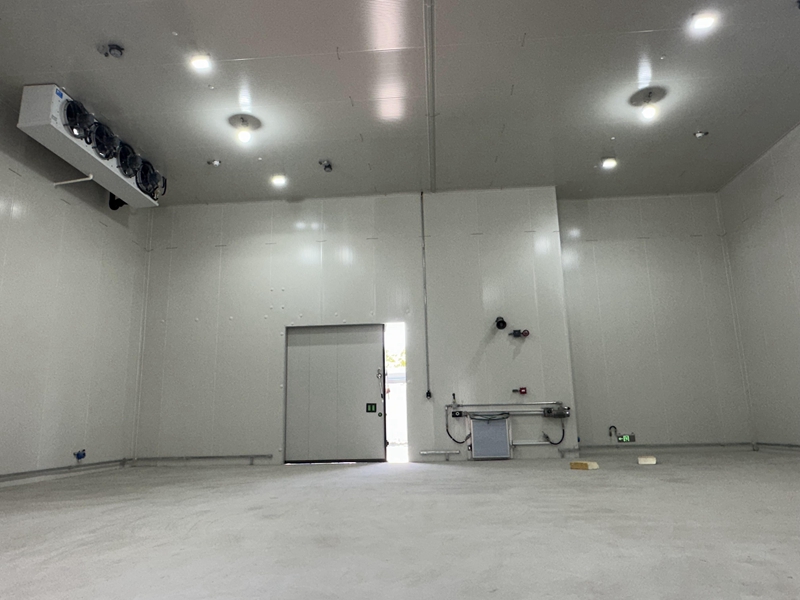
📦 Storage Capacity: How Many Tons Fit in a Pear Cold Room?
| Parameter | Specification |
|---|---|
| Typical Room Size | 200 m² × 4.0 m height = 800 m³ |
| Storage Method | Palletized cartons (15 kg/box) with airflow gaps |
| Density | ~200 kg/m³ (standard for ventilated fruit stacking) |
| Usable Capacity | 160 – 180 metric tons per batch |
💡 Ideal for Asian pear (Nashi), Bartlett, or Williams varieties—all requiring precise 0–3°C control.
💰 Total Investment: What You Actually Pay
A turnkey pear cold room (200m², 0–3°C, humidity-controlled) typically costs:
42,000– 55,000 USD
Key System Features:
- Temperature: Precise 0–3°C (varies by variety; e.g., Asian pears need 0–1°C, Bartlett 1–2°C)
- Humidity: 85–90% RH (prevents shriveling without promoting mold)
- Insulation: 120mm PU panels with food-grade cladding
- Ventilation: Forced-air circulation + ethylene scrubbing (optional)
- Monitoring: Cloud-based system with SMS alerts
⚠️ Critical: Temperatures above 4°C accelerate ripening; below -0.5°C causes chilling injury (internal browning).
🌍 Real-World Insight
A fruit exporter in Lao Cai Province, Northern Vietnam built a 200m² pear cold room to serve premium markets in Singapore and Thailand:
- Total Investment: $ 48,000 USD
- Capacity: 170 metric tons of highland Asian pears (Shinseiki & local hybrids)
- Result:
- Reduced post-harvest loss from 24% → 5%
- Enabled sea freight shipments (vs. costly air cargo)
- Maintained crisp texture and bright skin for supermarket contracts in Bangkok and Ho Chi Minh City
- Achieved ROI in 12 months
“Our pears grow at 1,200 meters—but without cold chain, they’d spoil before reaching lowland cities.”
— Export Manager, Hoang Lien Fruit Co., Vietnam