 Haocool

For seafood processors and exporters, cold storage isn’t just about freezing—it’s about preserving value. The right temperature can mean the difference between a premium export product and a rejected shipment.
But which temperature do you need? -25°C? -35°C? Or -60°C for sashimi-grade tuna? This guide provides a complete breakdown of seafood cold room costs, capacity planning, temperature selection criteria, and real-world ROI analysis.
Why Seafood Cold Storage Is Different
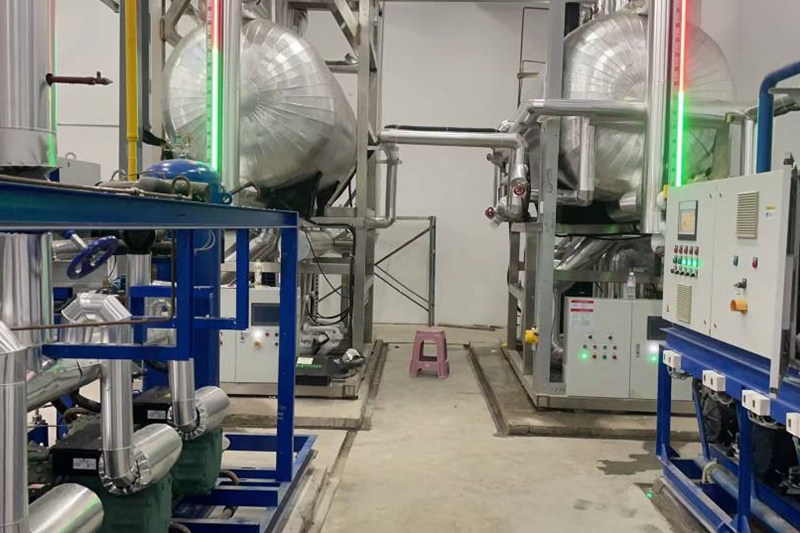
Seafood is one of the most perishable food categories. Unlike meat, seafood contains high levels of polyunsaturated fatty acids and enzymes that accelerate spoilage at higher temperatures. The storage temperature directly determines:
- Shelf life: How long can you store before quality deteriorates?
- Market access: Can you sell to premium EU/Japanese/Korean buyers?
- Product value: Does your seafood command commodity prices or premium prices?
Temperature-Shelf Life Relationship
| Storage Temperature | Suitable Products | Shelf Life | Industry Standard |
|---|---|---|---|
| -18°C | Lean fish (cod, haddock), shrimp | 6–12 months | Sufficient for short-term storage |
| -25°C to -30°C | Fatty fish (salmon, mackerel), export-grade shrimp | 9–18 months | Superior quality, less dehydration |
| -35°C to -40°C | IQF shrimp, whole fish for export | — | Rapid freezing locks in freshness |
| -60°C | Sashimi-grade tuna, salmon | 12–24 months | Required for “sushi-grade” certification |
⚠️ Critical Insight: According to FAO research, temperatures below -30°C are recommended for long-term storage of any frozen seafood produc. A study on Chinese fishery cold storage found that -22°C to -25°C provides better quality, less dehydration, and longer storage life compared to the traditional -18°C standard.
Temperature Options: What’s Right for Your Seafood?
Option 1: Standard Frozen Seafood Storage (-25°C)
Best for: Long-term bulk storage of commodity seafood, lean fish, shrimp, and block-frozen products before export.
| Parameter | Specification |
|---|---|
| Typical Size | 200 m² × 4m height = 800 m³ |
| Storage Capacity | 220 – 260 metric tons (palletized, block-frozen) |
| Best For | Long-term bulk storage before export |
Total Investment: $190,000 – $230,000 USD (turnkey)
Includes:
- 150mm PU insulation
- Bitzer 25–30HP semi-hermetic compressor
- Ceiling evaporators with hot-gas defrost
- Manual sliding doors + basic monitoring
💡 Cost Context: Standard frozen storage (-18°C) typically costs approximately 280–360 RMB/m³. At -25°C, costs are slightly higher due to thicker insulation and more powerful compressors. This is the most cost-effective solution for commodity seafood with stable demand.
Option 2: Blast Freezer for IQF or Whole Fish (-35°C)
Best for: Quick-freezing fresh catch within hours of landing—ideal for high-value IQF shrimp, whole snapper, and lobster.
| Parameter | Specification |
|---|---|
| Typical Size | 120 m² × 4m = 480 m³ (smaller footprint, high airflow) |
| Throughput Capacity | 15–20 tons per 24-hour cycle |
| Best For | High-value IQF shrimp, whole snapper, lobster |
Total Investment: $320,000 – $400,000 USD (turnkey)
Includes:
- 200mm PU panels (critical for -35°C stability)
- Twin 40HP compressors with cascade system
- High-velocity evaporators for rapid core freezing
- Auto-loading trolley system (optional)
⚠️ Higher upfront cost—but locks in freshness, enabling premium pricing in EU/US markets. Blast freezing at -35°C followed by storage at -25°C is the standard process for high-quality frozen seafood.
💡 Cost Context: -30°C to -35°C blast freezers typically cost 600–1,400 RMB/m³. The higher cost reflects the need for thicker insulation, more powerful compressors, and specialized evaporators.
Option 3: Ultra-Low-Temp for Salmon & Sashimi (-60°C)
Best for: Premium salmon, tuna, or sashimi-grade seafood destined for Japanese, Korean, or EU sashimi supply chains.
| Parameter | Specification |
|---|---|
| Typical Size | 100 m² × 3.5m = 350 m³ |
| Storage Capacity | 80 – 100 metric tons (vacuum-packed fillets) |
| Best For | Japanese/Korean/EU sashimi supply chains |
Total Investment: $500,000 – $700,000 USD (turnkey)
Includes:
- 250mm specialized PU insulation
- Cascade refrigeration system (two-stage compression)
- Stainless steel interior (food-grade compliance)
- Full remote monitoring with audit trail logging
💡 Critical Note: Without -60°C storage, you cannot sell seafood as “sushi-grade” in premium markets. This temperature is the industry standard for preserving the texture, color, and flavor of high-value tuna and salmon.
💡 Cost Context: Ultra-low temperature seafood cold storage (-60°C) typically costs 700–900 RMB/m³. The cascade refrigeration system and specialized insulation account for the significantly higher cost.
Total Investment Comparison by Temperature
| Temperature | Typical Size | Volume | Capacity | Investment (USD) | Cost per m³ (approx.) |
|---|---|---|---|---|---|
| -25°C | 200 m² × 4m | 800 m³ | 220–260 tons | $190,000–230,000 | ~$240–290/m³ |
| -35°C | 120 m² × 4m | 480 m³ | 15–20 tons/day | $320,000–400,000 | ~$670–830/m³ |
| -60°C | 100 m² × 3.5m | 350 m³ | 80–100 tons | $500,000–700,000 | ~$1,430–2,000/m³ |
💡 Why the cost difference? Lower temperatures require thicker insulation, more powerful compressors, and more complex refrigeration systems (e.g., cascade systems for -60°C). Additionally, operational costs increase significantly with lower temperatures—temperature zoning can increase storage fees by 15–30% for stricter temperature requirements.
Why 250mm Insulation for -60°C?
| Temperature | Recommended Insulation | Why |
|---|---|---|
| -25°C | 150mm PU | Sufficient for moderate temperature differential |
| -35°C | 200mm PU | Critical for temperature stability |
| -60°C | 250mm specialized PU | Extreme temperature differential requires maximum insulation |
Key specifications for -60°C:
- Cascade refrigeration: Two-stage compression system
- Stainless steel interior: Food-grade compliance for sashimi products
- Audit trail logging: Required for export certification
Real-World Project: Tanzania Kilwa Masoko Fishing Port – 20,000m³ Cold Storage Facility
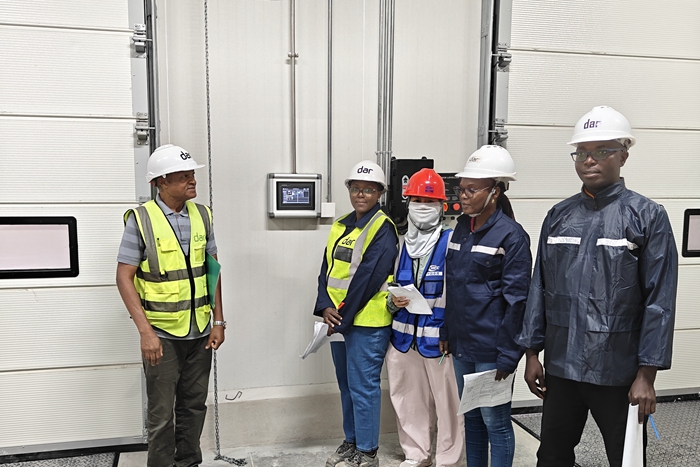
For a major fishing port handling large daily catches, reliable cold storage is the difference between fresh exports and post-harvest losses. This 20,000m³ turnkey cold storage project at Kilwa Masoko Fishing Port in Tanzania demonstrates how a comprehensive cold chain facility can transform a coastal fishing community.
Project Overview
| Metric | Details |
|---|---|
| Location | Kilwa Masoko Fishing Port, Tanzania |
| Total Volume | 20,000 m³ |
| Floor Area | 5,000 m² |
| Frozen Storage Capacity | ~1,900 tons |
| Blast Freezing Capacity | 90 tons/day |
| Ice Production | 100 tons/day |
Temperature Zones
| Zone | Temperature |
|---|---|
| Frozen storage | -25°C |
| Ultra-low storage | -60°C |
| Blast freezer | -35°C |
| Fresh-keeping chiller | -5°C |
| Pre-treatment, sorting, packing | 10–15°C |
| Ice storage | -10°C |
Key Facilities
- -60°C ultra-low room: 180 m² × 6m — for high-value tuna destined for sashimi markets
- Blast freezer: 180 m² × 4.5m — 90 tons/day capacity
- -18°C frozen room: 500 m² × 6m — 1,900 tons bulk storage
- Processing hall: 400 m² × 3.5m — sorting and pre-treatment
- Ice-making room: 100 tons/day production
Equipment & Technology
- Compressors: Gree semi-hermetic screw parallel units (120HP, 640HP, 150HP)
- Evaporators: 39 units of Zhejiang Kaidi high-efficiency air coolers
- Insulation: Changzhou Yuexian PU panels (75–200mm thickness, B1 fire-rated)
- Controls: Siemens S7-1200 PLC + SCADA with remote mobile alerts
Why This Project Matters
This facility handles the full fish processing chain—from unloading at the dock and pre-cooling, through blast freezing and sorting, to long-term frozen storage and ice production for the fishing fleet. Designed for Tanzania’s harsh tropical coastal climate, it combines thick PU insulation, Gree screw compressors, Kaidi evaporators, and a Siemens-based control system for reliable, energy-efficient operation.
For a fishing port that processes large daily catches, this facility significantly reduces post-harvest losses and opens up export opportunities to distant markets.
“A facility like this significantly reduces post-harvest losses and opens up export opportunities to distant markets.”
👉 Explore more seafood cold storage solutions →
Project completed by Haocool Cold Storage Services in cooperation with a local Tanzanian construction team.
How to Choose the Right Seafood Cold Room Temperature
| Your Product | Recommended Temperature | Why |
|---|---|---|
| Lean fish (cod, haddock, flatfish) | -18°C to -25°C | -18°C sufficient for short-term storage |
| Fatty fish (salmon, mackerel) | -25°C to -30°C | Lower temperature extends shelf life |
| Shrimp, shellfish (export) | -25°C | Industry standard for export-grade shrimp |
| IQF shrimp, whole fish | -35°C (blast) + -25°C (storage) | Rapid freezing locks in freshness |
| Sashimi-grade tuna, salmon | -60°C | Required for “sushi-grade” certification |
Key Decision Factors
- Target market: EU/Japanese/Korean buyers have stricter temperature requirements
- Product type: Fatty fish and sashimi products need lower temperatures
- Storage duration: Longer storage requires lower temperatures
- Budget: -25°C is most cost-effective; -60°C is a significant investment
- Export certification: Some markets require specific temperature documentation
Frequently Asked Questions
Q1: What’s the difference between -25°C, -35°C, and -60°C seafood cold storage?
- -25°C: Standard frozen storage for most seafood—shrimp, lean fish, block-frozen products
- -35°C: Blast freezing for IQF products—rapid freezing locks in freshness before transfer to -25°C storage
- -60°C: Ultra-low temperature for sashimi-grade tuna and salmon—required for premium export markets
Q2: Why does tuna need -60°C instead of -25°C?
Tuna contains high levels of fat and myoglobin, which oxidize rapidly at higher temperatures. -60°C preserves the bright red color, firm texture, and fresh flavor required for sashimi. Without -60°C, tuna cannot be sold as “sushi-grade” in Japanese or EU markets.
Q3: What is the operating cost difference between these temperatures?
Temperature zoning increases storage fees by approximately 15–30% for stricter temperature requirements. Seafood products also require regular weight checks and ice glazing services to prevent dehydratio. Energy consumption increases significantly at lower temperatures.
Q4: Can I build a -25°C cold room now and upgrade to -60°C later?
Not practically. Upgrading requires replacing insulation panels (150mm → 250mm), installing a cascade refrigeration system, and upgrading the entire control system. It’s more cost-effective to build the right temperature from the start.
Q5: What is the shelf life at different temperatures?
- -18°C: 6–12 months for most seafood
- -25°C: 9–18 months for fatty fish and export-grade products
- -60°C: 12–24 months for sashimi-grade tuna and salmon
Q6: What compliance is required for EU seafood export?
EU markets require:
- Stable temperature records with audit trails
- HACCP-compliant facilities
- Zero temperature deviations during storage
- Proper documentation for veterinary inspections
Ready to Build Your Seafood Cold Room?
Most seafood processors and exporters start with 200–500 ton capacity—enough to cover production cycles, seasonal catches, and export orders.
Tell us:
✅ Your primary seafood products (shrimp, tuna, salmon, etc.)
✅ Target markets (local, EU, Japan, Korea, etc.)
✅ Required storage temperature (-25°C, -35°C, or -60°C?)
We’ll send you a free layout + cost estimate + temperature recommendation—customized for your country in Kenya, Vietnam, Nigeria, UAE, or beyond.
The storage parameters provided above are for reference only. Optimal cold room conditions vary depending on seafood species, packaging, climate, and market requirements. Consult with a cold storage specialist for a customized solution.