 Haocool

Garlic is a classic “high-volume, low-margin” crop—unless you control when you sell. Without cold storage, post-harvest losses hit 20–30%, and prices crash during harvest season when supply overwhelms demand. With proper cold storage, you can hold inventory and sell at 2–3x higher prices 6 months later.
This guide provides a complete breakdown of 1,200-ton garlic cold storage costs, technical specifications, design options, and real-world ROI analysis.
Why Garlic Needs Specialized Cold Storage
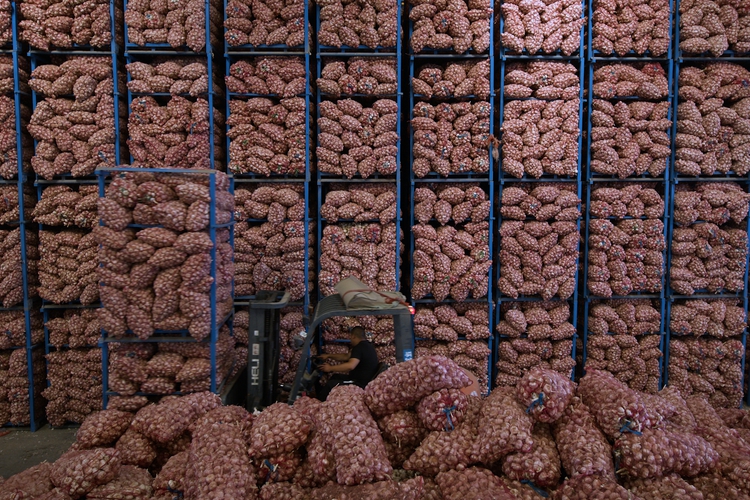
Garlic is not like apples or lettuce. It has unique storage requirements that standard “vegetable cold rooms” often fail to meet:
| Requirement | Specification | Why It Matters |
|---|---|---|
| Temperature | 0–2°C (or -1°C for long-term) | Suppresses sprouting without causing freezing injury |
| Humidity | 65–75% RH | Prevents shriveling without promoting mold |
| Ventilation | Regular air exchange | Removes CO₂ and ethylene buildup |
| Darkness | Light-free environment | Prevents greening and bitterness |
⚠️ Critical Warning: Standard vegetable cold rooms running at 4–8°C are perfect for lettuce—but disastrous for garlic. At those temperatures, garlic sprouts within weeks.
The Temperature Debate: 0–2°C vs -1°C
Different sources and storage durations call for different optimal temperatures:
| Temperature Range | Storage Life | Best For |
|---|---|---|
| 0–2°C | 4–6 months | Most commercial storage |
| -1°C to 0°C | 6–8 months | Long-term storage, export |
| -1±1°C (CA) | 8+ months | Premium export, extended holding |
Key insight: If you’re storing garlic for 4–6 months, 0–2°C is sufficient. If you need 8+ months, consider -1°C or controlled atmosphere (CA) storage.
What About Ethylene?
Contrary to what some sources claim, garlic is not sensitive to ethylene exposure. However, other gases like CO₂, ethanol, and acetaldehyde can accumulate in storage and affect quality. Regular ventilation (fresh air exchange) is more important than ethylene removal for garlic storage.
Storage Capacity: What Fits in 1,200 Tons?
| Parameter | Specification |
|---|---|
| Product | Dry bulb garlic (in mesh bags or cartons) |
| Storage Density | 180 – 220 kg/m³ (industry standard for ventilated stacking) |
| Total Volume Required | 5,500 – 6,700 m³ |
| Recommended Room Size | 1,200 m² × 5.0 m height = 6,000 m³ |
| Actual Usable Capacity | 1,150 – 1,250 metric tons |
| Layout Includes | Aisles, ventilation gaps, and loading zones |
| Pallet Positions | ~2,000 – 2,400 standard pallets (depending on racking system) |
💡 Pro Tip: Don’t overpack. Garlic needs proper airflow between stacks to prevent moisture buildup and mold growth. The 1,150–1,250 ton range accounts for necessary ventilation gaps.
Total Investment: $210,000 – $260,000 USD
A turnkey garlic cold room (1,200m², 0–2°C, 65–75% RH) typically costs $210,000–$260,000 USD.
Detailed Cost Breakdown
| Cost Category | Share | Estimated Cost | Key Specifications |
|---|---|---|---|
| Insulation Panels | 25–30% | ~$60,000 | 120mm PU panels with aluminum cladding (rodent-resistant) |
| Refrigeration System | 30–35% | ~$75,000 | Compressors + evaporators; 0–2°C precision |
| Ventilation System | 5–8% | ~$15,000 | Forced-air circulation every 2 hours |
| Floor System | 8–10% | ~$20,000 | Insulated + reinforced concrete |
| Controls & Monitoring | 8–10% | ~$20,000 | Cloud-based system with SMS alerts for temp/humidity drift |
| Doors & Dock Equipment | 5–8% | ~$15,000 | Insulated doors + loading dock |
| Installation & Commissioning | 8–10% | ~$20,000 | On-site build, testing, training |
| Total | 100% | $210,000–260,000 | ✅ Everything needed to operate day one |
Cost per Ton Reference
| Metric | Value |
|---|---|
| Total Investment | $210,000–260,000 |
| Storage Capacity | 1,200 tons |
| Cost per Ton | $175 – $217/ton |
What Determines the Final Price?
- Equipment brand: Bitzer/Copeland (premium) vs. local brands — 15–25% difference
- CA vs. standard: Controlled atmosphere adds 15–25% to total cost
- Automation level: Basic PLC vs. full remote monitoring
- Installation location: Freight, tariffs, and local labor vary by country
- Climate conditions: Hot climates require thicker insulation and higher-capacity refrigeration
Two Design Options: Standard vs. Controlled Atmosphere (CA)
| Feature | Standard Cold Room | Controlled Atmosphere (CA) Room |
|---|---|---|
| Temperature | 0–2°C | -1±1°C |
| Humidity | 65–75% RH | 60–70% RH |
| Gas Control | Ventilation only | 3% O₂, 5% CO₂ |
| Storage Life | 4–6 months | 8+ months |
| Additional Cost | Baseline | +15–25% |
| Best For | Most garlic growers, cooperatives | Exporters, long-term holders |
When to choose CA: If you’re targeting export markets or need to hold garlic for more than 8 months, the additional investment in CA storage can be justified by higher prices during the off-season.
Real-World ROI: Garlic Cooperative in Kartasura, Indonesia
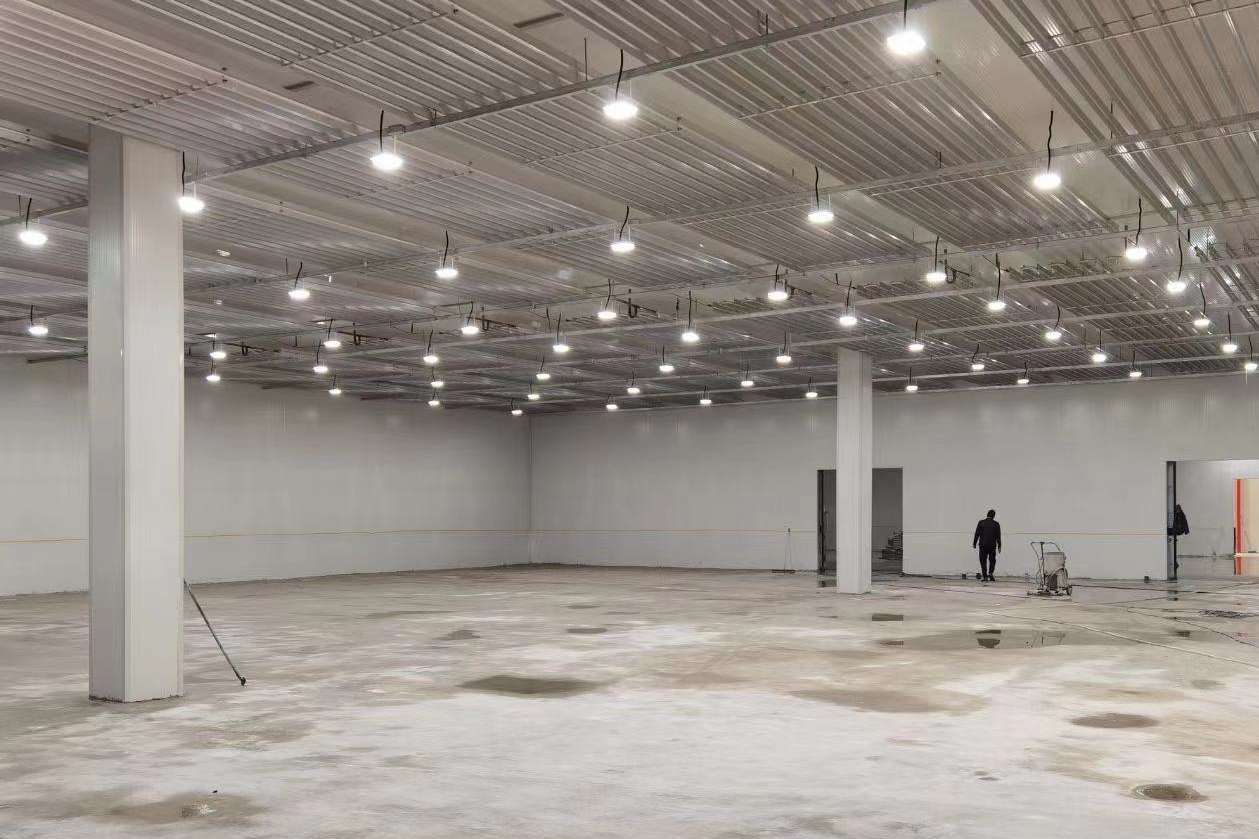
A garlic farmers’ cooperative in Kartasura, Central Java, built a 1,200m² cold store to serve 200+ smallholders.
Project Details
| Metric | Value |
|---|---|
| Total Investment | $235,000 USD |
| Storage Capacity | 1,220 metric tons |
| Configuration | 0–2°C, 65–75% RH, forced-air ventilation |
| Members Served | 200+ smallholder farmers |
Results
| Metric | Before | After |
|---|---|---|
| Post-Harvest Loss | 28% | 5% |
| Sales Timing | Harvest season only | 70% sold 4–6 months post-harvest |
| Selling Price | Harvest price | 2.4x harvest price |
| Market Access | Local traders only | UAE & Saudi spice importers |
| ROI Timeline | — | 14 months |
How the ROI Was Achieved
- Reduced loss from 28% to 5%: Saving 23% of total production value
- Timing the market: 70% of stock held 4–6 months, sold at 2.4x harvest price
- Export contracts: Secured deals with UAE and Saudi importers at premium prices
- Bargaining power: From “begging traders to buy” to “negotiating”
“Before cold storage, we begged traders to buy. Now, we negotiate.”
— Chairperson, Central Java Garlic Cooperative
Garlic Cold Room vs. Standard Vegetable Cold Room
| Factor | Garlic Cold Room | Standard Vegetable Cold Room |
|---|---|---|
| Temperature | 0–2°C (or -1°C for long-term) | 4–8°C |
| Humidity | 65–75% RH | 90–95% RH |
| Ventilation | Regular air exchange | Standard circulation |
| Effect on Garlic | ✅ Suppresses sprouting | ❌ Causes sprouting, weight loss |
| Best For | Garlic, onions, shallots | Leafy greens, most fruits |
⚠️ Key Insight: A standard vegetable cold room at 4–8°C will cause garlic to sprout within weeks. The wrong temperature can destroy an entire harvest. Don’t cut corners on temperature control.
Frequently Asked Questions
Q1: Does the $210,000–260,000 price include land and building construction?
No. The price assumes an existing building shell—it covers insulation, refrigeration, ventilation, flooring, doors, controls, and installation. Land acquisition and building construction are additional costs.
Q2: How long does construction take?
For a 1,200-ton facility using an existing shell, typical construction takes 6–8 weeks from material arrival to commissioning.
Q3: What is the operating cost of a 1,200-ton garlic cold room?
Energy is the largest operating cost. For a 6,000m³ facility, estimate:
– Energy consumption: 150–200 kWh per m³ annually
– Maintenance: $5,000–10,000/year for compressor service, evaporator cleaning, and system checks
Q4: Can I store other products in the same cold room?
Garlic has specific temperature and humidity requirements (0–2°C, 65–75% RH) that differ from most fruits and vegetables. Onions can be stored in similar conditions, but most other produce requires different settings. Dedicated garlic storage is recommended.
Q5: What happens if the temperature drops below 0°C?
Temperatures below 0°C can cause freezing injury—cloves become soft, translucent, and prone to rapid decay. This is why precise temperature control is critical for garlic storage.
Q6: Is controlled atmosphere (CA) storage worth the extra cost?
For standard 4–6 month storage, CA is not necessary. For export or 8+ month storage, CA can be justified by higher off-season prices. Evaluate based on your target market and holding period.
Q7: What is the minimum order quantity for a garlic cold room?
While 1,200 tons is a large-scale facility, smaller capacities (100–500 tons) are also available. Contact us for a quote tailored to your specific needs.
Ready to Invest?
A 1,200-ton garlic cold storage facility is a proven investment for cooperatives, large-scale growers, and exporters. With upfront costs of $210,000–260,000 and typical ROI in 14 months, it’s one of the most effective ways to reduce post-harvest loss, time the market, and access premium export channels.
Next steps:
1. Define your annual garlic volume and storage duration needs
2. Assess your site (existing shell or ground-up construction)
3. Determine if CA storage is needed for your target markets
4. Request a site-specific quote from a supplier with garlic experience
The storage parameters provided above are for reference only. Optimal cold room conditions vary depending on garlic variety, harvest maturity, growing region, and market requirements. Consult with a cold storage specialist for a customized solution.