 Haocool

Project Overview
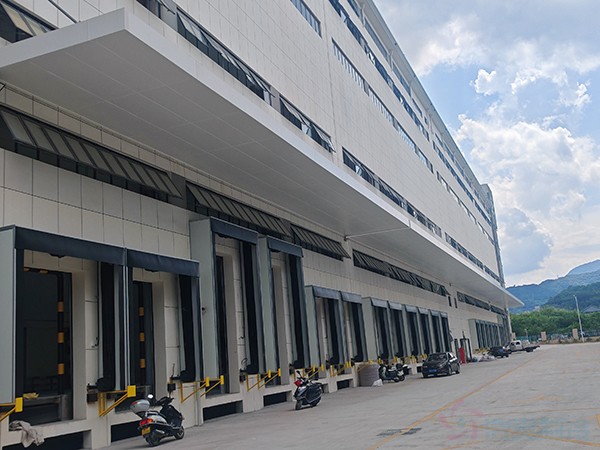
This large-scale 180400m³ cold chain logistics project is built as a regional distribution cold storage hub in Longyan, Fujian, serving highway-side logistics transit, strategic material reserves, and bulk frozen meat commercial storage.
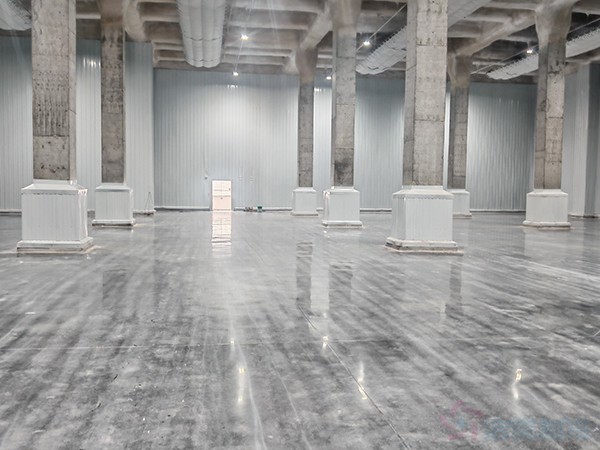
Different from ordinary single-temperature cold rooms, this project adopts a dual-temperature zoning design, combining heavy-duty low-temperature freezing zones and constant-temperature logistics buffer zones. The facility is designed to handle frequent cargo entry and exit, fast temperature recovery, and long-term stable low-temperature storage under high-throughput logistics scenarios.
HAOCOOL delivered the full-turnkey EPC solution, including refrigeration system design, equipment supply, insulated envelope construction, intelligent control debugging, on-site installation, technical training and complete after-sales support.
Core Project Challenges
This ultra-large-volume cold storage faces three typical operational difficulties in regional logistics scenarios:
- Strict fast-cooling process requirement
Incoming frozen meat arrives at -10°C and must be uniformly cooled down to -25°C within 24 hours. The system must handle both static storage load and large batch instantaneous heat load during peak receiving periods. - Dual-zone temperature difference conflict
The warehouse contains -25°C deep-freeze rooms and 10–12°C open dock vestibules. Frequent door openings cause continuous hot air infiltration, easily leading to heavy frost, temperature fluctuation and excessive power consumption. - High requirements for intelligent stable operation
As a public logistics transit hub, the cold storage requires 24/7 unattended monitoring, automatic fault alarming and energy adaptive adjustment to ensure long-term reliable operation.
Customized Refrigeration System Design
According to the two completely different temperature zone operating conditions, we adopted zoned independent refrigeration configurations to avoid system interference and improve overall efficiency.
-25°C Frozen Storage Zone (R507A Low-Temperature System)
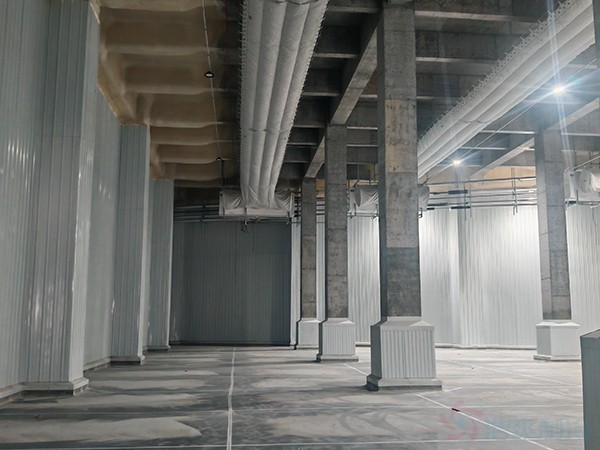
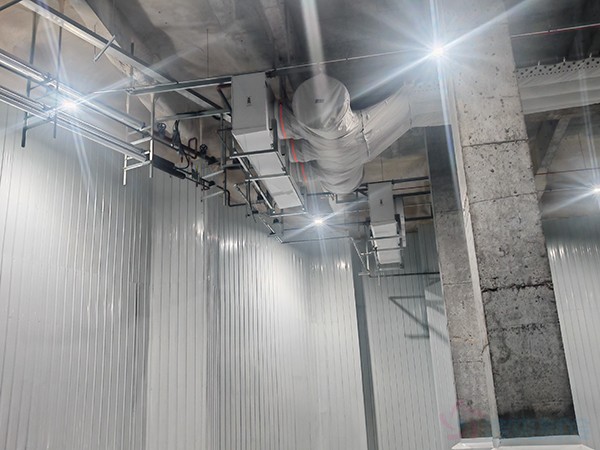
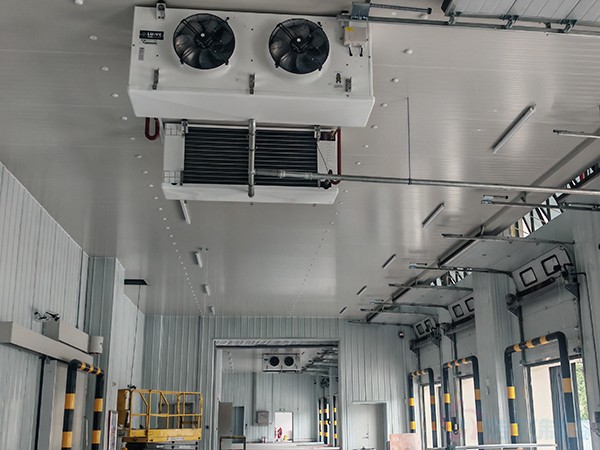
For large-volume deep-freeze areas requiring stable ultra-low temperature and fast cooling capacity, the project uses R507A refrigerant matched with screw parallel compressor racks, pump liquid recirculation systems and ceiling evaporators.
Parallel screw units dynamically adjust operating capacity based on real-time cargo load, perfectly adapting to multi-room centralized cooling and batch fast-cooling demands. The pump recirculation system ensures even refrigerant delivery, achieving uniform temperature distribution and rapid heat removal during mass cargo input.
10–12°C Temperature-Controlled Dock & Vestibule
As a buffer zone for cargo loading and transit, the temperature fluctuation frequency is much higher than internal cold rooms. For this area, we applied an independent direct expansion refrigeration system.
This targeted design effectively reduces cold loss caused by frequent door opening, stabilizes ambient working temperature, and greatly lowers the frosting pressure of the low-temperature storage area.
High-Standard Insulation & Envelope System
To cope with the extreme temperature difference between indoor and outdoor environments, the entire cold storage adopts a complete moisture-proof and thermal insulation structure.
Multi-layer vapor barrier systems prevent moisture penetration into insulation materials, avoiding thermal performance degradation and internal frosting. Reinforced protective layers effectively resist mechanical impact during high-frequency cargo turnover.
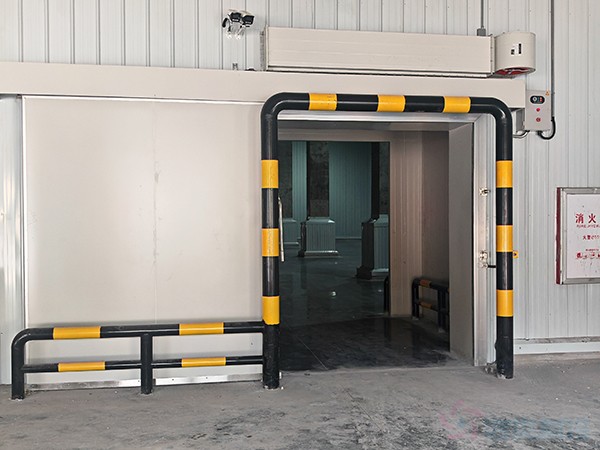
All loading ports are equipped with high-efficiency air curtains and well-sealed cold storage doors, forming an effective air isolation barrier and minimizing heat and humidity infiltration.
Smart Monitoring & Energy-Saving Control System
The whole warehouse is equipped with a centralized intelligent control platform, covering full-range temperature monitoring, equipment linkage control, fault automatic alarm and energy-saving operation optimization.
The system records real-time temperature data of all freezing rooms and buffer zones 24/7. Once abnormal temperature deviation or equipment failure occurs, the system triggers immediate alarms to ensure timely maintenance.
In addition, the intelligent energy-saving module automatically adjusts unit operating frequency and cooling output according to real-time load, realizing precise energy control without sacrificing storage safety.
Project Operational Advantages
After full completion and operation, the cold storage has formed stable regional cold chain logistics capacity:
- Realizes standard fast cooling from -10°C to -25°C within 24 hours for bulk frozen meat
- Effectively reduces cold loss and frosting problems through temperature buffer vestibule design
- Supports long-term safe storage of reserve materials and commercial frozen products
- Intelligent control system reduces manual intervention and annual operating power consumption
FAQ
Q1: Why adopt separate refrigeration systems for -25°C cold rooms and 10–12°C docking zones?
A dual-system design eliminates cross-interference between high-load deep-freeze operation and frequently opened buffer zones. The R507A pump recirculation system guarantees stable ultra-low temperature and fast cooling efficiency for bulk frozen meat, while the independent direct-expansion system for temperature-controlled vestibules effectively reduces cold loss and frosting risks caused by frequent door opening. This zoning solution ensures both storage safety and long-term energy efficiency for large-volume logistics cold storage.
Q2: What is the advantage of R507A refrigerant for large -25°C frozen meat cold storage?
R507A features excellent low-temperature performance, stable cooling capacity and high operational safety under continuous high-load conditions. It perfectly matches the project’s strict 24-hour fast-cooling requirement for incoming frozen meat (-10°C to -25°C). Compared with ordinary refrigerants, R507A maintains more uniform temperature distribution in ultra-large cold rooms and reduces frequent unit startup and shutdown, extending the service life of the entire refrigeration system.
Q3: How does the temperature-controlled 10–12°C dock vestibule optimize cold chain operation?
As a critical buffer zone, the constant-temperature vestibule isolates massive hot and humid ambient air from entering the -25°C freezing area during cargo loading and unloading. It drastically lowers cold loss, reduces frost accumulation on evaporators, and stabilizes internal cold-room temperature. Meanwhile, it improves operational comfort and consistency for high-frequency logistics turnover, avoiding temperature fluctuations that affect frozen meat storage quality.
Construction & Completion Photos