 Haocool

Client: BGI Genomics (Shenzhen National Gene Bank)
Service Delivered: Biobank cold‑room layout design, full refrigeration system deployment, insulation enclosure construction, GSP‑compliant monitoring platform, DQ/IQ/OQ/PQ validation, site commissioning & URS acceptance
This laboratory‑grade cold‑storage facility was custom‑built for BGI Genomics’ national gene‑bank biorepository in Shenzhen. Biological gene samples are extremely sensitive to temperature excursions. Even short‑time temperature drift can cause irreversible degradation of genetic specimens. Standard commercial cold‑rooms cannot satisfy strict biobank traceability, redundant safety and multi‑national audit requirements.
The project delivers four independent laboratory cold‑chambers with total volume of 1,491 m³, dedicated for secure medium‑term and long‑term storage of precious gene‑related biological specimens. The whole installation meets GSP, ISO biobank and EN laboratory standards, together with complete URS user‑requirement‑specification deliverables.
Core Project Metrics
- Total laboratory cold‑storage volume: 1,491 m³, 4 physically separated cold rooms
- 2 × 4 °C refrigerated chambers: for biospecimen medium‑term cool preservation
- 2 × ‑20 °C frozen chambers: for long‑term genetic‑material storage
- Adjustable working temperature within design scope; every chamber implements 1‑main‑1‑standby redundant refrigeration setup
- Compliance baseline: GSP, ISO biobank specification, EN laboratory cold‑room standard, full URS validation documentation
- Deliverables: On‑site installation, commissioning, four‑stage DQ/IQ/OQ/PQ performance validation and audit‑ready data‑logging system
Pre‑Construction Laboratory & Compliance Pain Points
Our engineering team performed detailed biobank‑oriented site assessment before layout finalization, identifying high‑risk operational constraints for gene‑sample preservation:
- Catastrophic specimen‑loss risk upon single‑equipment failure
Genetic biological samples are irreplaceable assets. Without fully redundant refrigeration hardware, compressor breakdown would lead to specimen degradation and unrecoverable research‑resource loss. - Strict multi‑standard audit traceability requirements
Biobank operations need immutable, long‑term temperature records for GSP / ISO / EN external audits. Manual or editable log files would result in direct audit non‑conformity. - Mixed‑function generic cold‑room cannot satisfy lab biosafety rules
Ordinary commercial cold‑rooms lack laboratory‑grade sealing, monitoring and alarm chains; they cannot support secure storage of high‑value genetic biospecimens. - Need unified centralized management across four independent cold chambers
Lab facility managers required one single control dashboard to supervise all four cold‑rooms, with multi‑channel remote alarm for temperature deviation incidents.
Local‑site constraint note: For biobank cold‑storage projects, equipment redundancy, non‑editable trace log and complete validation documents are not optional features, but mandatory audit prerequisites.
Custom‑Built Biobank‑Grade Engineering Solutions
1. Redundant Refrigeration Unit Configuration (1‑main‑1‑standby for every chamber)
- 4 °C Refrigerated Chambers (Room 1 & Room2): 2 sets Swedish Beijer medium‑temperature integrated refrigeration units. Each unit adopts imported Bitzer piston compressor CST050L6D, complete with solenoid valves and condensers.
- ‑20 °C Frozen Chambers (Room3 & Room4): 2 sets Swedish Beijer low‑temperature integrated refrigeration units, fitted with Bitzer CST280L6D piston compressors, solenoid assemblies and condensers.
- Each cold‑room runs independent main‑plus‑standby hardware; automatic fault‑switch logic activates backup unit once primary equipment malfunctions, preventing specimen‑thawing risk.
2. High‑Reliability Air‑Cooler Hardware
All four cold‑chambers deploy Swedish Beijer BMT122H & BMT091 high‑efficiency air coolers, also configured with dual‑redundancy setup to guarantee stable air circulation inside biospecimen storage spaces.
3. Insulation Envelope Specification
| Component | Specification | Biobank‑specific optimization |
|---|---|---|
| Six‑sided cold‑room enclosure | 150 mm double‑sided color‑steel polyurethane insulation panels, B1 flame‑retardant rating | Enhanced vapor‑barrier construction; minimize interior condensation risk for long‑term stable laboratory‑grade environment |
4. Automation, Monitoring & Validation System
- Core control platform: Siemens full‑automated temperature control system with Schneider industrial‑grade electrical components.
- Multi‑point high‑precision PT100 sensors deployed inside each chamber; continuous automatic logging; multi‑level alarm: local sound‑light, SMS and remote APP push for temperature excursion.
- Output full DQ / IQ / OQ / PQ four‑stage validation report for GSP & ISO biobank audit submission.
Biobank Cold‑Storage Site Installation & Construction Photographs
Original on‑site documentation includes panel hoisting, copper‑pipe welding, air‑cooler mounting and joint‑sealing operations for this BGI gene‑bank laboratory cold‑storage project.

Exterior view of BGI Genomics Shenzhen facility for national gene‑bank biobank cold‑storage
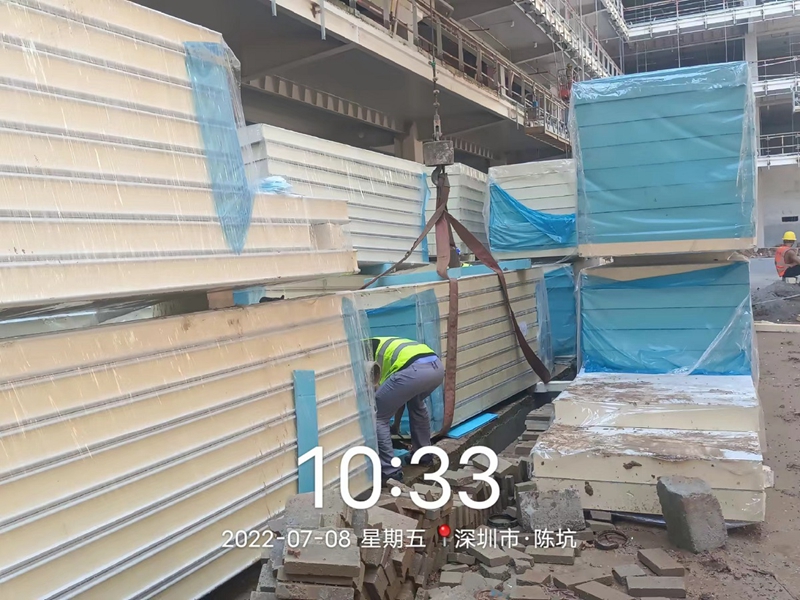
Workers hoisting heavy‑duty laboratory‑grade polyurethane insulation panels on‑site
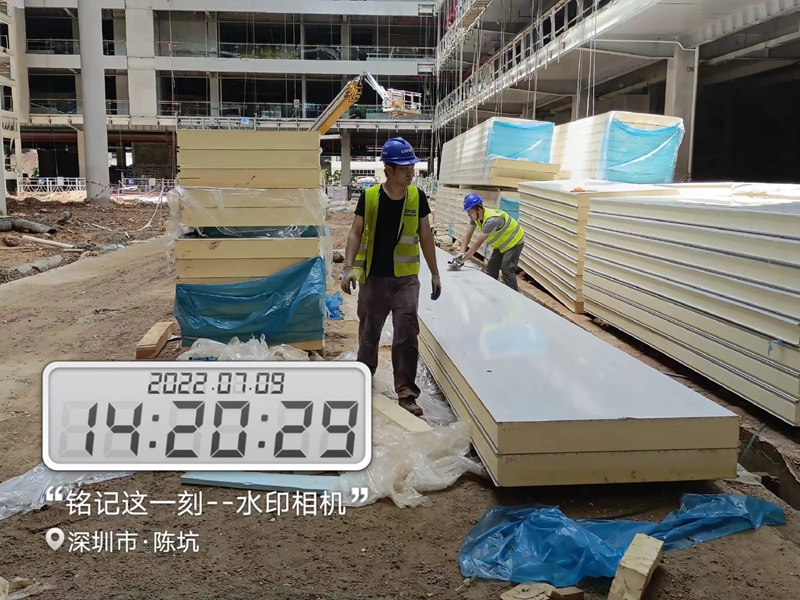
Workers hoisting heavy‑duty laboratory‑grade polyurethane insulation panels on‑site
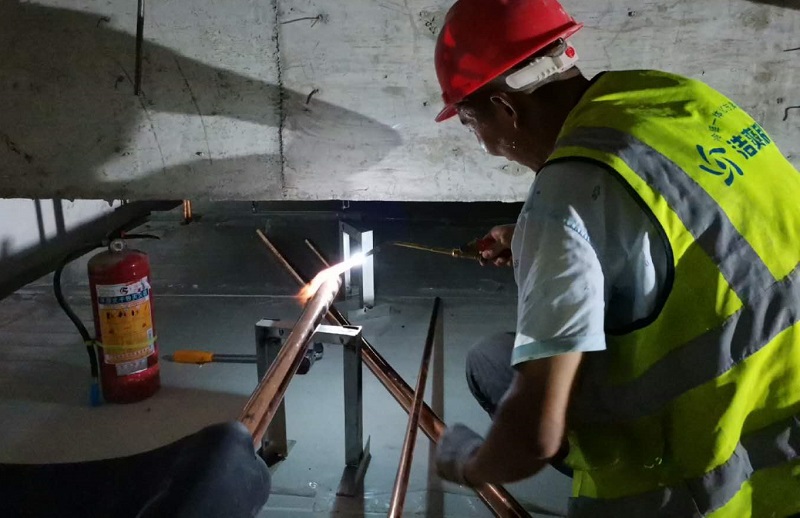
Technician performing copper‑pipe welding for biobank cold‑storage refrigeration circuit
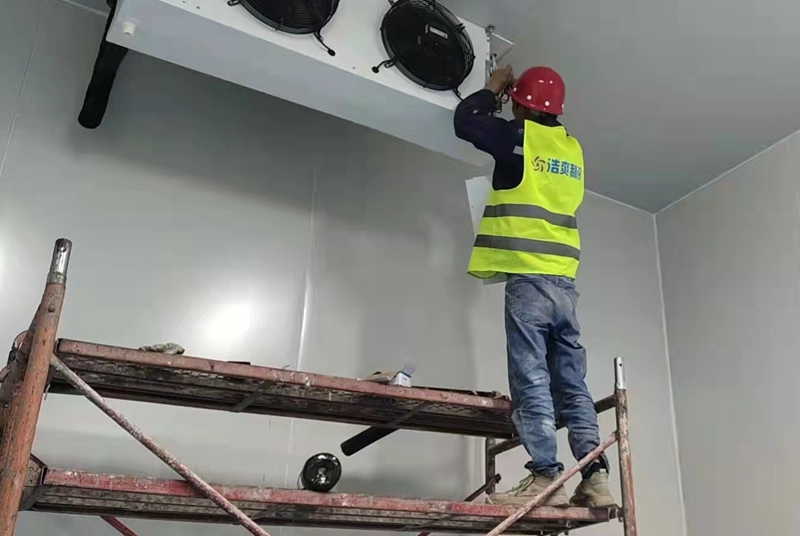
Installation procedure of high‑efficiency Beijer air‑cooler units for gene‑sample cold‑chambers
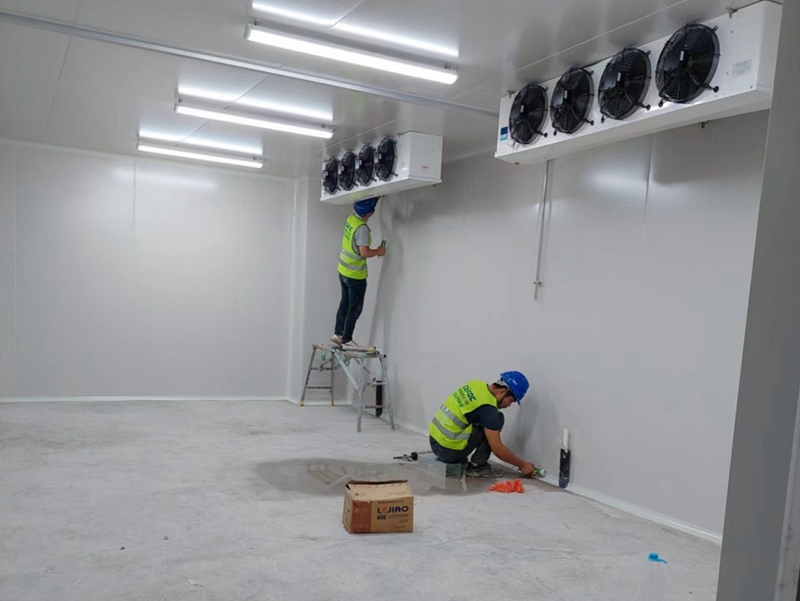
On‑site joint glue‑sealing work for laboratory cold‑room panel seams
Measurable Operational Outcomes After Commissioning
✅ Every cold‑chamber equipped with 1‑main‑1‑standby automatic‑switch refrigeration setup, drastically lowers risk of precious genetic‑specimen loss caused by single‑unit breakdown
✅ Centralized unified monitoring dashboard covers all four lab cold‑rooms; multi‑channel remote early‑warning responds rapidly for temperature‑drift events
✅ Complete set of DQ/IQ/OQ/PQ validation deliverables, meets URS, GSP, ISO biobank and EN laboratory audit‑ready requirements
✅ Stable 4 °C / ‑20 °C controlled environment offers secure long‑term preservation condition for irreplaceable biological gene‑bank specimens.
Practical Lessons For Biobank & Laboratory Cold‑Storage Construction
From hands‑on BGI gene‑bank delivery experience, these are critical pitfalls for investors building biospecimen laboratory cold‑storage:
1. Omit main‑plus‑standby redundant refrigeration hardware → single compressor fault may cause total loss of irreplaceable biological specimens
2. Adopt editable short‑term temperature logs → traceability data becomes invalid for GSP / ISO biobank audit
3. Skip formal DQ/IQ/OQ/PQ performance validation → project cannot pass laboratory biobank compliance acceptance
4. Apply ordinary commercial cold‑room design for gene‑sample repository → insufficient stability and safety for high‑value biological material preservation
5. Lack multi‑channel remote alarm mechanism → temperature deviation events are discovered too late during off‑hours.
FAQ For Biobank & Laboratory Infrastructure Managers
Q1: Why must biobank cold‑rooms adopt 1‑main‑1‑standby redundant refrigeration?
A: Gene‑bank biological specimens are mostly irreplaceable research resources. If the primary compressor fails, the automatic‑switch standby unit takes over cooling duty to avoid specimen thawing and permanent degradation.
Q2: What audit documents are mandatory for gene‑bank laboratory cold‑storage?
A: Complete URS specification, four‑stage DQ/IQ/OQ/PQ validation documents, plus long‑term non‑editable temperature trace records for GSP, ISO biobank and EN‑standard inspection.
Q3: Can regular commercial cold‑rooms be retrofitted for gene‑bank biospecimen storage?
A: Normally not recommended. Biobank cold‑storage requires full‑set redundancy, laboratory‑grade monitoring, alarm and validation deliverables; generic commercial cold‑rooms cannot satisfy strict biospecimen preservation audit requirements.
Request Your Custom Laboratory & Biobank Cold‑Storage Proposal
If you plan cold‑storage construction for biobank, pharmaceutical‑lab or biological‑specimen repository projects, please share chamber‑temperature requirements, estimated volume and target audit standards. Our engineering team can deliver lab‑grade layout concept and itemised USD‑denominated quotation.