 Haocool

Author: Senior Kiwi Plantation Cold Chain Engineer
11 years EPC & quotation experience for Sichuan, Shaanxi kiwi industrial base cold storage projects. Familiar with GB 50072 Cold Storage Design Standard & WFLO international fresh fruit storage specification, master ordinary fresh room and CA gas regulation two sets of matching schemes for kiwi export enterprises.
Kiwifruit is highly sensitive to temperature fluctuation, ethylene gas and air dryness. Improper cold storage design leads to mass softening, browning and mildew within 2 months. Many orchard owners only compare total price without distinguishing constant humidity system, ethylene scrubber and CA airtight structure.
1 GB 50072 Standard 500-Ton Kiwi Storage Volume Calculation
Official Formula
Storage Ton G = Total Nominal Volume V × Volume Utilization Coefficient η × Pallet Cargo Density ρ
Fixed Standard Parameters
- Target capacity: 500 tons kiwi
- Kiwi bulk crate density ρ = 0.22 t/m³
- Nominal volume range 2001–10000 m³ → η = 0.55
Reverse Calculate Required Total Volume
V = G ÷ (η × ρ) = 500 ÷ (0.55 × 0.22) ≈ 4132 m³
Matching Floor Area Reference
- Net height 4m: 4132 ÷ 4 ≈ 1033 ㎡
- Net height 5m: 4132 ÷ 5 ≈ 826 ㎡
Note: The empirical value of 4.5 m³ per ton is only rough estimate; GB formula must be used for engineering equipment selection & budget audit.
2 Full Turnkey Cost Table (USD, Excluding Civil Foundation & Pallet Racks)
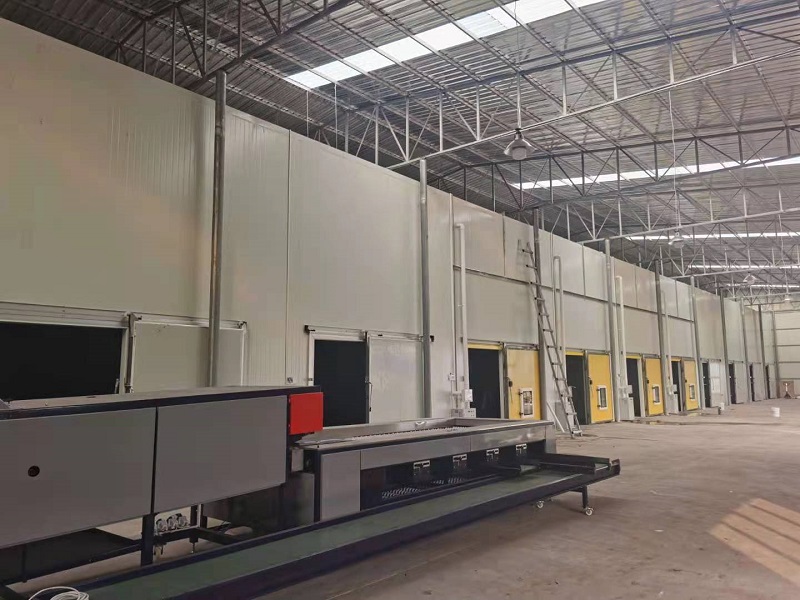
Benchmark: 100mm B1 flame retardant PU panel, domestic inverter scroll unit, temperate climate single zone
| Warehouse Type | Total Investment Range | Core Exclusive Matching For Kiwi | Max Shelf Life |
|---|---|---|---|
| Ordinary Constant Humidity Fresh Room | $140,000 – 170,000 | Micro-fog humidifier, low-speed anti-dehydration air cooler, ethylene ventilation system | 3–4 months |
| CA Controlled Atmosphere Kiwi Warehouse | $245,000 – 265,000 | Gas generator, airtight wall structure, ethylene scrubber, multi-point gas sensor | 6–8 months |
Main Cost Premium Items
- Import Bitzer compressor upgrade: +25–32% total budget
- Southern plum rain double vapor barrier: +8–12%
- Independent pre-cool buffer room: Extra $9,000–13,000
- Multiple separated storage chambers for different ripeness: +10–18%
3 Four Core Fixed Cost Proportion (Kiwi Cold Storage Exclusive)
- PU Insulation Enclosure (30–38%): 100mm B1 wall/roof panel, XPS floor, full airtight cold doors
- Refrigeration & Humidification System (35–45%): Scroll unit, low-speed evaporator, high-pressure micro-fog humidifier
- Intelligent Monitoring (10–14%): Temp/humidity/ethylene multi-point sensor, SMS multi-level alarm
- Installation & Commissioning (12–20%): Pipe welding, air tightness test, 72h full load calibration
4 Mandatory Kiwi Fresh-Keeping Technical Standards
1. Temperature By Kiwi Variety (Allowable Fluctuation ≤±0.5℃)
- Green heart (Xuxiang/Cuixiang): 0 ~ +1℃
- Yellow heart (Jinyan): +1 ~ +2℃
- Red heart (Hongyang): +1 ~ +1.5℃
2 Humidity & Gas Control Hard Rules
- Fixed RH: 90–95% to avoid peel shrivel
- Ordinary warehouse: Daily morning ventilation, ethylene limit <0.03μL/L
- CA warehouse standard atmosphere: O₂ 2–5%, CO₂ 5–8%, matched ethylene scrubber
3 Pre-Cool SOP (Mandatory After Harvest)
- Stage 1: 10–12℃ hold 6–8h to remove field heat
- Stage 2: 5–8℃ hold 6–8h
- Stage 3: 3–5℃ hold 8–10h
- Final stable target temperature before long-term storage
4 Exclusive Equipment Requirement
Low wind velocity air cooler (≤0.6m/s) to prevent fruit surface water loss; independent ethylene adsorption device to avoid cross ripening.
5 6 Common Kiwi Cold Storage Loss Pitfalls
- Omit micro-fog humidifier → 10%+ weight loss during storage
- High-speed ordinary air cooler → peel dry & commodity value drop
- Mix store kiwi with apple/banana → ethylene surge, whole batch soften within 1 month
- Skip staged pre-cooling → uneven core temperature, local rot
- Thin 80mm panel instead of standard 100mm → unit overload, unstable temp
- CA warehouse without airtight wall → gas leakage, short storage period
6 Measurable Investment ROI Reference
- Ordinary fresh room: Annual spoilage loss reduced from 12% down to 3.5%, full payback 18–24 months
- CA gas regulation warehouse: Extend export cycle to sea freight standard, off-season price premium offset extra investment, payback 24–36 months
FAQ For Kiwi Plantation Cooperatives & Exporters
Q1 How many cubic meters does a standard 500-ton kiwi cold storage need?
Calculate by GB formula: V=500÷(0.55×0.22)≈4132m³, matching 826–1033㎡ floor area under 4–5m height.
Q2 What’s the biggest difference between ordinary room and CA kiwi warehouse?
CA adds nitrogen generator, airtight enclosure and ethylene scrubber, control O₂/CO₂ to slow respiration, double storage time for overseas sea export.
Q3 Why cannot store kiwi together with apples?
Apples release massive ethylene, trigger rapid softening and browning of kiwi within short period.
Q4 What humidity standard for long-term kiwi preservation?
Stable 90–95% RH with automatic micro-fog humidifier to avoid shrinkage weight loss.
Custom Kiwi Cold Storage Inquiry
Provide local climate (north dry / south plum rain), daily harvest tonnage and export demand to get itemized quotation & pre-cooling layout drawing.