 Haocool

If you are planning a 10,000-ton dried chili storage facility, you are dealing with a serious scale of investment. This is not a small farm cold room. It is an industrial asset that requires careful planning around space, climate control, and operational costs.
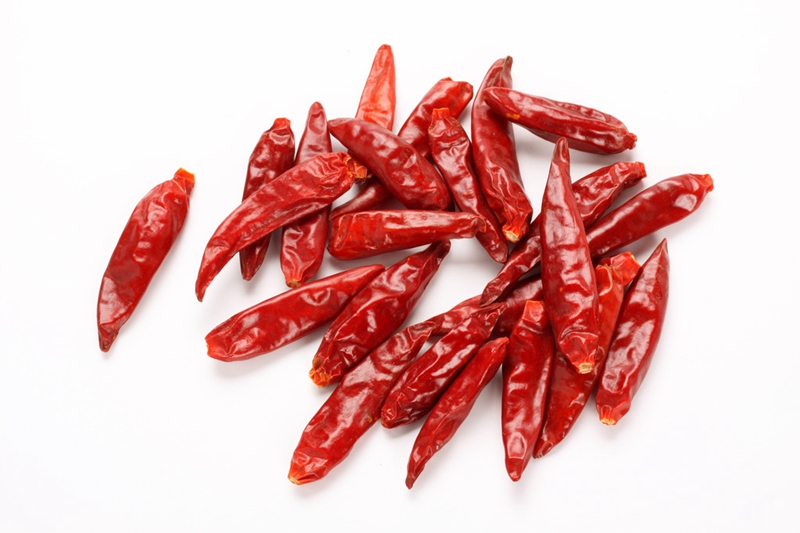
Dried chilies are not like fresh produce or frozen meat. They are hygroscopic – they absorb moisture from the air. That means your biggest risk is not temperature, but humidity. Without proper dehumidification, your entire inventory can develop mold and aflatoxin within weeks, turning a million‑dollar investment into a total loss.
Here is what you need to know about space requirements, turnkey costs, and the critical design choices that separate a profitable facility from a costly mistake.
How Much Space for 10,000 Tons of Dried Chilies?
Dried chilies are lightweight but bulky. You cannot just stack bags on the floor and hope for the best. Proper airflow is essential to prevent moisture pockets and maintain uniform temperature.
The industry standard for bagged dried chilies is about 0.4 tons per cubic metre. That is the density you get with standard stacking on pallets, with enough space for air to circulate.
For 10,000 tons:
- 10,000 tons ÷ 0.4 tons/m³ = 25,000 m³ of storage volume
If you build with a clear height of 6 metres, the floor area you need is:
- 25,000 m³ ÷ 6 m = approximately 4,166 m²
But that is just the net storage area. You also need aisles for forklifts, loading bays, machinery space, and office or inspection areas. Add a 30 percent buffer for all that, and you end up with a total construction area of roughly 5,500 to 6,000 square metres.
One practical tip: do not build lower than 6 metres. Increasing the height from 5 to 6 metres saves you about 1,000 square metres of foundation and roofing costs, which significantly lowers your cost per ton of storage.
Total Turnkey Cost – What You Are Looking At
For a 10,000‑ton dried chili cold storage, the total investment typically falls between $1.3 million and $1.8 million USD. The final number depends on the quality of the building, the climate control system, and the logistics equipment you choose.
Here is a rough breakdown of where the money goes.
Insulated warehouse: About $850,000 to $1.1 million. This covers the building itself – a steel structure with 100mm PIR insulation panels, high‑speed doors to minimise air exchange, and proper sealing to maintain stable conditions.
Climate control system: $250,000 to $350,000. This is not just refrigeration. For dried chilies, the critical component is active dehumidification. You need to remove moisture from the air, not just cool it. The target relative humidity is below 65 percent, and the temperature should be kept between 0°C and 5°C to preserve colour and pungency.
Racking and logistics: $150,000 to $250,000. This covers pallet racking for 10,000 tons and the forklifts needed to move product in and out efficiently.
The total turnkey cost includes design, supply, installation, and commissioning. It does not include land acquisition or ongoing operating costs.
Why Dehumidification Is Non‑Negotiable
This is where many first‑time builders get it wrong. Dried chilies absorb moisture from the air. If you just build a cold room without active dehumidification, condensation will form on the walls and ceiling. The chilies will absorb that moisture, and within weeks you will have mold and aflatoxin issues.
A simple cold room is not enough. You need a system that actively removes moisture from the air – typically a desiccant dehumidifier or a combination of refrigeration‑based dehumidification and mechanical ventilation. The target is below 65 percent RH at all times.
Without this, you are not building a storage facility. You are building a money pit.
Regional Cost Variations
The cost of building this type of facility varies significantly by region. Here is what we see in different markets.
South Asia (India, Pakistan): $1.1 million to $1.4 million. Labour costs are lower, but you need to pay extra attention to dehumidification due to monsoon seasons. The risk of moisture ingress is high.
Southeast Asia (Vietnam, Thailand): $1.3 million to $1.6 million. High ambient humidity means oversized dehumidifiers are required, which adds to equipment costs.
Africa / Middle East: $1.5 million to $1.9 million. Logistics premiums on imported steel and refrigeration units push the price higher.
Latin America (Peru, Mexico): $1.4 million to $1.8 million. Seismic structural requirements may increase steel costs, especially in earthquake‑prone areas.
Real Example: Chili Exporter in India
Here is a case that illustrates the value of getting the design right. A chili exporter in India built a 6,000‑square‑metre warehouse with a 10,000‑ton capacity. The total investment was $1.45 million USD.
Before the facility was built, the company lost about 15 percent of its annual stock to moisture and mold. That was a recurring loss they had simply accepted as part of doing business.
After installing active desiccant dehumidification to maintain below 60 percent RH, the spoilage rate dropped to under 0.5 percent. The facility also allowed the company to meet EU organic export standards, which opened up a higher‑priced market.
The payback period was 22 months – from saved inventory alone. That does not even include the premium revenue from export sales.