 Haocool

Author: Chen Hao, Senior Cold Storage Design Engineer
13 years of large-scale multi-story cold storage EPC design experience, specialized in agricultural wholesale market cold chain park construction. Completed over 20 multi-temperature layered cold storage projects across southern China, member of China Cold Chain Logistics Association.
Table of Contents
- Project Background & Client Demand
- Overall Layout & Floor Division Logic
- Full Temperature Zone Technical Parameters
- Customized Insulation & Vapor Barrier Design
- Refrigeration Unit Matching & System Configuration
- Intelligent Control & Energy-Saving Design Highlights
- Classified Agri-Product Storage Standard Matching
- Key Construction Difficulties & Custom Solutions
- Post-Operation Data & Customer Benefit Analysis
- FAQ for Large Agricultural Cold Park Investors
1. Project Background & Client Demand
Basic Project Info
- Client: China Agricultural Wholesale Market Holding Co. (State-owned national agricultural logistics platform)
- Location: Pingxiang City, Jiangxi Province (subtropical high temperature & high humidity climate)
- Total building area: 11,000 ㎡ three-story integrated cold storage logistics park
Handover completion: May 2020, full EPC turnkey delivery by Haocool Refrigeration
Core Client Pain Points Before Construction
- Local fresh produce circulation lacked centralized multi-temperature distribution hub; leafy greens, fruits, frozen seafood suffered high post-harvest loss without standardized cold chain;
- Single-temperature small cold rooms could not realize mixed storage of refrigerated fresh goods, frozen aquatic products and semi-finished agricultural food;
- Traditional cold houses had high power consumption, unstable temperature fluctuation, and no automatic monitoring traceability system to meet wholesale market regulatory requirements.
Project Core Design Target
Build a three-layer vertically distributed multi-temperature cold storage, covering 0–4°C chilling, adjustable variable temperature zone and -23°C deep freezing; realize integrated receiving, storage, sorting and delivery for regional agricultural wholesale market, reduce overall commodity spoilage loss below 4%.
2. Overall Layout & Floor Division Logic
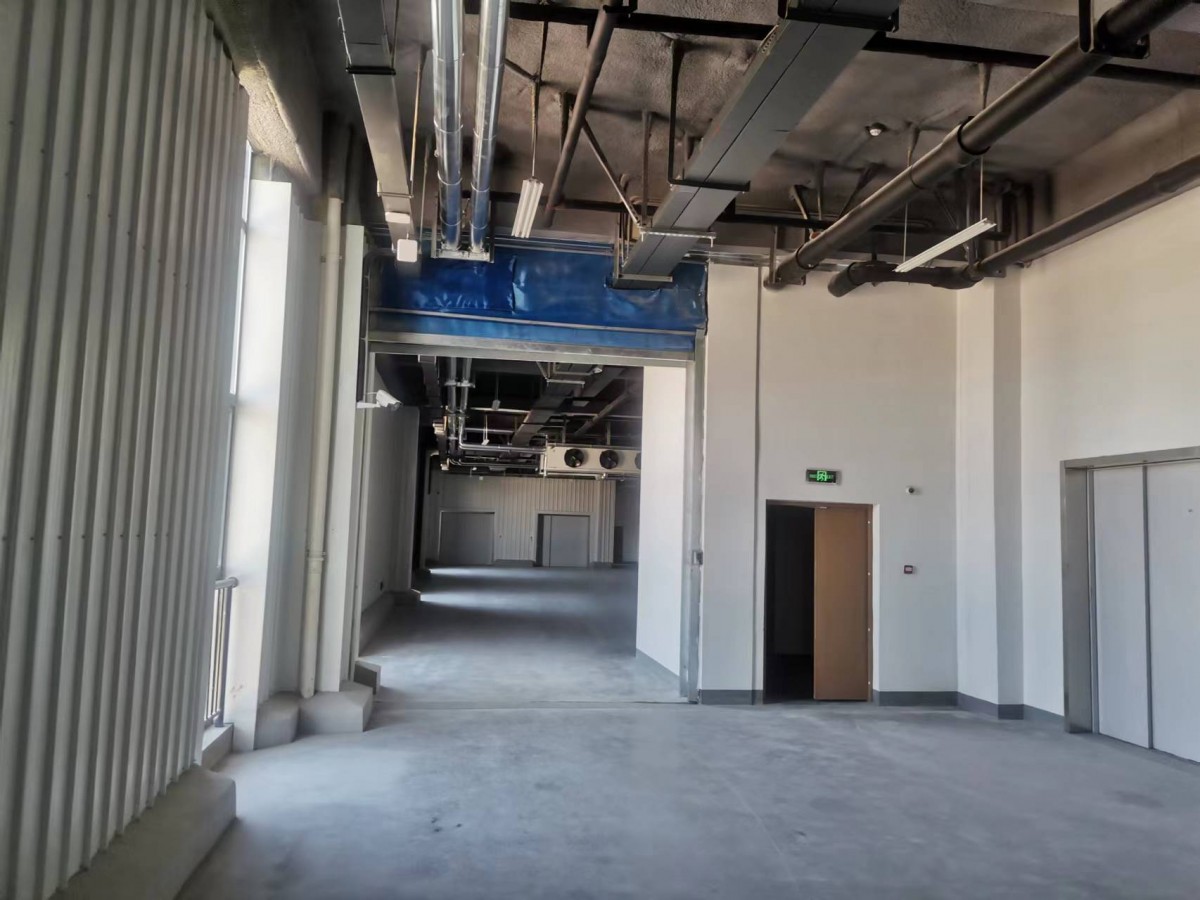
Total construction area split into three independent cold zones with separated refrigeration circuits, independent air circulation and isolated cargo passages to avoid cold loss during loading/unloading:
| Floor | Functional Positioning | Usable Area | Core Operation Scenario |
|---|---|---|---|
| 1F Perishable Chilling Zone | Fresh leaf vegetables, berries, fruits, pre-cooling temporary storage | 3,700 ㎡ | Daily wholesale short-cycle fresh goods turnover |
| 2F Convertible Variable Temp Zone | Root vegetables, preserved agricultural products, semi-finished food | 3,700 ㎡ | Adjustable 4℃ ~ -10℃ according to seasonal supply |
| 3F Deep Frozen Storage Zone | Frozen seafood, frozen meat, quick-frozen agricultural products | 3,600 ㎡ | Long-term stockpile for off-season supply |
| Supporting auxiliary facilities: 6 loading & unloading docks, buffer air curtain rooms, central intelligent monitoring control room, spare machine room, drainage and defrost recovery system. |
3. Full Temperature Zone Technical Parameters
Comply with national standard GB 50072-2023 Cold Storage Design Specification and ASHRAE fresh produce storage standards:
| Floor | Temperature Range | Allowed Temp Deviation | Core Supporting Technology |
|---|---|---|---|
| 1F Chilling Zone | 0–4℃ | ±0.5℃ | Double-layer cyanate ester vapor barrier + low-speed humidifying air coolers |
| 2F Variable Temp Zone | -23℃ ~ 4℃ | ±0.8℃ | Convertible independent chamber system, separate cold supply loop |
| 3F Deep Freezing Zone | -23℃ | ±1℃ | 180mm thick sprayed PU insulation + liquid pump circulation cooling |
4. Customized Insulation & Vapor Barrier Design
Jiangxi summer high humidity easily causes wall condensation and cold bridge penetration, so the project adopted graded insulation thickness differentiated by temperature zone:
| Parameter | 0–4°C Chilling Zone | -23°C Deep Freezing Zone | Industry Advantage |
|---|---|---|---|
| Sprayed PU Insulation Thickness | 100mm | 180mm | Thicker frozen layer avoids floor cold bridge frost buildup |
| Vapor Barrier Structure | Double-layer cyanate ester composite film | Double-layer cyanate ester composite film | Block southern humid air penetration, reduce insulation aging |
| Fire Classification Standard | Euroclass E (equivalent to domestic B2 flame retardant) | Euroclass E | Meet agricultural market fire acceptance standards |
| Key optimization: All floor slab joints, column wall connections filled with closed-cell PU foam to eliminate cold bridge leakage points unique to multi-story cold buildings. |
5. Refrigeration Unit Matching & System Configuration
All semi-hermetic screw compressors matched according to peak summer cooling load of Pingxiang local 36℃ ambient temperature:
| Equipment Model & Spec | Quantity | Matching Zone | Design Advantage |
|---|---|---|---|
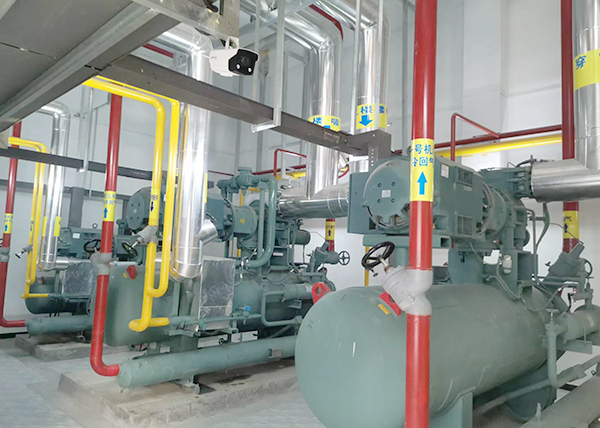
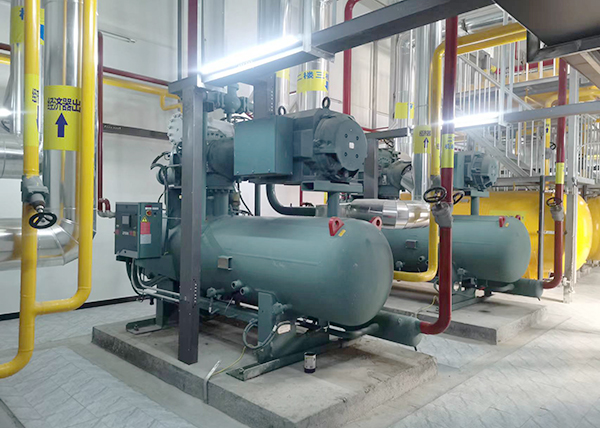
| 81kW (110HP) Semi-Hermetic Screw Compressor | 4 sets | 1F & 2F chilling/variable temp area | Variable frequency load adjustment for fluctuating daily cargo volume |
| 55kW (75HP) Semi-Hermetic Screw Compressor | 4 sets | 3F deep frozen zone | Stable low-temperature continuous operation |
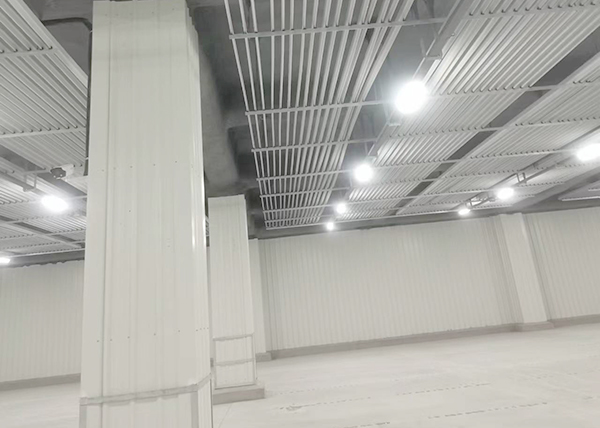
| Hot Gas Defrost Ceiling Air Coolers | 32 units | All three floors | Avoid electric defrost high power waste |
| Liquid Pump Circulation Refrigeration System | 2 sets | -23°C frozen floor | Improve heat exchange efficiency by 18% vs gravity liquid supply |
6. Intelligent Control & Energy-Saving Design Highlights
6.1 Hierarchical Independent Humidity Control
- 1F & 2F: Independent humidifier modules, stable RH 85%–95% for fresh vegetable anti-wilting storage
- 3F Deep freeze floor: Low humidity automatic cycle ventilation, prevent frost accumulation on goods surface
6.2 Core Energy-Saving Indicators
- Full-load COP reaches 3.8 at -23℃ freezing condition, 25% higher than conventional fixed-speed unit baseline (ASHRAE test standard);
- Heat recovery defrost system: Recycle compressor waste heat for chamber defrost, cut defrost power consumption by over 30%;
- Cloud-based load intelligent scheduling: Automatically reduce unit running power during low night electricity price valley period.
6.3 Full Traceability Monitoring System
24-hour real-time temperature & humidity sensor coverage, remote mobile phone alarm, all storage data permanently stored to meet agricultural market supervision and food safety traceability requirements.
7. Classified Agri-Product Storage Standard Matching
Customized storage schemes designed targeting the wholesale market’s mainstream agricultural goods, matched to three temperature zones:
| Product Category | Storage Temp | RH Level | Usable Storage Cycle | Matching Floor |
|---|---|---|---|---|
| Leafy Greens (Cabbage, Spinach) | 1℃ | 95% | Up to 21 days | 1F Chilling Zone |
| Root Vegetables (Potato, Radish) | 4℃ | 90% | Up to 180 days | 2F Variable Temp Zone |
| Frozen Seafood & Frozen Meat | -23℃ | Dry low humidity | Up to 18 months | 3F Deep Freeze Zone |
8. Key Construction Difficulties & Custom Solutions
Difficulty 1 Multi-story cold slab anti-cold-bridge construction
Ordinary single-layer cold storage does not involve floor heat loss; three-story vertical structure easily forms vertical cold bridges.
Solution: Separated sprayed PU insulation between upper and lower floors, waterproof anti-freeze floor coating, drainage slope design for defrost water centralized collection.
Difficulty 2 Southern high humidity vapor barrier failure risk
Long rainy season in Pingxiang leads to wall internal condensation.
Solution Full wall double-layer cyanate ester vapor barrier with lap joint sealing process, strict air tightness pressure test before equipment commissioning.
Difficulty 3 Synchronized commissioning of multi-temperature independent circuits
Three floors with different cooling demands are easy to cause system pressure imbalance.
Solution Separate refrigeration host loops for each floor, independent PLC control logic, staged temperature drop debugging during handover.
9. Post-Operation Data & Customer Benefit Analysis
After 5 full years of stable operation starting 2020:
1. Post-harvest spoilage loss of local agricultural products reduced from original 16% down to 3.8%;
2. Comprehensive power consumption per ton of goods reduced by 22% compared to the client’s previous scattered small cold rooms;
3. Realize off-season stockpile sales of frozen aquatic products, average annual gross profit increase of the wholesale market platform over USD 110,000 via seasonal price difference;
4. Realize centralized unified cold chain distribution for surrounding 12 counties, forming regional agricultural circulation core competitiveness.
10. FAQ for Large Agricultural Cold Park Investors
Q1 What’s the core difference between single-layer cold storage and multi-story agricultural logistics cold park?
A Multi-story projects save land resources for urban wholesale markets; each floor can be divided into independent temperature zones, but higher requirements for floor insulation, cold bridge treatment and layered refrigeration loop design, single-layer warehouses have simpler construction and lower technical difficulty.
Q2 Is COP 3.8 a reliable energy-saving index for -23℃ deep freezing?
A The data is tested under standard ASHRAE working conditions (ambient 32℃, full warehouse load). Variable frequency screw unit + liquid pump circulation system jointly realize high efficiency, traditional fixed-speed units only reach COP around 3.0 under the same condition.
Q3 How to solve condensation problem for cold storage in southern high-humidity areas like Jiangxi?
A Adopt double-layer composite vapor barrier sprayed PU wall insulation, set air curtain buffer rooms at all loading doors, match automatic humidity adjustment equipment for fresh storage floors.
Q4 What supporting facilities must be equipped for agricultural wholesale market cold parks?
A Multi-temperature layered zoning, independent pre-cooling temporary storage area, loading & unloading buffer docks, cloud temperature traceability system, heat recovery defrost energy-saving module, centralized defrost drainage system.
If you plan to invest or design multi-temperature layered agricultural cold storage logistics parks in southern high-humidity regions, contact our EPC engineering team for site survey, customized layout drawing and detailed turnkey budget quotation.
Construction & Completion Photos
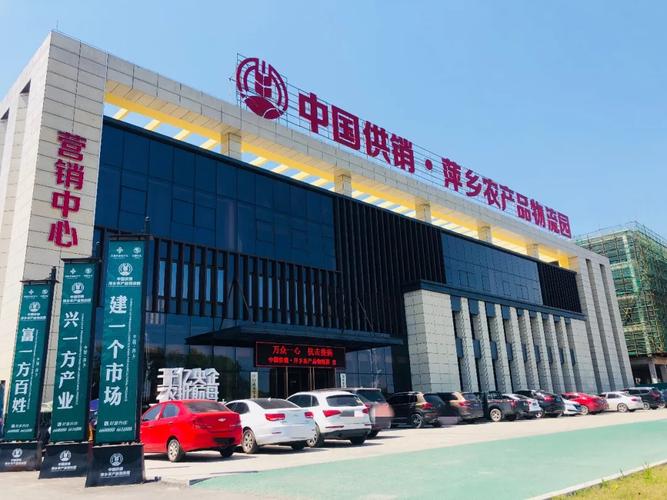
Jiangxi Pingxiang Agricultural Products Logistics Park