 Haocool

Project Date: August 2025
Client: Local fruit cooperative in Barkam, Aba Prefecture
Service Delivered: Plateau‑adapted custom design, air‑tight CA enclosure, refrigeration system, gas‑regulation equipment, on‑site installation, pressure tightness test and full commissioning
This real‑world EPC project delivers dual‑purpose controlled‑atmosphere and freezer storage built at roughly 2600 m altitude on the western Sichuan plateau. Local growers produce apples, plums and wild mountain berries, yet plateau environmental conditions create unique engineering barriers that standard low‑land cold‑storage designs cannot overcome.
Thin plateau air reduces refrigeration heat dissipation efficiency. Day‑night temperature swings can exceed 25 °C, alongside strong ultraviolet radiation, sand‑wind erosion and risk of winter ground frost‑heave. For decades local operators relied on primitive earth cellars, which generated massive post‑harvest losses and forced growers to sell fruit at low prices right after harvest. Long‑distance transport to rented cold warehouses in Chengdu added extra logistics expense and mechanical bruising to delicate mountain‑grown fruit.
Core Project Metrics
- Total built‑out volume: 2076 m³, split into dual functional zones: 1020 m³ CA chamber (-5‑0 °C) + 1056 m³ -18 °C deep‑freezer room
- Usable mixed‑fruit storage capacity: ~263 tons (calculated using plateau fruit stacking density and warehouse volume‑utilisation coefficient)
- Project turnaround: 45 working calendar days, including mandatory CA air‑tightness pressure test and 72‑hour full‑load temperature calibration
- Compliance baseline: GB/T34399 CA specification, NY/T4696 post‑harvest fruit preservation standard, custom mechanical adjustments for high‑altitude thin‑air operating conditions
Pre‑Construction Field & Business Pain Points
Our senior plateau cold‑chain engineer completed site assessment and documented four critical bottlenecks hurting the fruit cooperative’s profitability:
- Severely high spoilage inside traditional earth cellars
Simple underground cellars offered no precise temperature or gas control. Spoilage rate reached 34 % within just 30 days after picking. Growers had no option but to dump large volumes of fruit or sell at harvest‑time depressed prices. - Costly long‑distance outsourced cold‑storage in Chengdu
Renting storage space hundreds of kilometres away created heavy logistics bills. Multiple handling and trucking steps caused widespread mechanical bruising on high‑value mountain berries. - Ordinary off‑the‑shelf compressors failed under thin plateau air
Standard condenser sizing designed for low‑elevation locations could not achieve target set‑points because thinner air impairs heat rejection. - Absence of properly sealed CA chambers
Without professional gas‑tight construction, fruit ripened rapidly in‑storage. Operators could not hold stock for profitable off‑season marketing windows.
Local‑site constraint note: At 2600 m elevation every 1000 m gain in altitude brings approximately 10‑12 % cooling‑capacity attenuation for air‑cooled refrigeration hardware. Simple copy‑paste designs from plain‑land projects will under‑perform dramatically.
Custom‑Built Plateau‑Optimised Engineering Solutions
Every subsystem received modification for low‑pressure plateau conditions, frost‑heave risk, high UV exposure and strict CA gas‑leakage limits.
1. Anti‑Freeze & UV‑Resistant Building Envelope System
Special panel joint sealing and floor construction counteracts frost‑heave, sand‑wind ageing and strict CA air‑tightness requirements.
| Zone Type | PU Panel Specification | Plateau‑Specific Upgrade Details |
|---|---|---|
| -5‑0 °C CA preservation chamber | 100 mm B1 low‑smoke PUR panels | Double‑layer HDPE warm‑side vapour barrier; three‑layer glue plus two non‑woven fabric air‑tight joint construction (meets GB/T34399 500Pa / 30‑minute pressure‑drop criteria); exterior anti‑UV coating to resist sand‑wind surface degradation |
| -18 °C deep‑freezer chamber | 150 mm B1 high‑density PUR panels | Double‑layer XPS anti‑frost‑heave floor insulation; low‑temperature flexible elastic rubber door gaskets to maintain seal under large ambient temperature swings |
Mandatory construction details:
– All wall‑ceiling‑floor seams filled with mildew‑resistant low‑temperature sealant
– Nylon thermal‑break gaskets fitted for every hanging bracket to stop condensation under 25 °C diurnal temperature fluctuation.
2. Low‑Pressure‑Adapted N+1 Redundant Refrigeration Architecture
We added 28 % extra compressor power headroom to offset plateau cooling‑capacity loss. Condenser heat‑exchange area was intentionally enlarged for thin‑air heat dissipation.
- CA chamber: 4 ×10HP Emerson Copeland scroll compressors; 1‑main‑1‑standby automatic fault‑switch logic for each independent circuit
- ‑18 °C freezer zone: 2 ×28HP Frascold piston compressors with factory pre‑calibrated plateau operating parameters
- Universal DL/DD low‑speed evaporators; maximum airflow held ≤0.6 m/s to prevent fruit surface dehydration and weight‑loss
- Unified dual‑circuit hot‑gas defrost cycles eliminating damaging local temperature spikes for stored apples, plums and wild berries.
3. GB/T34399‑Compliant CA Gas‑Regulation Hardware
Integrated Runops gas‑control platform built around Siemens PLC core components.
– Combined O₂/N₂ generator, CO₂ scrubber and ethylene‑removal unit
– Tuned gas set‑points for local mountain fruit varieties:
– Apples & plums: O₂ 2‑4 %, CO₂ 1‑3 %
– Wild mountain berries: O₂ 3‑5 %, CO₂ ≤2 %
– Mandatory acceptance test criteria: starting pressure 500 Pa, pressure drop ≤100 Pa after 30 minutes holding
– Independent internal pressure‑balance bags fitted inside each CA room, preventing panel deformation from large internal‑external pressure differences; explosion‑proof inspection observation windows for routine operator checks.
4. HACCP‑Aligned Zoning & Immutable Monitoring Platform
Fabric curtain dividers are rejected; physical solid‑wall separation is enforced for food‑safety workflow.
- Yellow zone: Pre‑cooling buffer area with mandatory six‑hour field‑heat removal for freshly‑harvested fruit
- Green zone: Qualified CA and freezer bulk‑storage area
- Red zone: Isolation compartment for mould‑damaged or defective fruit batches
Intelligent traceability setup:
– Combined temperature, O₂ and CO₂ multi‑point sensors deployed every 120 m²
– Automatic data logging every 30 minutes; minimum two‑year non‑editable encrypted cloud storage complying with NY/T4696 fresh‑produce export audit rules
– Multi‑tier alarm system: on‑site sound‑light alert + SMS remote push triggered for out‑of‑range gas levels, temperature drift or equipment failure.
Plateau Cold‑Storage Site Assembly & Completed CA Chamber Photographs
These original on‑site images capture panel unloading, installation work, joint‑sealing operations and finished interior view of this Barkam plateau controlled‑atmosphere & freezer facility.
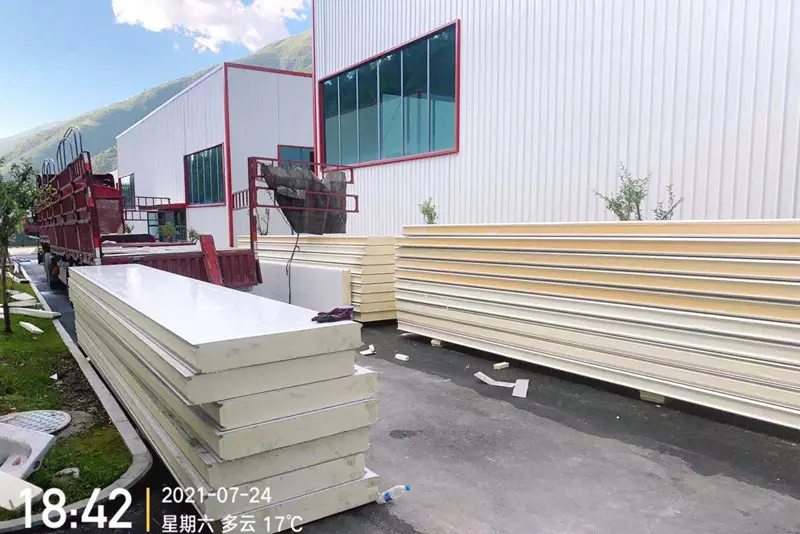
Unloading PU insulation panels for high‑altitude Barkam CA cold‑storage site
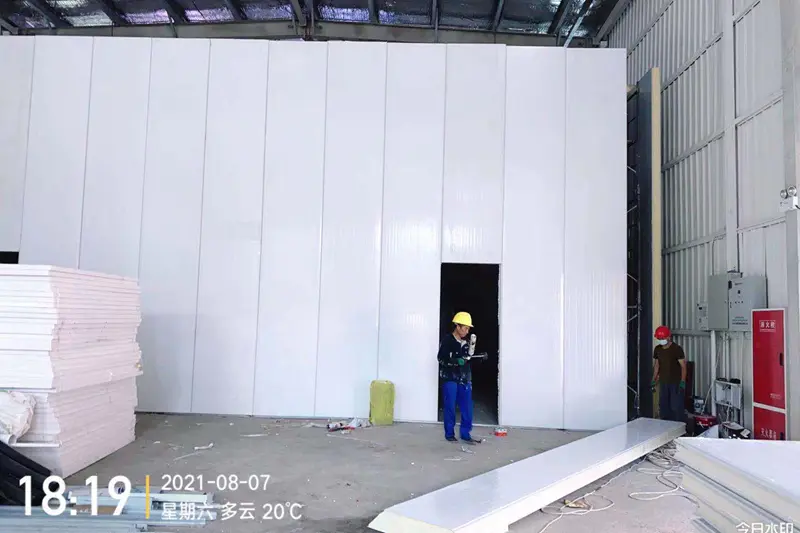
Workers installing cold‑room wall panels on‑site at plateau fruit facility
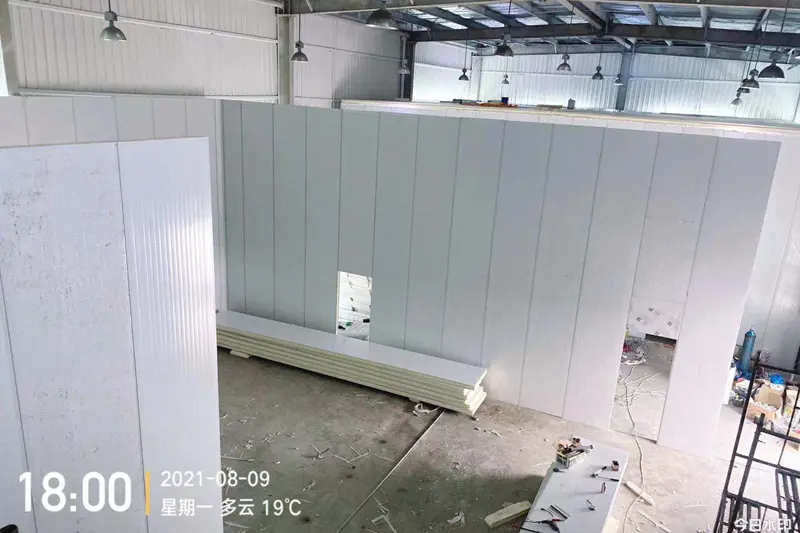
Workers installing cold‑room wall panels on‑site at plateau fruit facility
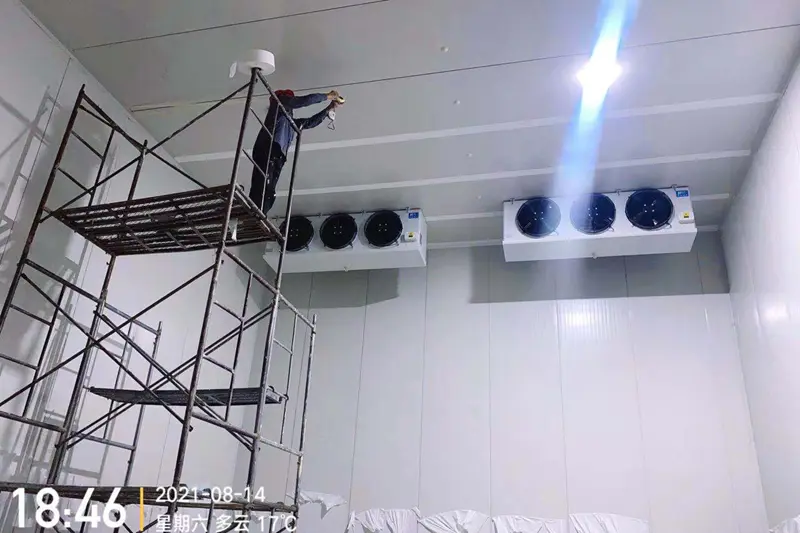
Technician applying multi‑layer air‑tight sealant to CA cold‑storage panel joints
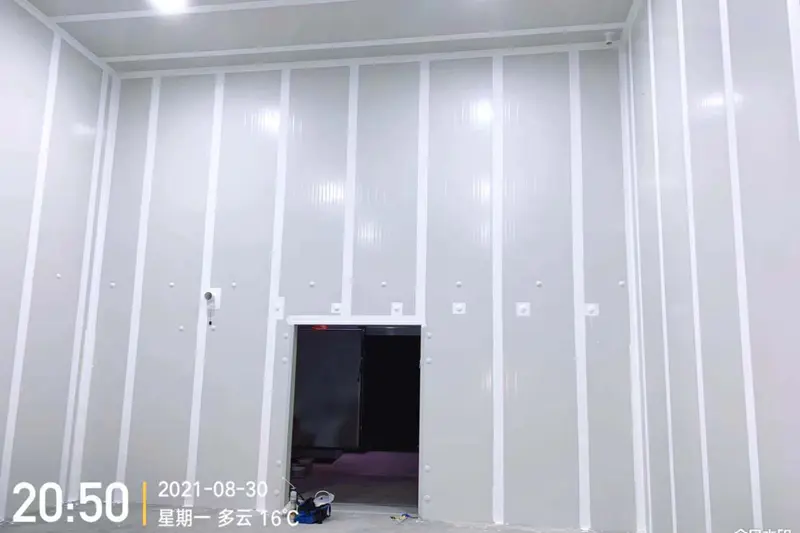
Technician applying multi‑layer air‑tight sealant to CA cold‑storage panel joints
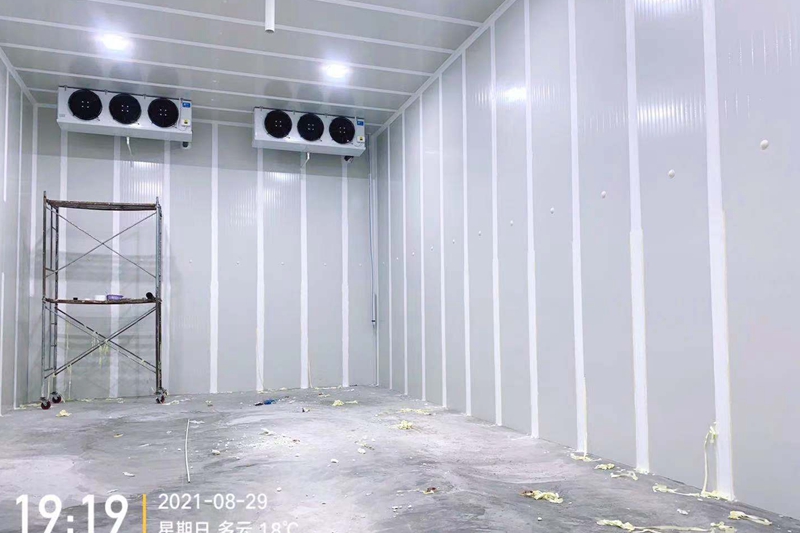
Interior shot of finished CA cold‑storage chamber with ceiling evaporator units
Measurable 12‑Month Operational Outcomes After Commissioning
After going live the dual‑purpose facility delivered tangible economic improvements for the local fruit cooperative:
✅ Professional CA gas‑tight construction extended marketable fruit shelf‑life from only 30 days up to 150 days, opening profitable off‑season selling opportunities
✅ Plateau‑calibrated oversized condenser hardware reduced annual facility‑wide power consumption by 24 %
✅ Overall fruit spoilage dropped from original 34 % down below 2.8 %
✅ Eliminated costly long‑distance outsourced cold‑storage logistics to Chengdu. Calculated full‑investment payback period is approximately 18 months.
Practical Lessons: Common Pitfalls When Building CA Cold‑Storage At High Altitude
From hands‑on Barkam plateau project delivery, these are costly mis‑steps frequently seen for mountain‑region fruit investors:
1. Deploy standard plain‑land compressors without adding 20‑30 % power redundancy → cannot hit target temperature under thin plateau air
2. Skip three‑layer multi‑material air‑tight joint construction → CA chamber leaks gas, effective preservation time gets cut in half
3. Omit double‑XPS anti‑frost‑heave floor build → winter soil frost expansion cracks cold‑room floor and panels
4. Leave out exterior UV‑resistant coating → outer panel surfaces degrade rapidly under plateau strong sunlight within two operating years
5. Store mixed fruit varieties inside one CA compartment without physical separation → cross‑ethylene exposure triggers premature ripening and batch losses
6. Use editable short‑term environmental logs → documentation fails export‑oriented agricultural‑product audits
7. Run CA or freezer chambers with no standby compressor → single‑unit shutdown risks total write‑off of valuable mountain‑fruit stock.
Simplified ROI reference formula for plateau CA cold‑storage investors:
Annual Net Income = Off‑season sales price premium + long‑distance logistics cost savings − yearly power & maintenance expenses − monetary loss from fruit spoilage
Payback Months = Total EPC project investment ÷ average monthly net operating profit
FAQ For Plateau‑Region Fruit Cooperative Managers
Q1: Why do compressors require extra power margin for Barkam‑style high‑altitude locations?
A: Thin plateau air reduces condenser heat‑dissipation performance. Roughly 10‑12 % cooling capacity is lost per 1000 m elevation gain, so additional power headroom must be built‑in.
Q2: What accepted industry test standard validates CA room air‑tightness?
A: Initial pressure set to 500 Pa; qualified result means pressure drop shall not exceed 100 Pa after holding for 30 minutes.
Q3: How many months can local apples be stored within this plateau CA cold‑storage?
A: Up to 150 days when maintaining correct O₂ and CO₂ controlled‑atmosphere set‑points.
Q4: What special floor treatment is mandatory for plateau winter‑frost zones?
A: Double‑layer XPS anti‑freeze floor insulation is required to prevent structural damage caused by permafrost frost‑heave movement.
Request Your Custom High‑Altitude CA Cold‑Storage Proposal
If you plan cold‑storage construction in elevated regions, please share your main fruit varieties and exact site altitude. Our engineering team can deliver air‑tight construction concept layout plus itemised USD‑denominated quotation.