 Haocool

Author: Senior Tropical French Frozen Food Cold Storage Engineer
12 years overseas cold storage EPC experience covering South Pacific tropical islands & EU food factories. Familiar with EU Regulation EC 852 HACCP, EN16798 HVAC standard, GB 50072 and New Caledonia cyclone & high-humidity local construction codes, completed multiple French dessert warehouse projects in Nouméa and surrounding archipelagos.
Project Overview
Haocool successfully completed a low-temperature cold storage project for Socalait, a renowned French ice cream manufacturer based in New Caledonia. The project included three freezer rooms, each maintained at -23°C, designed to store a large variety of premium ice cream products.
Core Basic Project Data
- Total effective volume: 1,720 m³ | Net height: 4.3 m
- Three independent fully isolated cold chambers, unified stable storage temp: -23°C
- Standard palletized ice cream storage capacity: 500 tons (GB 50072 calculation: 1720 × 0.60 utilization × 0.48 ton/m³ ice cream density)
- Mandatory control target: Temp fluctuation ≤±0.5℃, internal RH 70–78%, airflow velocity 0.2–0.5 m/s
- Construction & delivery cycle: 3.5 months (Shanghai factory prefabrication → ocean freight → local joint installation & full-load commissioning)
- Compliance certification: EU EC 852 HACCP, EN16798 energy standard, New Caledonia cyclone wind resistance code
Pre-Construction Client Critical Pain Points
- Old temporary simple cold room without full vapor barrier, tropical high humidity causes heavy frost on evaporators, annual ice cream scrap rate up to 16%;
- Single non-redundant compressor unit, frequent municipal power outages in island lead full batch melting loss;
- High-speed standard air coolers produce coarse ice crystals, customer complaints & Pacific export order rejection;
- Editable manual temperature records, unable to pass EU HACCP annual food supervision audit;
- Ordinary thin wall panels without typhoon reinforcement, hidden roof collapse risk in cyclone season.
1 Tropical Cyclone & High-Humidity Envelope Custom Design
Specially optimized for New Caledonia’s humid summer & annual cyclone risks:
| Structural Component | Standard Configuration | Island Exclusive Optimization |
|---|---|---|
| Wall & Ceiling PU Panel | 200mm B1 flame retardant low λ PUR (λ≤0.020) | Double-layer full HDPE warm-side vapor barrier; reinforced steel keel roof to meet cyclone wind load standard |
| Floor Insulation | Double staggered 50mm XPS anti-freeze board + anti-slip epoxy | Slight drainage slope to avoid melted ice cream liquid accumulation |
| Cold Door & Loading Vestibule | Thermal break stainless sliding door + heating air curtain | Full enclosed buffer hall to block hot humid air inflow during frequent loading |
Core construction rule: All wall/pipe penetration gaps filled with low-temperature mildew-proof sealant; all suspension bolts fitted nylon insulation gaskets to eliminate ceiling sweating.
2 Low-Wind Refrigeration System For Ice Crystal Control
The core difference between ice cream warehouse and ordinary frozen storage lies in ultra-low airflow design:
1. Per-chamber 1-main-1-standby Emerson scroll parallel rack (independent refrigeration loop for each room);
2. Special low-speed anti-frost air coolers, controlled airflow only 0.2–0.5 m/s to avoid ice crystal coarsening;
3. Hot gas circulation defrost only (electric heating strip forbidden for EU food safety);
4. Low GWP environmentally friendly refrigerant compliant with EU F-Gas regulation;
5. Oversized tropical condenser adapted to 34℃ peak island ambient temperature.
3 EU HACCP Compliant Intelligent Monitoring Platform
Siemens PLC industrial control system meeting European food traceability requirements:
1. High-precision PT100 sensors, temp deviation limited ≤±0.5℃, 5-year non-editable encrypted data storage;
2. Three-tier operation authority (Warehouse / QA / Factory Manager), all inbound & outbound batch records permanently archived;
3 Multi-channel alarm: On-site sound-light + mobile SMS + overseas headquarters remote APP push;
4. One-click export complete temperature mapping report for EU HACCP annual inspection.
4 Standard One-Way FIFO Logistics Layout
Three independent cold chambers share one sealed loading buffer vestibule:
– Separate storage by ice cream flavor & production batch;
– Strict first-in first-out management to avoid expired goods;
– Independent isolated temporary area for defective melted products to prevent cross-contamination of qualified stock.
5 Measurable Post-Operation 12-Month Benefits
- Full vapor barrier + low-speed fan design cut ice cream scrap rate from 16% down below 4%;
- Per-room standby unit completely eliminate power outage batch melting risk;
- Stable -23℃ ±0.5℃ low-wind environment maintains fine ice crystal texture, successfully expand export business to Fiji, Tahiti Pacific markets;
- Inverter parallel rack + full insulation reduce annual refrigeration energy consumption by 30% as measured;
- Complete tamper-proof traceability system pass EU EC 852 HACCP audit at one time without rectification.
6 6 Common EU HACCP Tropical Cold Storage Inspection Pitfalls
- High-speed air coolers used for ice cream storage → Coarse ice crystal leads export order rejection
- Single compressor without standby unit → Power outage mass product loss risk
- Omit double-layer vapor barrier for tropical island → Heavy frost & high power cost year-round
- Editable temperature recording system → All audit data invalid per EU regulation
- No typhoon reinforced roof keel → Hidden safety hazard in cyclone season
- No independent isolation area for defective ice cream → Direct HACCP rectification requirement
FAQ For French Frozen Dessert Overseas Manufacturers
Q1 Why ice cream cold storage must adopt ultra-low wind air coolers?
Air velocity higher than 0.6m/s accelerates sublimation inside packaging, forming large rough ice crystals that destroy smooth texture, failing European retail quality standards.
Q2 What’s the mandatory temperature fluctuation limit for EU ice cream storage?
-23℃ storage zone must be controlled within ±0.5℃; any long-term temperature drift causes irreversible texture damage.
Q3 What special construction requirements for New Caledonia cyclone season?
Roof needs thick reinforced steel keel structure plus double vapor barrier to resist strong tropical wind and high summer humidity.
Q4 What document needs to be reserved for EU HACCP audit?
5-year non-editable temperature trace logs, equipment calibration certificates and full warehouse design validation records.
Custom Tropical Frozen Dessert Cold Storage Inquiry
If you plan to build -22~-24℃ ice cream cold storage for French-speaking South Pacific islands, provide local maximum temperature & annual cyclone grade to get free wind-resistant layout drawing & EU compliant quotation.
Construction & Completion Photos
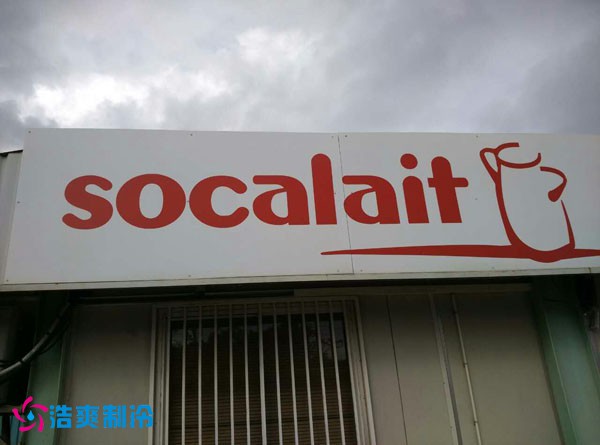
Exterior photos of the Socalait ice cream cold storage facility in France
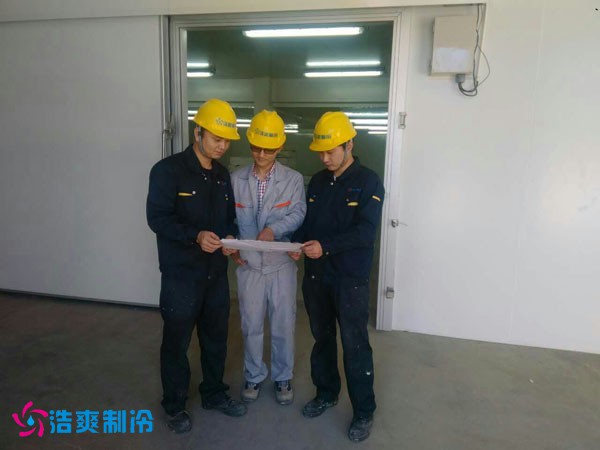
The engineering and technical personnel of Haocool Company are discussing the construction plan for the cold storage.
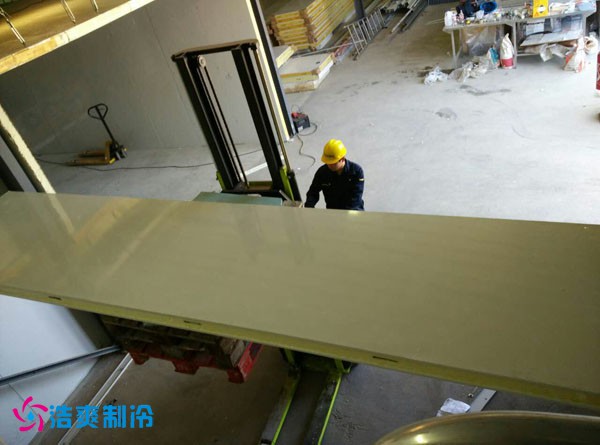
Haocool workers are installing cold storage panels.
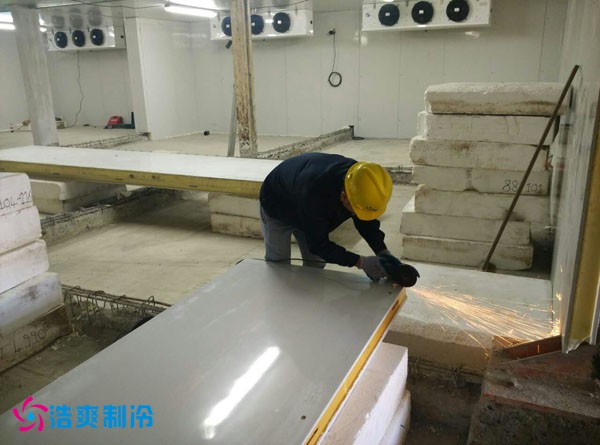
Cutting cold storage panels
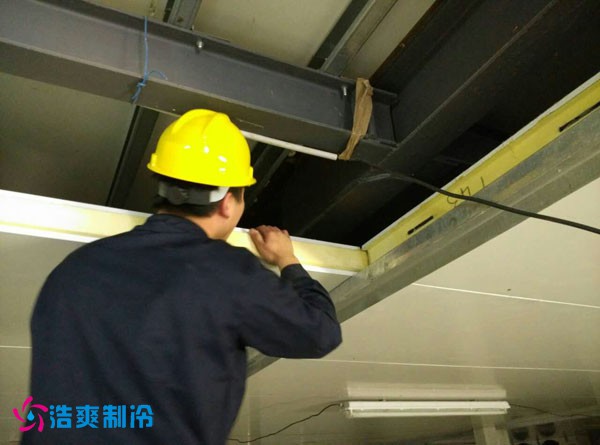
During the installation of warehouse panels, the joints are being joined.
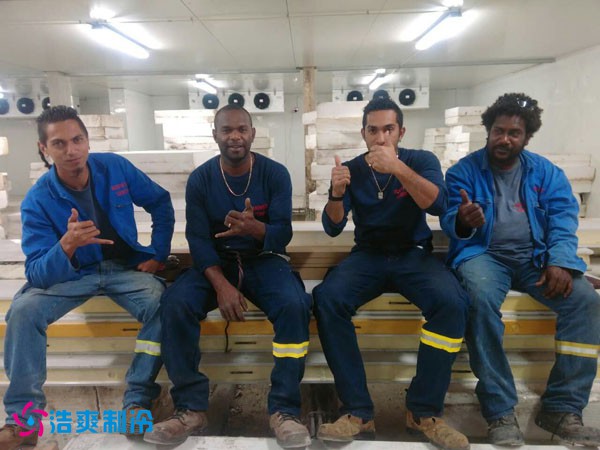
Local installers pose for a group photo.