 Haocool

For meat processors, exporters, and premium butchers, a dedicated aging and thawing cold room is not a luxury—it’s a competitive necessity. In markets like Vietnam, Pakistan, Nigeria, Saudi Arabia, and Uzbekistan, frozen meat is often thawed using unsafe methods—room temperature, warm water, or direct sunlight. The result? 10–15% juice and weight loss, bacterial growth, and quality downgrades that lead to rejection by hotels, supermarkets, or export buyers.
A professional dual-function cold room for meat aging and controlled thawing at 0–4°C with 85–95% humidity preserves tenderness, color, and yield—critical for premium sales in high-end markets.
This guide provides a complete breakdown of 100m² meat aging and thawing cold room costs, capacity planning, technical specifications, and real-world ROI analysis.
Aging vs. Thawing: Two Critical Functions, One Room
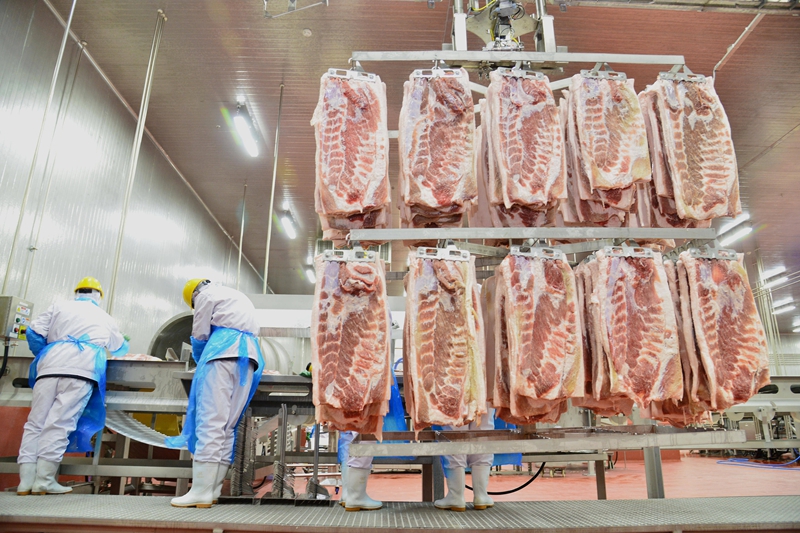
Dry Aging vs. Wet Aging
| Method | Temperature | Humidity | Duration | Characteristics | Yield Loss |
|---|---|---|---|---|---|
| Dry Aging | 0–4°C | 85–95% RH | 14–45 days | Concentrated flavor, tender texture, “umami” notes | 15–30% |
| Wet Aging | 0–4°C | Vacuum bag | 7–28 days | Milder flavor, more moisture retention | 3–5% |
Dry aging is the preferred method for premium steakhouses and high-end export markets. The controlled environment allows natural enzymes to break down connective tissue while moisture evaporates, concentrating flavor. The 85–95% humidity is critical—too dry and the meat develops a hard crust too quickly; too humid and mold can form.
Wet aging is more common for volume production. The meat is sealed in vacuum bags, retaining moisture and requiring less specialized equipment. However, the flavor profile is milder than dry-aged meat.
Controlled Thawing: The 0–4°C Advantage
Thawing at 0–4°C is the industry gold standard. Here’s why:
| Thawing Method | Temperature | Duration | Juice Loss | Bacterial Risk |
|---|---|---|---|---|
| Room Temperature | 20–25°C | 4–8 hours | 10–15% | High |
| Warm Water | 30–40°C | 2–4 hours | 12–18% | Very High |
| Controlled Thawing | 0–4°C | 24–48 hours | 2–5% | Low |
💡 Key Insight: Thawing at 0–4°C allows the meat to warm gradually, minimizing cellular damage and retaining juices. The slow process also prevents the surface from reaching temperatures that promote bacterial growth—critical in hot climates.
Storage & Throughput Capacity (100m² Layout)
| Parameter | Specification |
|---|---|
| Floor Area | 100 m² (e.g., 10m x 10m) |
| Ceiling Height | 3.5 – 4.0 m |
| Total Volume | ~350 – 400 m³ |
| Hanging Capacity | 8–12 metric tons of beef/lamb carcasses |
| Batch Thawing Throughput | 3–5 tons per day (with 24–48h cycle) |
| Aging Capacity | 5–8 tons (14–45 day cycle) |
Capacity Calculation
The 8–12 ton hanging capacity is based on standard beef carcass dimensions (approximately 0.25–0.35 m³ per carcass) and typical hanging rail spacing. For boxed or vacuum-packed meat, capacity increases to 12–16 tons.
Typical clients in Dubai, Lahore, Lagos, or Riyadh use this room to thaw imported frozen beef from India, Brazil, or Australia, then supply 5-star hotels, premium butchers, or retail chains.
Total Investment: What You Actually Pay
A fully installed, turnkey 100m² dual-function meat cold room (including insulation, refrigeration, humidity control, overhead rails, and commissioning) typically costs:
$42,000 – $58,000 USD
This price reflects real-world installations in regions with high ambient temperatures (up to 48°C) and variable power supply—designed to run reliably year-round.
💡 Note: Prices vary by equipment brand, automation level, and site conditions. The range reflects typical configurations for tropical and arid regions.
Detailed Cost Breakdown
| Cost Category | Share | Estimated Cost | Key Specifications |
|---|---|---|---|
| Insulation Panels | 25–30% | $12,000–15,000 | 100–150mm PU panels, B1 fire-rated, stainless/aluminum cladding |
| Refrigeration System | 30–35% | $14,000–18,000 | Scroll/screw compressors for 0–4°C precision |
| Humidity Control | 10–15% | $5,000–8,000 | Humidification/dehumidification system, 85–95% RH |
| Overhead Rails | 8–10% | $4,000–6,000 | Stain steel hanging rails, load-rated for 8–12 tons |
| Control Systems | 5–8% | $3,000–5,000 | Digital controllers, remote alarms, temperature logging |
| Installation & Commissioning | 8–10% | $4,000–6,000 | On-site build, testing, training |
| Total | 100% | $42,000–58,000 |
What Determines the Final Price?
- Aging vs. thawing priority: Dry aging requires more precise humidity control, adding 10–15% to cost
- Equipment brand: Bitzer (Germany) vs. domestic compressors — 30–50% price difference
- Railing system: Stainless steel vs. galvanized steel — significant cost difference
- Climate conditions: Systems designed for 45°C+ ambient require higher-capacity components
- Automation level: Basic monitoring vs. full remote control with mobile alerts
Why 0–4°C and 85–95% Humidity?
| Parameter | Why It Matters |
|---|---|
| 0–4°C | Stops bacterial growth while allowing enzymatic breakdown of connective tissue |
| 85–95% RH | Prevents surface drying in dry aging; critical for consistent aging quality |
| Controlled Environment | Eliminates temperature fluctuations that cause condensation and spoilage |
| XPS Insulated Floor | Blocks ground heat infiltration—critical in desert regions |
⚠️ Critical Warning: In hot climates, floor insulation is not optional. Without XPS insulation, ground heat can penetrate the cold room, causing temperature fluctuations that ruin aging meat.
Real-World Project: Halal Beef Processor in Lahore, Pakistan
A medium-scale halal meat exporter in Lahore, Pakistan faced a critical challenge: losing 12% of product weight during thawing and failing to meet UAE supermarket specifications.
Project Details
| Metric | Value |
|---|---|
| Client | Medium-scale halal meat exporter |
| Challenge | 12% weight loss during thawing; couldn’t meet UAE supermarket specs |
| Solution | 100m² dual-zone cold room (aging + thawing) with humidity control and stainless rails |
| Total Investment | $108,000 (premium configuration with enhanced humidity control) |
Results After 1 Year
| Metric | Before | After |
|---|---|---|
| Juice/Weight Loss | 12% | 2.5% |
| Market Access | Local only | Dubai-based halal distributor contract |
| Selling Price | $4.80/kg | $7.20/kg |
| ROI Timeline | — | 13 months |
How the ROI Was Achieved
- Reduced weight loss from 12% to 2.5%: Saving 9.5% of product value
- Secured export contract: Dubai distributor agreement at premium prices
- Price premium: $7.20/kg vs. $4.80/kg — 50% increase
- Consistent quality: Met UAE supermarket specifications
💡 Why $108,000 vs. the $42k–58k range? This premium configuration included enhanced humidity control systems, stainless steel rails, and additional climate-specific adaptations for Pakistan’s hot climate.
Why This Works in Hot Climates
| Feature | Benefit in Tropical/Arid Regions |
|---|---|
| High-Humidity Control | Prevents surface drying in 40°C+ ambient heat |
| Precise 0–4°C Zone | Stops bacterial growth (critical where power fluctuates) |
| Insulated XPS Floor | Blocks ground heat infiltration (common in desert regions) |
| Remote Alarm System | Alerts via SMS if temperature rises during power outage |
Operating Costs & Total Cost of Ownership (TCO)
Estimated Energy Consumption
- 100m² facility: ~800–1,200 kWh/month (varies by ambient temperature)
- Energy cost: Varies by local electricity rates
Estimated Annual Maintenance Costs
| Item | Frequency | Estimated Annual Cost |
|---|---|---|
| Compressor service | Annual | $500–800 |
| Humidity system maintenance | Quarterly | $300–600 |
| Rail inspection | Bi-annual | $200–400 |
| Door seal replacement | As needed | $200–400 |
| Refrigerant top-up | As needed | $200–500 |
| Total | — | $1,400–2,700/year |
Frequently Asked Questions
Q1: What’s the difference between dry aging and wet aging?
Dry aging: Meat is hung in a controlled environment (0–4°C, 85–95% RH) for 14–45 days. Natural enzymes break down connective tissue, concentrating flavor. Yield loss is 15–30%. Wet aging: Meat is sealed in vacuum bags for 7–28 days. The process retains moisture, with only 3–5% yield loss, but the flavor is milder.
Q2: Why is 0–4°C the ideal thawing temperature?
Thawing at 0–4°C allows the meat to warm gradually, minimizing cellular damage and retaining juices. The slow process also prevents the surface from reaching temperatures (above 4°C) that promote bacterial growth.
Q3: Can aging and freezing be done in the same cold room?
Not recommended. Freezing stops the aging process and damages cell structure. Aging requires consistent 0–4°C with no freezing. If you need both functions, a dual-temperature or multi-room configuration is required.
Q4: What is the typical ROI for a meat aging/thawing cold room?
For the Lahore case study, ROI was achieved in 13 months. Typical ROI ranges from 12–24 months, depending on production volume, product value, and market prices.
Q5: Does the $42,000–58,000 price include the hanging rail system?
Yes. The turnkey price includes stainless steel overhead rails rated for 8–12 tons. Premium configurations (like the Lahore case) may include enhanced rail systems that increase cost.
Q6: How does high ambient temperature affect design?
In hot climates (45°C+ ambient), systems require:
– Thicker insulation (150mm+)
– Higher-capacity compressors
– Enhanced humidity control
– XPS floor insulation to block ground heat
Ready to Build Your Meat Aging & Thawing Cold Room?
A 100m² dual-function meat cold room is a proven investment for meat processors and exporters targeting premium markets. With upfront costs of $42,000–58,000 and typical ROI in 12–24 months, it’s one of the most effective ways to reduce product loss, access premium markets, and increase profitability.
Tell us:
✅ Your country (e.g., Nigeria, Uzbekistan, Saudi Arabia)?
✅ Main meat type (beef, lamb, goat)?
✅ Daily thawing volume (tons)?
We’ll send you:
– Recommended layout and capacity
– Turnkey cost in USD
– Local voltage/power compatibility (220V/380V/50Hz)
– Heat-resistant insulation recommendations
– Estimated payback period based on your market prices
The storage parameters provided above are for reference only. Optimal conditions vary by meat type, packaging, climate, and operational requirements. Consult with a cold storage specialist for a customized solution.