 Haocool

For meat processors, seafood exporters, and frozen food distributors, a -25°C cold storage facility is more than just a freezer—it’s a strategic asset that determines product quality, shelf life, and market access.
Unlike standard -18°C storage, -25°C provides superior protection against freezer burn, slower fat oxidation, and longer product shelf life—critical factors for exporters targeting EU, US, and GCC markets. But what does it really cost to build? And will it pay for itself?
This guide provides a complete breakdown of -25°C cold storage costs, capacity planning, design considerations, and real-world ROI analysis.
Why -25°C? The Science Behind the Temperature
The choice between -18°C and -25°C is not arbitrary. Research on frozen food quality shows that:
- Lower temperatures slow fat oxidation: Fatty fish and meat degrade faster at -18°C
- Ice crystal growth is minimized: At -25°C, ice crystals remain small, preserving texture
- Shelf life is extended: Products stored at -25°C last 30–50% longer than at -18°C
For export-oriented businesses, -25°C is often the minimum temperature required to meet the cold chain standards of premium markets.
Storage Capacity: What Fits in Your -25°C Cold Room?
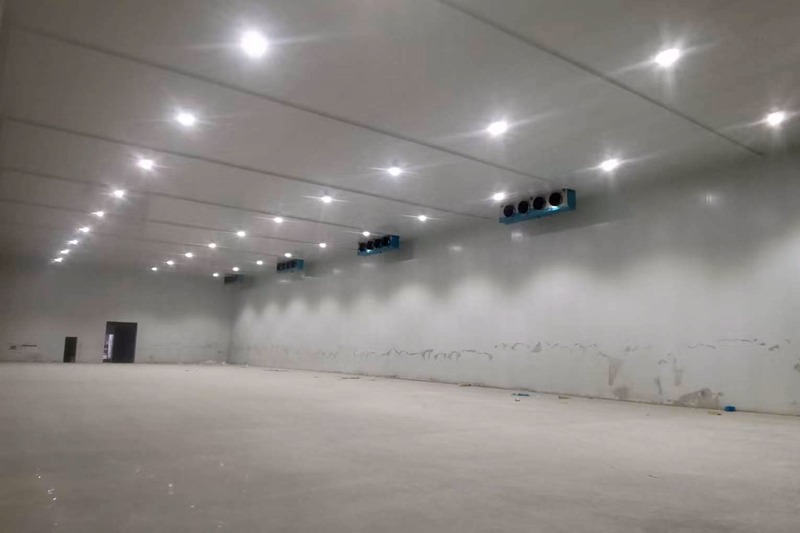
Capacity depends on product type, packaging, and storage density.
| Product Type | Pallet Load (20ft container equiv.) | Tonnage per 100 m² (5m height) |
|---|---|---|
| IQF Seafood / Meat Blocks | 30–35 pallets | 22–26 metric tons |
| Frozen Vegetables / Ready Meals | 35–40 pallets | 25–30 metric tons |
| Boxed Frozen Meat | 28–32 pallets | 20–24 metric tons |
Example Calculation: 500 m² -25°C Freezer
- Volume: 500 m² × 5m height = 2,500 m³
- Pallet Capacity: 750–900 pallets
- Tonnage: Approximately 550–680 metric tons
💡 Pro Tip: Don’t overpack. Proper airflow between pallets is essential for maintaining uniform -25°C temperature throughout the facility.
Total Investment: What You Actually Pay
A turnkey -25°C cold storage facility typically costs between $45,000 and $280,000 USD, depending on scale.
| Facility Size | Volume (approx.) | Storage Capacity | Total Cost (USD) | Best For |
|---|---|---|---|---|
| Small (100 m²) | ~500 m³ | ~80 tons | $45,000 | Local butcher, small seafood processor |
| Medium (300 m²) | ~1,500 m³ | ~250 tons | $105,000 | Regional distributor, export packer |
| Large (600 m²) | ~3,000 m³ | ~500 tons | $280,000 | National cold chain hub, meat exporter |
✅ Turnkey includes: Engineering design, PU panels, refrigeration, electrical, installation, commissioning
❌ Excludes: Land, concrete slab, utility connections
💡 Industry Context: For comparison, a standard -18°C frozen storage facility typically costs $90,000–120,000 for a 500-ton capacity. The -25°C system commands a premium due to thicker insulation and more powerful compressors.
Detailed Cost Breakdown: Where Your Money Goes
| Cost Category | Small (100 m²) | Medium (300 m²) | Large (600 m²) | Key Specifications |
|---|---|---|---|---|
| Insulation Panels | $15,000–20,000 | $35,000–45,000 | $70,000–90,000 | 150–200mm PU panels, B1 fire-rated, stainless/aluminum cladding |
| Refrigeration System | $12,000–16,000 | $30,000–38,000 | $80,000–110,000 | Bitzer/screw compressors, R404A or CO₂ system |
| Evaporators | $5,000–7,000 | $12,000–16,000 | $25,000–35,000 | DD/DL series low-temp fan coils with defrost control |
| Control Systems | $3,000–5,000 | $8,000–12,000 | $15,000–20,000 | Remote alarms, temperature logging, backup power interface |
| Installation & Commissioning | $5,000–7,000 | $12,000–16,000 | $25,000–35,000 | On-site build, testing, training |
| Total | ~$45,000 | ~$105,000 | ~$280,000 |
What Determines the Final Price?
- Equipment brand: Bitzer (Germany) vs. domestic compressors — 30–50% price difference
- Refrigerant type: R404A vs. CO₂ systems — CO₂ has lower environmental impact but higher upfront cost
- Climate conditions: Systems designed for high ambient temperatures (up to 48°C) require more powerful components
- Automation level: Basic monitoring vs. full remote control with mobile alerts
Why 150mm Insulation for -25°C?
| Temperature | Recommended Insulation | Why |
|---|---|---|
| -18°C (standard frozen) | 100mm | Sufficient for moderate temperature differential |
| -25°C (meat/seafood) | 150mm | Minimizes heat gain; critical for temperature stability |
| -35°C (blast freezing) | 150–200mm | Extreme temperature differential requires maximum insulation |
In hot climates (Southeast Asia, Middle East, Africa), 150mm is the minimum recommended thickness. Thinner panels will result in higher energy consumption and potential temperature fluctuations.
Key specifications:
- Density: 42 kg/m³ PU foam
- Cladding: 0.5mm double-sided stainless steel or aluminum
- Fire rating: B1 (non-combustible) is required for commercial facilities
Operating Costs & Total Cost of Ownership (TCO)
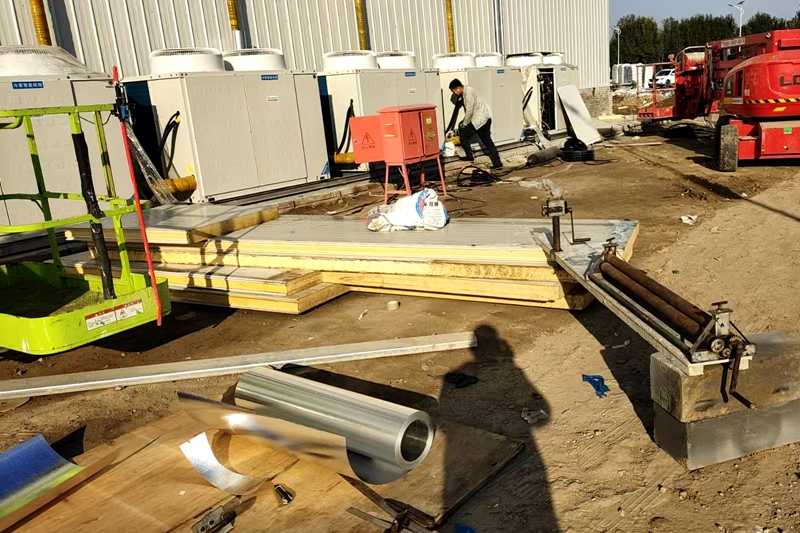
Energy is the single largest operating cost for -25°C cold storage—typically 60–70% of total operating expenses.
Estimated Energy Consumption
- Small (100 m²): ~1,000–1,500 kWh/month
- Medium (300 m²): ~3,000–4,500 kWh/month
- Large (600 m²): ~6,000–9,000 kWh/month
Actual consumption varies by ambient temperature, door opening frequency, and insulation quality.
Estimated Annual Operating Costs
| Cost Category | Medium Facility (300 m²) |
|---|---|
| Energy (varies by region) | Largest cost item |
| Compressor maintenance | $3,000–5,000/year |
| Evaporator cleaning | $1,500–3,000/year |
| Refrigerant top-up | $500–1,500/year |
| Door seal replacement | $500–1,000/year |
💡 Energy Efficiency Tip: Investing in high-quality insulation and efficient compressors may cost more upfront but typically pays back in 3–5 years through energy savings.
Real-World ROI: How to Calculate Your Payback
ROI Sources
- Reduced product loss: A -25°C facility can reduce freezer burn from 12% to 2%
- Extended shelf life: Enables sea freight instead of expensive air freight
- Market access: EU and GCC markets require certified cold chain compliance
- Premium pricing: Consistent quality commands higher prices
ROI Calculation Example
A medium-sized meat processor storing 500 tons annually:
| Metric | Value |
|---|---|
| Initial Investment | $105,000 |
| Annual Product Value | $1,500,000 |
| Loss Reduction (10% → 2%) | 8% = $120,000 saved/year |
| New Export Revenue | $80,000/year |
| Annual Benefit | $200,000 |
| Payback Period | ~6–8 months |
💡 Industry Benchmark: Typical ROI for -25°C cold storage investments ranges from 1.5 to 2 years, depending on utilization rate and product value.
Real-World Project: Mombasa, Kenya – Fishery Cooperative
A fishery cooperative in Mombasa, Kenya needed to freeze tuna loins within 2 hours of landing to preserve quality for EU export.
Project Details
| Metric | Value |
|---|---|
| Challenge | Freeze tuna loins within 2 hours of landing |
| Solution | 200 m² blast freezer (-35°C) + 300 m² -25°C storage |
| Total Investment | $230,000 |
| Outcome | Successfully exporting to EU markets |
| Compliance | HACCP, BRCGS, SASO standards |
Key Success Factors
- Rapid freezing: The -35°C blast freezer locks in quality immediately after landing
- Stable storage: The -25°C storage room maintains quality for export shipping
- Compliance: Met EU food safety standards through proper temperature management
Frequently Asked Questions
Q1: What’s the difference between -25°C and -18°C cold storage?
- -18°C: Standard frozen storage for most products; shorter shelf life
- -25°C: Extended shelf life, better quality preservation, required for many export markets
Q2: Is 150mm insulation sufficient for -25°C in hot climates?
For tropical climates (ambient temperatures above 35°C), 150mm is the minimum recommended. In extreme heat (45°C+), 200mm panels may be necessary for energy efficiency.
Q3: What is the typical operating cost for a -25°C cold room?
Energy is the largest operating cost. For a medium facility, expect:
- Energy: 3,000–4,500 kWh/month (varies by region)
- Maintenance: $5,000–9,000/year
- Total annual operating cost: Varies significantly by local electricity rates
Q4: Can I build a -18°C cold room now and upgrade to -25°C later?
Not practically. Upgrading requires replacing insulation panels, upgrading compressors, and reconfiguring the entire system. It’s more cost-effective to build the right temperature from the start.
Q5: What compliance is required for export to EU or GCC markets?
EU and GCC markets typically require:
- HACCP food safety certification
- BRCGS or IFS quality standards
- Temperature records with audit trails
- SASO for Saudi Arabian market
Ready to Build Your -25°C Cold Storage?
A -25°C cold storage facility is a proven investment for meat processors, seafood exporters, and frozen food distributors. With upfront costs ranging from $45,000–280,000 and typical ROI in 1.5–2 years, it’s one of the most effective ways to reduce product loss, access premium markets, and build scalable cold chain infrastructure.
Tell us:
✅ What you’re storing (meat? seafood? IQF vegetables?)
✅ Target market (EU, GCC, USA, local?)
✅ Ambient temperature at your site?
We’ll send you:
- Recommended size (m² + pallet/ton capacity)
- Turnkey cost in USD
- Estimated monthly energy cost
- Compliance roadmap (HACCP, BRCGS, SASO, etc.)
The storage parameters provided above are for reference only. Optimal conditions vary by product type, packaging, climate, and operational requirements. Consult with a cold storage specialist for a customized solution.