 Haocool

If you are an overseas investor looking at cold chain infrastructure, this is usually the first question you ask. It is a practical question, and the answer is not as straightforward as you might think.
The short answer is that it depends on what you are storing, how cold you need it, and how complex the building is. A million dollars can build a 6,000-square-metre fresh produce warehouse or a much smaller pharmaceutical freezer. The difference comes down to temperature requirements, ceiling height, and zoning.
Here is a practical breakdown of what $1 million USD can get you in different scenarios.
Temperature Is the Biggest Factor
The temperature you need determines the thickness of the insulation, the size of the refrigeration system, and ultimately the size of the facility you can build.
Fresh Produce Storage (0°C to 5°C)
This is the most common type of cold storage and the most economical to build. It is used for fruits, vegetables, dairy, and general chilled goods. Because the temperature is moderate, insulation panels can be thinner (around 100mm) and the refrigeration system does not need to be oversized.
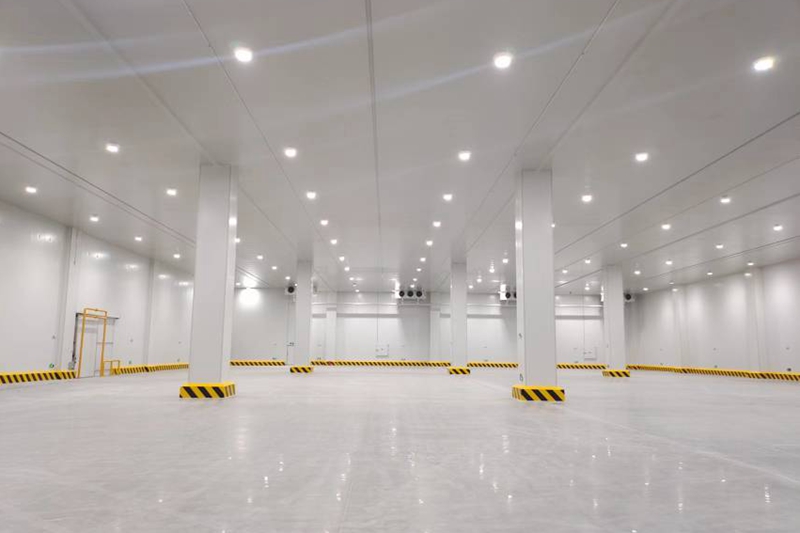
With a $1 million budget, you can typically build around 6,000 square metres of floor space with a ceiling height of about 5 metres. That gives you roughly 30,000 cubic metres of storage volume.
Frozen Storage (-18°C to -25°C)
This is for meat, seafood, frozen ready meals, and ice cream. The lower temperature requires thicker insulation panels (at least 150mm) and more powerful compressors. The cost per square metre is significantly higher.
With the same budget, you are looking at a smaller facility – roughly 4,500 to 5,000 square metres, depending on the equipment brand and local labour costs.
Blast Freezing and Ultra-Low Temperature (Below -35°C)
This is the most expensive type of cold storage. It is used for rapid freezing in food processing plants, central kitchens, and high-value frozen goods. The equipment is heavy-duty, the insulation is thick, and the engineering is complex.
For this type of facility, $1 million might get you 3,000 to 4,000 square metres at most, and that is with careful specification choices.
Ceiling Height and Layout Matter
Floor area alone does not tell the full story. The ceiling height determines the total volume you can store. A 5-metre ceiling gives you more cubic metres than a 4-metre ceiling on the same footprint.
For standard fresh produce storage with a 5-metre ceiling, a $1 million investment typically builds about 6,000 square metres. If you go with a 4-metre ceiling, you lose about 20 percent of your total volume for the same floor area – so the effective storage capacity drops even though the construction cost stays similar.
Room segmentation also affects the cost. A single large room is cheaper to build than multiple smaller rooms. If you need separate temperature zones – for example, a chilled section and a frozen section – you pay more for additional insulation walls, doors, and independent refrigeration controls. That reduces the total floor area you can build within the same budget.
Pharmaceutical and High-Spec Storage
Medical cold storage is in a category of its own. These facilities require precision temperature control, backup refrigeration systems, and strict compliance with GMP or GDP standards. The equipment is more expensive, and the design is more complex.
With a $1 million budget, a pharmaceutical cold storage typically covers around 4,500 square metres – smaller than a fresh produce facility but larger than a blast freezer, simply because the temperature range (2–8°C) is moderate.
How Much Product Can You Store?
The storage capacity depends on what you are storing and how you stack it. Here are general estimates for a 6,000-square-metre facility with 5-metre ceilings.
Fresh produce: roughly 7,000 to 9,000 metric tons. This assumes efficient pallet stacking with moderate aisle space.
Frozen meat and seafood: roughly 5,000 to 7,000 metric tons. Frozen products are denser, so you get more weight per cubic metre.
Pharmaceuticals and high‑value goods: roughly 3,000 to 5,000 metric tons. These are often stored in smaller containers or require more space per pallet due to segregation requirements.
What About Regional Differences?
Costs vary significantly between regions. In South Asia, labour and materials are cheaper, so you can build more for your dollar. In the Middle East or Africa, logistics premiums on imported equipment push costs higher.
Climate also plays a role. A facility in a hot, humid region needs larger condensers and possibly extra dehumidification, which adds to the equipment budget. A similar facility in a temperate climate would cost less to build and run.
Is a Multi‑Temperature Facility Worth It?
Some operators want a single temperature zone, which is the cheapest option. Others need a mix – a chilled room for fresh goods, a freezer for frozen stock, and maybe a blast freezer for quick processing. A multi‑zone facility is more expensive to build, but it also generates more revenue because you can store a wider variety of products.
If you are running a distribution centre or a wholesale market, the extra cost for zoning is often justified by the increased business flexibility.