 Haocool

When planning a large cold storage project, one of the first questions investors ask is:
How large does the building need to be to store 70,000 tons of products?
The required construction area depends on storage density, racking systems, building height, and operational space planning. A scientific layout can significantly reduce land use while maximizing storage capacity.
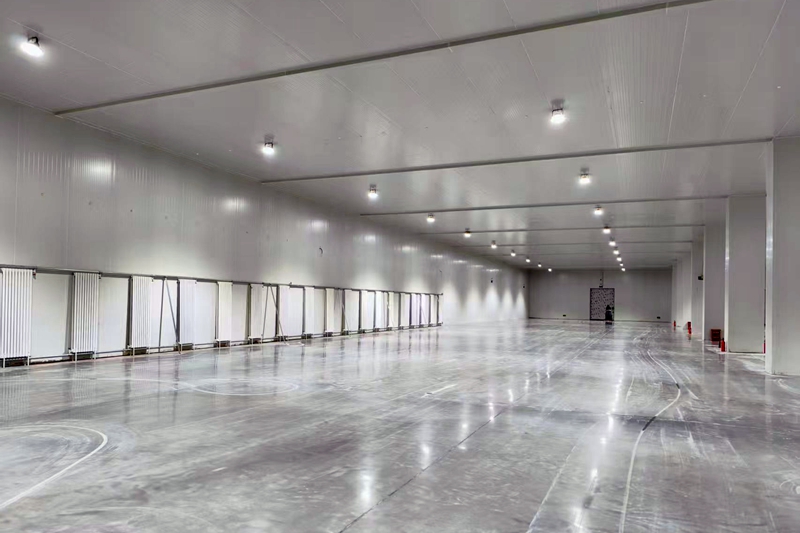
Storage Density Determines Floor Area
Different storage systems require different space per metric ton.
Standard Pallet Racking
- Space required: 1.5–2.0 m² per metric ton
- Suitable for conventional warehousing
- Lower automation, easier maintenance
High-Bay & Automated Racking Systems
- Space required: 1.0–1.2 m² per metric ton
- Uses vertical space efficiently
- Ideal for logistics hubs and high-throughput cold chain centers
Base Storage Area Calculation
Using a mid-efficiency storage design:
- Total storage capacity: 70,000 metric tons
- Space per ton: 1.5 m²
Base storage floor area = 70,000 × 1.5 = 105,000 m²
Additional Operational Areas (Essential but Often Overlooked)
A functional cold storage facility requires more than storage rooms. Space must also be allocated for:
- Refrigeration equipment rooms
- Loading & unloading docks
- Sorting and staging areas
- Forklift traffic lanes
- Buffer zones
- Control rooms and offices
Industry standards recommend adding 20%–30% extra space for operational support.
Practical Planning Range
In real-world engineering projects, a 70,000-ton cold storage facility typically requires:
Approximately 120,000 – 140,000 m² of construction area
The final size depends on:
- Storage temperature requirements
- Building height design
- Level of automation
- Workflow efficiency
- Site layout and logistics planning
Professional warehouse simulation and 3D layout design are recommended before construction to avoid space waste or capacity shortages.