 Haocool

Author: Wang Hao, Senior Large Cold Chain Logistics Engineer
10 years of EPC design experience for 10,000–50,000 m³ food & e-commerce cold distribution parks. Familiar with GB 50072-2021 cold storage design standard and China Cold Chain Association cost specification, completed multiple cross-border large logistics cold warehouse projects in Southeast Asia and China.
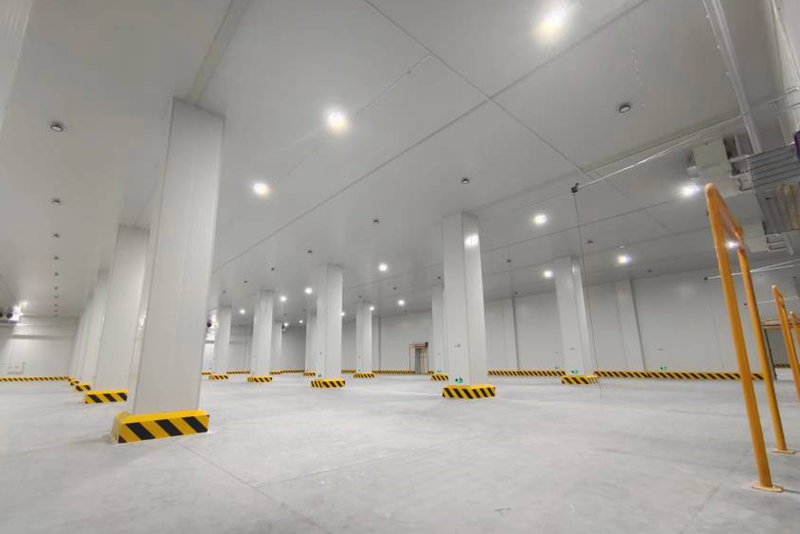
Real view of the cold storage of a 20,000㎡ multi-temperature zone food cold chain distribution center
20,000 m³ large multi-temperature cold distribution center is the core storage facility for chain supermarkets, snack brands, frozen food factories and fresh e-commerce national distribution networks. Different from small single-temperature cold rooms, large logistics warehouses require parallel screw unit systems, independent receiving buffer halls, hydraulic loading docks and full intelligent WMS management. Many investors only compare total price without distinguishing temperature zone, unit type and supporting configuration, leading to over-budget or ultra-high long-term power consumption.
1 Standard Layout & Core Matching Configuration for 20,000 m³ Cold Warehouse
Basic Spatial Parameters
- Total effective volume: 20,000 m³
- Standard net height: 5m → Floor area approx 4,000 ㎡
- Standard zoning: Receiving buffer hall (10℃) + 0–5℃ fresh zone + -18℃ frozen zone (3 independent isolated chambers)
- Mandatory supporting facilities: Hydraulic loading docks, air curtain doors, anti-collision guardrails, fire protection system, standby generator, WMS temperature traceability platform
Refrigeration System Core Selection Contrast (Key Industry Difference)
| Scheme Type | Applicable Scene | Advantages | Disadvantages |
|---|---|---|---|
| Multi-Screw Parallel Rack Unit | ≥10,000 m³ large distribution center | Load stepped adjustment, single machine fault without full warehouse shutdown, 20–30% lower annual power consumption | Slightly higher one-time investment |
| Separate Single Independent Unit | Small 500 m³ single cold room | Low upfront cost for tiny space | Load mismatch for large warehouse, frequent overload, high maintenance cost |
Critical Standard Note (GB 50072): 20,000 m³ multi-temperature distribution center must adopt parallel screw rack system to cope with peak order frequent door opening load fluctuation.
Standard Insulation Matching
- Fresh zone (0–5℃): 100mm B1 flame-retardant PU double color steel panels
- Frozen zone (-18℃): 150mm B1 high-density polyurethane panels
- All floor: XPS anti-freeze insulation + heavy-duty wear-resistant concrete layer (≥3t load capacity)
2 2026 Full Turnkey Total Cost Reference (USD, Excluding Land & Civil Foundation)
Price based on domestic variable frequency parallel units, standard racking & basic WMS system; Import Bitzer/Copeland parallel units or full automation AGV will add 25–40% total budget.
| Warehouse Configuration Type | Full Turnkey Cost Range | Effective Storage Ton Capacity | Suitable Enterprise Scale |
|---|---|---|---|
| Basic Dual-Temp (0~5℃ + -18℃, Manual Pallet) | $450,000 – 520,000 | 3,000 – 3,400 tons frozen mixed goods | Regional chain food distributor |
| Full Multi-Temp + Parallel Inverter Unit | $520,000 – 600,000 | 3,400 – 4,000 tons full pallet storage | National e-commerce & factory distribution hub |
Four Major Fixed Cost Proportions of Large Cold Warehouse
- Insulation Enclosure & Floor Project (30–38%): PU panels, anti-freeze ground, air curtain cold doors, buffer hall structure
- Parallel Screw Refrigeration System (35–45%): Rack compressors, evaporative condensers, low-speed air coolers, defrost system
- Intelligent Electric & WMS Traceability (10–18%): PLC central control, 5-year non-editable data logger, SMS multi-level alarm
- Auxiliary Construction & Installation (12–22%): Hydraulic loading docks, anti-collision columns, fire protection, on-site commissioning labor
Price Fluctuation Key Factors
- Climate difference: Tropical areas with summer ambient over 36℃ need oversized condensers, cost up 8–15%
- Fire grade: B1 flame retardant panels cost 10–20% higher than ordinary B2 grade
- Automation upgrade: AS/RS stereoscopic racking + AGV robot increase total investment by 30–60%
- Multi-temperature partition: Each extra independent cold chamber raises budget by 12–20%
3 Standard Daily Power Consumption Reference (Classified By Temperature Zone)
Distinguish fresh and frozen zones to avoid one-sided average data:
- 0–5℃ Fresh Storage: 8–14 kWh per ton per day
- -18℃ Frozen Storage: 38–52 kWh per ton per day
Energy-saving optimization effect: Inverter parallel unit + full air curtain buffer doors reduce annual electricity expenditure by 22–30% compared with fixed-frequency single units.
4 Measurable Operation Benefits For Large Distribution Enterprises
- Centralized regional storage cuts cross-city long-distance logistics freight by 18–25%
- Parallel unit redundant design eliminates full warehouse temperature runaway risk during equipment breakdown, food spoilage loss controlled below 1.2%
- Multi-temperature zoning realizes unified storage of fruit, dairy, frozen meat and pre-made food, improve inventory turnover cycle by 35%
- 24h remote WMS monitoring reduces daily warehouse management labor cost
5 Real 22,000 m³ Malaysia Food Distribution Cold Storage Case
Basic Project Info
- Client: National frozen food chain distributor in Malaysia
- Warehouse volume: 22,000 m³ three-temperature parallel rack cold warehouse
- Total turnkey investment: ~USD 580,000
- Storage capacity: Over 3,000 tons mixed frozen & fresh pallet goods
Average daily power consumption: 40–55 kWh per ton
Post-Operation ROI Data
- Seasonal logistics cost saving + spoilage loss reduction create stable annual net income
- Verified full investment payback period: 2.5 years after full commissioning
- Inverter parallel system cut annual power bill by 24% vs traditional single unit scheme
6 6 Common Large Cold Warehouse Procurement Pitfalls
- Adopt separate single units for 20,000 m³ large warehouse → Serious load mismatch, annual electricity surges over 20%
- Omit hydraulic loading dock & air curtain buffer hall → Frequent temperature fluctuation, high food rot rate
- Choose B2 thin insulation panels to save upfront cost → Severe cold leakage, long-term operation cost far higher
- No standby generator for large distribution center → Full batch goods scrap risk during city power failure
- Ignore WMS temperature traceability system → Fail local food safety regular inspection
- Simplify fire protection & anti-collision facilities → Extra rectification cost after acceptance
7 Simple ROI Calculation Formula For Cold Park Investors
Annual Net Profit = (Logistics Freight Saving + Spoilage Loss Reduction) − Annual Electricity & Maintenance Operating Cost
Full Investment Payback Years = Total Turnkey Investment ÷ Annual Average Net Profit
8 FAQ For Cold Distribution Park Developers & Food Factory Infrastructure
Q1 Why large 20,000 m³ warehouse cannot use independent single compressors?
A Per GB 50072 standard, large cold warehouses have drastic load fluctuation during daily inbound & outbound. Parallel screw racks can start/stop units according to actual cooling demand, while single units always run at full load with low efficiency and high failure risk.
Q2 How much extra cost to add automated stereoscopic racking?
Add full AS/RS robot storage system will increase total investment by 30–60%, suitable for platforms with daily order volume over 60,000 pallets.
Q3 What mandatory supporting facilities for 20,000 m³ distribution cold warehouse?
Independent receiving buffer hall, hydraulic loading dock, air curtain cold doors, standby emergency generator, 7-year non-editable temperature WMS traceability system, B1 fire insulation panels.
Q4 How much does tropical high temperature climate affect total budget?
Summer ambient over 36℃ requires oversized heat dissipation condensers and extra moisture-proof vapor barrier, total construction cost rises by 8–15%.
Custom Large Multi-Temp Cold Distribution Center Inquiry
If you plan to build 10,000–50,000 m³ fresh & frozen cold logistics park, provide warehouse volume, temperature zone demand and local maximum summer temperature to get free layout drawing and itemized full cost breakdown quotation.