 Haocool

An 800-square-meter cold facility is a strategic sweet spot for mid-sized agribusinesses, meat packers, and regional distributors. It’s large enough to achieve economies of scale, yet manageable enough to build within a reasonable budget. But the cost—and value—depends entirely on what you’re storing.
This guide breaks down the real costs of three cold room types—chilled, frozen, and pharmaceutical—so you can make an informed investment decision.
Storage Capacity: How Much Can You Store?
An 800m² facility with 4.0m clear height provides approximately 3,200m³ of usable volume. Storage capacity varies by product density and storage configuration:
| Cold Room Type | Temp Range | Usable Volume* | Storage Capacity | Typical Products |
|---|---|---|---|---|
| Chilled | 0–5°C | ~3,200 m³ | 640–720 metric tons | Fruits, vegetables, dairy |
| Frozen | -18°C – -25°C | ~3,200 m³ | 960–1,100 metric tons | Chicken, beef, seafood |
| Pharma / Specialty | 2–8°C or -25°C | ~3,200 m³ | 350–420 pallets | Vaccines, medicines, biologics |
*Assumes standard 4m clear height. Pharma requires wider aisles per GMP/WHO GDP guidelines.
Total Investment by Type (Turnkey, 2026 Pricing)
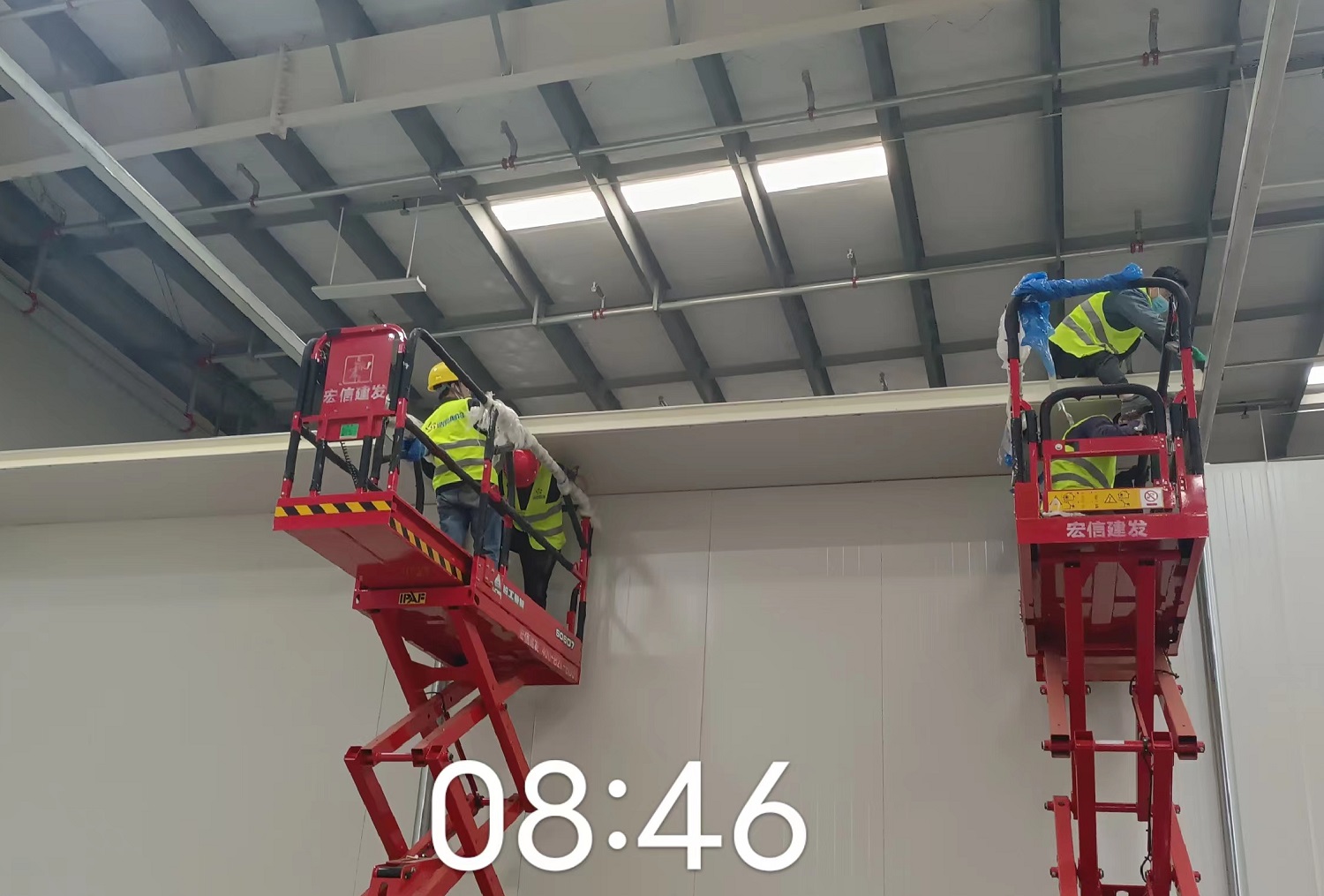
| Application | Temperature | Total Cost (USD) | Key Features |
|---|---|---|---|
| Fresh Produce Cold Room | 0 to +5°C | $140,000 | 100mm PU panels, single compressor, humidity control, basic monitoring |
| Frozen Meat/Seafood Cold Room | -18°C to -25°C | $170,000 | 150–200mm insulation, industrial screw compressor, floor heating, heavy-duty doors |
| Pharma / Ultra-Low Cold Room | 2–8°C or -25°C | $200,000+ | Dual redundant systems, 24/7 cloud monitoring, alarm, validation support |
✅ All prices include insulation, refrigeration, electrical, controls, installation, and commissioning.
⚠️ Specialty rooms (e.g., explosion-proof for batteries, blast freezers for IQF) can exceed $230,000 USD due to custom engineering.
Why the Price Differences?
Chilled vs Frozen: Why Frozen Costs $30,000 More
| Cost Driver | Chilled (0–5°C) | Frozen (-18°C to -25°C) | Extra Cost |
|---|---|---|---|
| Insulation Thickness | 100mm | 150–200mm | +50–100% material |
| Compressor Type | Single compressor | Industrial screw compressor | Higher capacity, more expensive |
| Floor System | Standard concrete | XPS insulation + frost protection | Prevents ground freezing |
| Doors | Standard insulated | Heavy-duty, thicker insulation | Reduces temperature loss |
| Total Difference | — | — | ~$30,000 |
Freezer rooms run longer and work harder than chiller rooms. In hot climates, freezer operating costs increase even more [2†L22-L24]. Equipment costs for a freezer room are typically 40–60% higher than an equivalent chiller room [2†L34-L35].
Pharma vs Frozen: Why Pharma Costs $30,000+ More
| Cost Driver | Frozen (-18°C to -25°C) | Pharma (2–8°C or -25°C) | Extra Cost |
|---|---|---|---|
| Refrigeration System | Single system | Dual redundant (N+1) | Backup system doubles equipment |
| Monitoring | Basic | 24/7 cloud monitoring + alarms | Continuous oversight |
| Compliance | Standard | GMP/GDP validation (IQ/OQ/PQ) | Documentation & testing |
| Construction | Standard | GMP-compliant surfaces, wider aisles | Higher material & labor |
| Total Difference | — | — | ~$30,000+ |
Pharmaceutical cold rooms must meet strict GMP standards. In China, GMP cold rooms generally cost RMB 900–1,900 per m² (approximately USD 130–270 per m²) [3†L6-L8].
Real-World ROI: Two Success Stories
Case 1: Vegetable Exporter (Morocco) — Chilled Room
A vegetable exporter in Morocco built an 800m² chilled room to serve European supermarkets.
| Metric | Value |
|---|---|
| Total Investment | $128,000 USD |
| Storage Capacity | 680 tons of tomatoes & green beans |
| Temperature | 0–5°C |
Results:
| Metric | Before | After |
|---|---|---|
| Spoilage Rate | 25% | 6% |
| Export Capability | Limited | Weekly EU shipments |
| ROI Timeline | — | 10 months |
How the ROI Was Achieved:
- Reduced spoilage from 25% to 6% — saving 19% of total production value
- Enabled weekly exports to the EU — higher-margin sales vs. local market
- Consistent quality built buyer confidence and repeat orders
Case 2: Poultry Processor (Nigeria) — Frozen Room
A poultry processor in Nigeria built an 800m² frozen room to enter the Middle East market.
| Metric | Value |
|---|---|
| Total Investment | $158,000 USD |
| Storage Capacity | 1,050 tons of frozen chicken |
| Temperature | -18°C to -25°C |
Results:
| Metric | Before | After |
|---|---|---|
| Market Access | Local only | Passed Saudi Halal audit |
| Sales Model | Inconsistent | Monthly container contracts |
| ROI Timeline | — | 13 months |
How the ROI Was Achieved:
- Passed Saudi Halal certification — unlocked a premium export market
- Secured monthly container contracts — predictable revenue stream
- Cold chain compliance enabled long-distance shipping
How to Choose the Right Cold Room Type
| Your Product | Recommended Type | Why |
|---|---|---|
| Fresh fruits, vegetables, dairy, flowers | Chilled (0–5°C) | Lowest cost; meets preservation needs |
| Meat, poultry, seafood, frozen meals | Frozen (-18°C to -25°C) | Long-term frozen storage required |
| Vaccines, medicines, biologics, clinical samples | Pharma (2–8°C or -25°C) | Regulatory compliance; dual redundancy required |
Decision Factors to Consider
- Product type: What are you storing? Different products have different temperature requirements.
- Shelf life: How long do you need to store it? Longer shelf life often means lower temperatures.
- Target market: Export markets often require certified cold chain compliance.
- Regulatory requirements: Pharmaceuticals require GMP/GDP compliance.
- Budget: Chilled is the most affordable entry point; pharma is the highest investment.
Frequently Asked Questions
Q1: Can I convert a chilled room to a frozen room later?
Not easily. Conversion requires replacing insulation panels (100mm → 150mm+), upgrading the compressor, and adding floor heating. It’s more cost-effective to build the right type from the start.
Q2: How much does an 800m² cold room cost to operate?
Energy is the largest operating cost. Frozen rooms consume significantly more electricity than chilled rooms of the same size. A freezer room of the same size can cost 30–50% more to operate than a chiller room [2†L22-L24]. Operating costs depend on local electricity rates, ambient temperature, and door opening frequency.
Q3: Does the price include land and building construction?
No. The prices above assume an existing building shell—they cover insulation, refrigeration, flooring, doors, controls, and installation. Land acquisition and building construction are additional costs.
Q4: How long does construction take?
For an 800m² facility using an existing shell, typical construction takes 6–8 weeks from material arrival to commissioning.
Q5: What’s included in a “turnkey” price?
A turnkey price includes:
- Insulation panels and installation
- Refrigeration system and installation
- Electrical and control systems
- Floor system (including frost protection for frozen rooms)
- Doors and dock equipment
- Installation, commissioning, and operator training
- ✅ Everything needed to operate on day one
Q6: Why is pharmaceutical cold storage so much more expensive?
Pharma cold rooms require:
- Dual redundant refrigeration (if one fails, the backup takes over)
- 24/7 monitoring and alarms with cloud connectivity
- GMP/GDP compliance — validation documents (IQ/OQ/PQ), cleanable surfaces, wider aisles
- Temperature mapping to prove uniform temperature throughout the room
These requirements add significant cost but are essential for regulatory compliance and patient safety.
Ready to Invest?
An 800m² cold room is a proven investment for mid-sized agribusinesses, meat processors, and pharmaceutical distributors. With upfront costs ranging from $140,000–200,000+ (depending on type) and typical ROI in 10–13 months, it’s one of the most effective ways to reduce spoilage, access export markets, and build scalable cold chain infrastructure.
Next steps:
1. Define your product type and required temperature range
2. Determine your target markets and regulatory requirements
3. Assess your site (existing shell or ground-up)
4. Request a site-specific quote from a supplier with relevant experience
The storage parameters provided above are for reference only. Optimal cold room conditions vary depending on product type, packaging, climate, and operational requirements. Consult with a cold storage specialist for a customized solution.