 Haocool

If you are in the frozen food business – meat processing, seafood distribution, or ready meals – you know that storage capacity is not just about square metres. It is about how many tons you can hold, how reliably you can keep them at -18°C, and whether the facility makes financial sense over the long term.
A 2,000-ton frozen food cold storage is a common scale for regional distributors, meat processors, and e‑grocery fulfilment centres. It is large enough to serve a city or a cluster of cities, but not so massive that it becomes unmanageable.
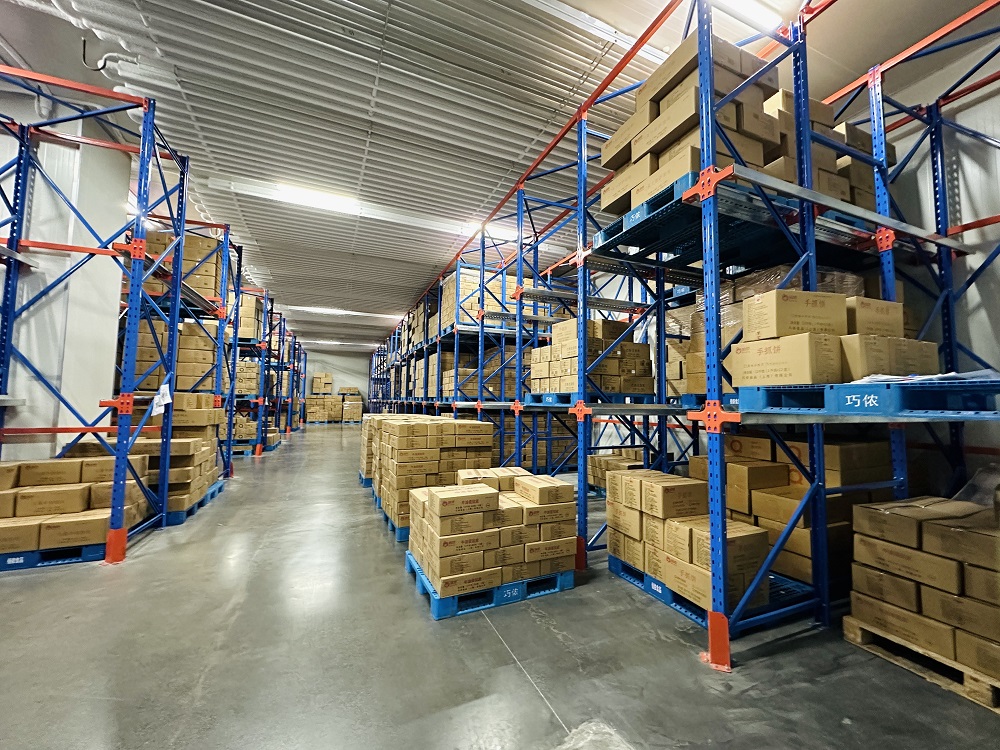
How Much Space for 2,000 Tons of Frozen Food?
Frozen food is denser than fresh produce, but it still needs space for pallets, aisles, and air circulation. The industry standard for frozen goods stored at -18°C is roughly 5.0 to 6.0 cubic metres per metric ton.
That range accounts for standard palletised cartons (each pallet holding 400 to 600 kilograms), airflow gaps between stacks, and space for forklifts to move around.
For a 2,000‑ton facility, the numbers work out like this:
- Required usable volume: 10,000 to 12,000 cubic metres
- Floor area with 5‑metre clear height: roughly 2,000 to 2,400 square metres
- Pallet capacity: 4,000 to 5,000 standard pallets
- Equivalent shipments: 40 to 50 full 40‑foot refrigerated containers
This scale is suitable for large meat processors shipping weekly to the GCC or Europe, national food security reserves, or e‑grocery fulfilment hubs serving over a million urban customers.
Total Turnkey Investment
A reliable, food‑grade frozen storage facility at -18°C typically costs between $380,000 and $500,000 USD for a complete turnkey installation.
Here is what that investment covers:
- Temperature control: -18°C with a tolerance of plus or minus 1°C, which is the global standard for frozen food storage.
- Insulation: 150mm PIR or PUR panels with seamless joints and 0.5mm steel cladding. This thickness is necessary to maintain temperature efficiently in most climates.
- Refrigeration: 120 to 150HP screw compressors from brands like Bitzer or Refcomp, with dual‑circuit redundancy so the facility stays cold even if one circuit fails.
- Evaporators: High‑efficiency ceiling coolers with hot‑gas defrost to prevent ice buildup.
- Floor system: 100mm XPS insulation underneath a 150mm reinforced concrete slab, designed to handle heavy forklift traffic.
- Doors: Insulated electric sliding doors with air curtains to minimise cold air loss during loading and unloading.
- Controls: A PLC‑based system with cloud monitoring, SMS alerts, and data logging. You can check the temperature from your phone.
- Installation: Full civil preparation, piping, wiring, commissioning, and operator training.
The total cost comes to roughly $190 to $260 per ton of storage capacity. That is a more meaningful metric than cost per square metre because it directly reflects what you are actually paying for – the ability to store product.
In hot climates like Nigeria, Saudi Arabia, or Pakistan, you should budget an extra 10 to 15 percent for oversized condensers. The refrigeration system needs to reject heat efficiently even when outside temperatures exceed 45°C.
How Long Does It Take to Build?
A 2,000‑ton frozen food cold storage typically takes about three months from order to ready‑for‑loading.
- Design and engineering: 2 to 3 weeks
- Equipment fabrication: 4 to 6 weeks
- On‑site construction and commissioning: 8 to 10 weeks
That timeline works well for seasonal planning – you can order the facility in time for it to be operational before your peak production period.
Real Example: Poultry Processor in Egypt
A poultry processor in Egypt built a 2,200‑square‑metre cold storage facility for frozen chicken parts. The total investment was $460,000 USD, and the facility stores 2,100 tons of product at -18°C.
The facility allowed the company to secure a 12‑month supply contract with a Saudi supermarket chain. By consolidating weekly full‑container‑load shipments, they reduced logistics costs significantly. The investment paid for itself in 14 months through volume discounts and reduced spoilage.