 Haocool

If you have ever walked through an indoor ice exhibition, you know the feeling. The air hits you cold, the sculptures glow under coloured lights, and everything feels like it belongs in a winter fairy tale. But behind the scenes, keeping those ice carvings solid is a serious engineering challenge.
An indoor ice sculpture hall is not a cold storage room. It is a climate-controlled entertainment space where art, hospitality, and refrigeration technology have to work together. And if you are planning to build one – especially in a hot climate like Dubai, Saudi Arabia, or Southeast Asia – the cost and design considerations are different from anything you would use for food storage.
We recently walked through a 1,000-square-metre ice hall project with a client in the Gulf region. Here is what we learned about the cost, the equipment, the operating expenses, and how quickly a facility like this can pay for itself.
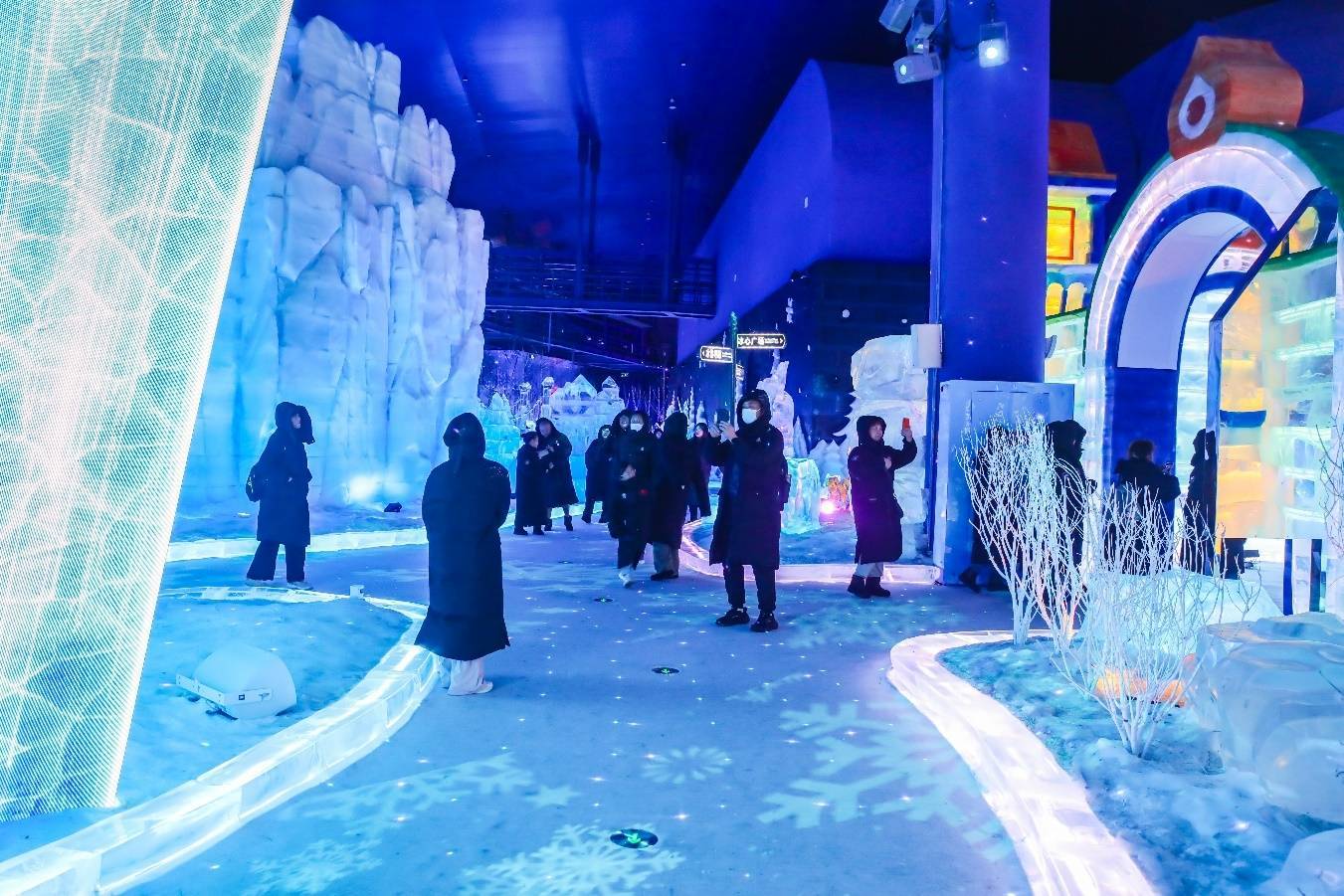
What Makes an Ice Hall Different from a Freezer?
A food cold room is designed to keep boxes of meat or vegetables at a stable temperature. An ice sculpture hall is designed to keep people comfortable while they walk past ice that is supposed to stay solid for months.
The facility typically handles between 50 and 300 visitors per hour, depending on the layout and how many exhibits there are. Most ice halls display 20 to 50 large sculptures – animals, castles, slides, tunnels – and the interior temperature is usually maintained between -5°C and -15°C. The cooling system has to be indirect, meaning the cold air does not blow directly on visitors. That would be uncomfortable and could cause health issues.
The goal is to keep the ice intact for three to six months while ensuring that guests can enter and exit without bringing in too much warm, humid air. That means airlocks at the entrances, heated rest areas, and careful management of airflow.
Total Investment – What You Actually Pay For
For a 1,000-square-metre ice exhibition hall, the total turnkey investment for the refrigeration and thermal envelope typically falls between $170,000 and $220,000 USD.
A few important caveats. This price covers only the insulation system, the refrigeration equipment, and the installation. It does not include civil construction, the steel structure, lighting, the sculptures themselves, or ticketing systems. Those are separate budgets.
Here is what you get for that investment:
Temperature control: The system can maintain anywhere from -5°C to -15°C, adjustable by zone. Different parts of the hall may need different temperatures – a slide area might run colder than a photo zone.
Insulation: Walls and ceiling use 150mm PIR or PUR panels with double-sided steel cladding. The thermal conductivity is around 0.018 W/m·K, which is standard for this type of application. The floor system includes 100mm of XPS insulation, rebar-reinforced concrete, and SBS waterproofing to prevent frost heave.
Refrigeration: A 75HP semi-hermetic screw compressor, typically from Bitzer or Copeland, with a dual-circuit setup for redundancy. If one circuit fails, the other keeps the hall cold enough to prevent melting.
Air distribution: DD-series low-velocity ceiling coolers are used, specifically chosen to avoid direct drafts on visitors. No one wants cold air blasting them in the face while they are looking at ice sculptures.
Controls: A digital PLC system with remote monitoring, auto-defrost, and alarm alerts. The facility can be managed from a phone or computer.
Installation: Full piping, wiring, commissioning, and training for the operators.
The cost per square metre works out to roughly $170 to $220 per square metre. But that is not the most useful metric. The real ROI measurement is cost per visitor-hour – how many paying guests the facility can handle over its lifetime.
What Adds to the Cost in Hot Climates?
If the project is in a region like the UAE, Thailand, or Nigeria, where temperatures regularly exceed 40°C and humidity is high, you should budget an extra 10 to 15 percent on top of the base price. The reason is simple: the refrigeration system needs enhanced dehumidification to handle moisture that seeps in through doors, and the condensers need to be oversized to reject heat efficiently in extreme ambient temperatures.
How Long Does the Project Take?
From order to opening, expect roughly 10 to 12 weeks. The timeline breaks down like this:
- Design and engineering: 2 to 3 weeks
- Equipment fabrication: 4 to 5 weeks
- On-site installation: 6 to 8 weeks
At that point, the facility is ready for ice carving. The schedule works well for seasonal launches – winter festivals or summer indoor attractions in hot climates.
What Does It Cost to Run?
Operating an ice hall is not cheap, but the numbers are predictable.
Power consumption averages 80 to 110 kW continuously. At an electricity rate of $0.12 per kWh, the monthly bill comes to roughly $7,000 to $9,500. That is a significant operating expense, but it is manageable for a facility that generates ticket revenue.
With good design and proper maintenance, ice melt rates stay below 3 percent per month. That means sculptures can last four to six months before they need significant touch-ups.
Maintenance costs are relatively low because screw compressors are reliable and typically only require service once a year.
One practical tip: use LED lighting and airlock entrances. These two measures alone can cut energy consumption by 15 to 20 percent.
A Real-World Example
A leisure and entertainment group in Saudi Arabia built a 1,000-square-metre ice hall inside a shopping mall. The refrigeration investment came to $220,000 USD – right in the middle of the range we are discussing.
The facility handles about 120 visitors per hour and displays 35 large ice sculptures. It operates year-round, even when outside temperatures hit 48°C in summer.
The numbers tell the story. The average ticket price is around $22 per person. Daily revenue ranges from $8,000 to $12,000. The facility paid for itself in eight months. The operations director put it simply: “It is not a freezer – it is a profit centre that works 365 days a year.”
That is not an exaggeration. In markets where people are looking for indoor activities during extreme heat, an ice hall is a unique attraction that draws consistent crowds.
What to Watch Out For in the Design
A few critical points come up in every ice hall project we have been involved with.
First, avoid direct airflow on visitors. Use diffused ceiling coolers that distribute cold air evenly without creating drafts. Guests should feel cold but not wind-blown.
Second, design the entrance and exit as airlocks. Warm, humid air is the enemy of ice. Every time someone walks in without an airlock, moisture enters the space, condenses on the sculptures, and accelerates melting.
Third, invest in anti-slip, insulated flooring. Visitors will be walking on a cold surface, and condensation can make it slippery. Safety is non-negotiable.
Fourth, consider zoned temperature control. A slide area might work better at -8°C, while a photo zone with smaller sculptures might need -12°C to maintain sharp details. Zoning gives you flexibility without over-cooling the entire hall.