 Haocool

Author: Zhang Lei, Senior Agricultural Cold Chain & Frozen Food Processing Engineer
11 years experience specializing in legume vegetable cold storage and IQF production line design. Familiar with NY/T 1202 legume fresh-keeping standard & GB/T 31273 IQF frozen vegetable specification, completed multiple edamame processing & CA cold storage projects across Sichuan, Jiangsu and Southeast Asia export factories.
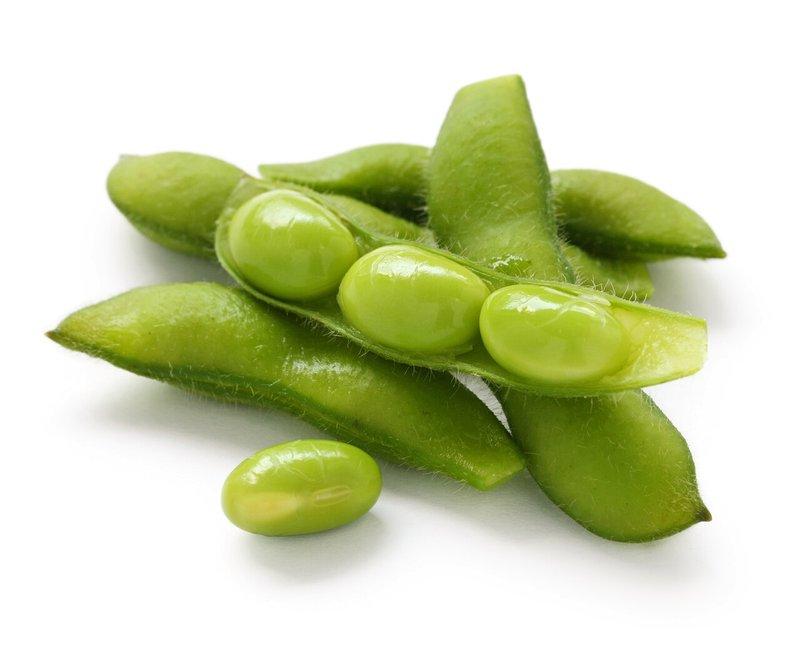
Edamame (green soybean pod) is a high-value legume rich in plant protein, vitamin, iron and phosphorus, widely exported as fresh vegetable and frozen finished goods. Edamame has very narrow safe storage temperature range:
– Long-term storage below 8°C → irreversible brown rust chilling injury on pods;
– Constant temperature above 8°C → mold and yellowing within 4–5 hours under room temperature;
– Improper processing leads to massive loss of chlorophyll and nutrients.
1 Three Main Edamame Storage Solutions Comparison Table
| Storage Mode | Standard Temp & RH | Max Shelf Life | Core Applicable Scenario | Main Investment Feature |
|---|---|---|---|---|
| Ordinary 4–6℃ Fresh Cold Room | 4–6℃, RH 95–100% | 30–45 days | Short-term domestic wholesale, local fresh supply | Low cost, no gas equipment |
| CA Controlled Atmosphere Fresh Storage | 5℃ ±0.5℃, RH 95–98% | Up to 60 days | Off-season fresh export without blanching | Add nitrogen & CO₂ scrubber system |
| IQF Quick Frozen Processing & Freezer | IQF -35℃, finished stock -18℃ | 18–24 months | Deep processing factory, long-distance sea export | Complete production line + low-temp freezer |
2 Standard CA Controlled Atmosphere Storage Process (60-Day Fresh Edamame)
Comply with NY/T 1202-2020 Technical Specification for Legume Vegetable Storage, permanent storage temperature fixed at 5℃ (forbid below 8℃ to avoid chilling injury).
2.1 Pre-Storage Warehouse Sanitization
- Fully clean the cold room wall, ground and air cooler; adopt FDA-approved food-grade disinfectant to kill mold spores;
- Pre-cool warehouse to stable 5℃ 48h before cargo warehousing; calibrate O₂ & CO₂ real-time gas detectors.
2.2 Harvest & Pre-Cool SOP (Mandatory Within 12h Post Picking)
- Harvest at dawn with dry pods; reject cracked, yellow, insect-damaged overripe edamame;
- Rapid forced-air hydro-cooling, lower pod core temperature to 5℃ within 12 hours to eliminate field heat;
- Surface moisture full air-dry before packaging to prevent mold inside bags.
2.3 Modified Atmosphere Packaging & Gas Setting
- Packaging material: 0.03mm food-grade LDPE breathable bags, oxygen permeability 4,000–6,000 cm³/m²/24h;
- Early storage (Weeks 1–4): O₂ 4–6%, CO₂ 5–7% (suppress respiration & chlorophyll degradation);
- Mid-late storage (Weeks 5–8): Adjust O₂ up to 6%, CO₂ down to 5% to avoid high-carbon pulp bitterness.
2.4 Long-Term Storage Outcome
Under stable 5℃ constant temp & matched gas index, edamame retains over 95% original green color and nutrient content within 60 days, no cold rust spots or mold growth.
3 Full IQF Industrial Processing Flow (24-Month Long-Term Frozen Edamame)
Follow GB/T 31273 frozen vegetable production specification, whole line flow chart with standard equipment & precise parameters:
| Processing Step | Standard Parameter | Matching Equipment | Quality Control Standard |
|---|---|---|---|
| Raw Material Sorting & Washing | 5ppm chlorinated clean water, pH 6.5–7.5 | Bubble washing machine | Remove weeds, broken & worm-eaten pods |
| Blanching (Enzyme Inactivation) | 98℃ hot water + 0.5% salt solution, 90s constant time | Steam blancher | Fully deactivate oxidase to prevent post-frozen yellowing |
| Gradient Cooling | 3-stage chilled water, final pod core ≤10℃ | Hydro cooling tunnel | Stop blanching heat damage, lock emerald green |
| Dewatering & Screening | Centrifugal vibration dewater | Oscillating sieve | Remove surface free ice source |
| IQF Quick Freezing | -35℃ tunnel, air flow 8–12 m/min | Fluidized bed IQF freezer | Pod core temperature drop below -18℃ within 30min |
| Nitrogen Flush Packaging | Vacuum nitrogen-filled PE/PA composite bags | Automatic weighing sealer | Prevent freezer burn during long storage |
| Finished Goods Storage | -18℃ ±1℃, relative humidity below 85% | Low-temperature pallet freezer | Stable storage up to 24 months |
IQF Product Advantage
After standardized blanching & quick freezing, edamame maintains intact fiber, protein and vitamin retention rate above 90%, suitable for supermarket retail, catering and cross-border bulk export.
4 Common Edamame Storage Mistakes & Batch Loss Consequence
- Set CA cold storage temperature below 8℃ → severe cold rust spots on all pods, lose fresh export value;
- Skip complete pre-cooling, stock hot harvested edamame directly → mold appears within 1 week;
- Over-high CO₂ concentration over 8% in CA warehouse → pulp produces bitter off-flavor;
- Insufficient blanching time before IQF → yellow discoloration after several months of freezing;
- High humidity frozen storage without nitrogen packaging → severe freezer burn, shriveled pods.
5 How To Choose Suitable Edamame Storage Mode
- Local short wholesale (within 1 month): Build ordinary 4–6℃ fresh cold room, lowest investment cost;
- Off-season fresh pod export (2 months supply cycle): Adopt CA controlled atmosphere cold storage;
- Deep processing factory & ocean export over 6 months: Complete IQF production line + -18℃ finished freezer.
6 FAQ For Edamame Growers & Frozen Food Processors
Q1 Why cannot CA edamame storage use -2℃ low temperature?
A Edamame is highly sensitive to chilling injury. Any long-term storage below 8℃ will generate irreversible brown rust spots on pod epidermis, completely unable to sell as premium fresh goods, complying with NY/T 1202 industry standard.
Q2 What’s the maximum shelf life of common non-gas fresh cold storage?
A Under stable 4–6℃ & 95% RH, fresh edamame can only be stored 30–45 days, far shorter than 60-day CA storage cycle.
Q3 Can IQF frozen edamame really be stored for 2 years?
A Only if fully blanched, fluidized bed IQF to core -18℃ and nitrogen sealed packaging under constant -18℃ storage; temperature fluctuation will shorten shelf life sharply.
Q4 What’s the core difference between CA fresh edamame and IQF frozen edamame?
A CA keeps raw fresh pods without heating blanching, for fresh market sales; IQF undergoes high-temperature enzyme inactivation processing, targeting frozen semi-finished food export.
Custom Edamame Cold Storage & IQF Line Inquiry
If you plan to build CA fresh storage or full IQF processing freezer for edamame planting bases and frozen food factories, provide daily processing volume and target sales market to get free layout drawing & detailed equipment quotation.