 Haocool

Author: Zhang Lei, Senior Vegetable Cold Chain Engineer
11 years experience in summer squash & melon cold storage design for domestic planting bases and cross-border vegetable exporters. Familiar with NY/T 2790 melon vegetable storage specification and UC Davis postharvest preservation data, completed dozens of zucchini fresh cold storage projects across Southwest and Southeast Asia producing areas.
Zucchini (summer squash) has ultra-high water content (over 95%) and strong postharvest respiration rate. Under room temperature above 20℃, it will wilt, yellow and rot within only 2–3 days. Meanwhile, zucchini belongs to typical cold-sensitive melon vegetables: long-term storage below 8℃ will trigger irreversible chilling injury, showing water-soaked pits and brown spots on peel, completely losing commercial value.
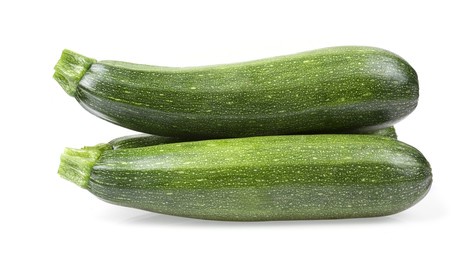
1 Standard Full Zucchini End-to-End Cold Chain SOP
1.1 Scientific Harvest Rules
- Harvest before 9 a.m. with no dew on the surface; avoid picking at high noon with high field heat;
- Cut the stalk with sharp scissors, do not break off manually to prevent pulp wound infection by mold;
- Only harvest medium-sized tender zucchini; over-mature thick-skinned fruits have poor storage resistance and separate for spot sales.
1.2 Mandatory Forced Pre-Cooling (Core Loss Reduction Step)
- Target: Lower fruit core temperature to 10–12℃ within 4 hours after picking;
- Optional equipment: Forced-air pre-cool room (small farm) / vacuum pre-cooler (large export base);
- Operation rule: Single-layer carton stacking during pre-cooling, reserve 5cm air gap between pallets for uniform heat dissipation;
- Test data from Chinese Academy of Agricultural Sciences: Zucchini without pre-cooling has a 3.6x higher rot rate within storage.
1.3 Sorting & Grading Standard
Remove zucchini with bruising, insect spots, mold and overripe pulp; classify by single fruit weight for separate warehouse storage, avoid mixed size causing uneven cooling.
1.4 Scientific Packaging Requirements
- Adopt perforated ventilated plastic crates / breathable corrugated cartons; forbid fully sealed airtight plastic bags (easily trigger anaerobic rot);
- Single layer stacking inside cartons, maximum stacking height ≤6 layers to prevent compression pits on peel;
- For long-distance sea export: MAP micro-perforated atmosphere packaging (O₂ 3–5%, CO₂ 4–6%) to extend shelf life.
1.5 Warehouse Storage Standard
Stable constant temperature 11–12℃, relative humidity 90–95%; strictly isolate from ethylene-rich fruits (apple, banana, tomato) to avoid premature yellowing and softening.
1.6 Cold Chain Transit Specification
Reefer truck constant temp locked at 11–12℃, install real-time temperature recorder; avoid frequent door opening during transportation to prevent large temperature fluctuation.
2 Authoritative Storage Parameter Table (Regular Cold vs MAP Long-Term Preservation)
| Storage Mode | Fixed Temp | RH Limit | Safe Storage Period | Core Applicable Scenario |
|---|---|---|---|---|
| Ordinary Fresh Cold Room | 11–12℃, fluctuation ≤±0.8℃ | 90–95% | 7–10 days | Local domestic wholesale within a week |
| MAP Modified Atmosphere Packaging Storage | 11–12℃, fluctuation ≤±0.5℃ | 90–95% | 14–18 days | Cross-border ocean export long-distance transportation |
Critical Chilling Injury Warning: Continuous storage below 8℃ for more than 3 days will produce permanent water-soaked peel lesions, which cannot be recovered after reheating.
3 Medium-Scale 500㎡ Zucchini Dedicated Cold Storage Layout Design
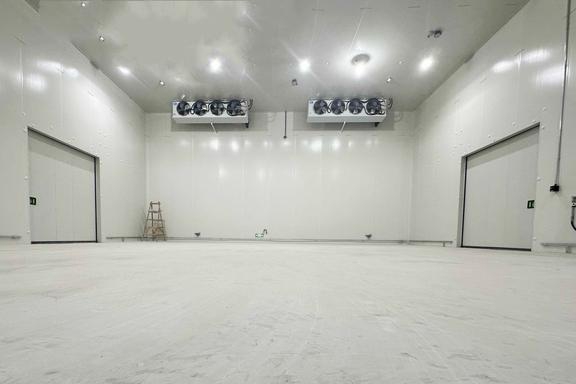
Suitable for large village planting cooperatives with annual zucchini output over 300 tons, divided into four independent functional zones:
1. Pre-Cooling Zone (10℃): Special forced air pre-cool area for newly harvested batches, quickly eliminate field heat;
2. Main Constant Temp Storage Zone (11–12℃): Core pallet rack storage area, reserve 300mm gap beside air coolers for airflow circulation;
3. Sorting & Packaging Buffer Zone (15℃): Isolated temperature control to avoid cold air loss during repeated inbound & outbound;
4. Loading Dock Buffer Hall: Equipped full-size air curtain doors to block outdoor hot humid air inflow during loading.
Layout Optimization Tips: All pallet aisles keep ≥1.2m width; do not stack goods against wall to prevent local high-temperature dead zones.
4 Common Zucchini Storage Loss Causes & Solutions
- Long-term storage below 8℃ → Chilling injury with brown pits
Solution: Lock warehouse temp at 11–12℃, install low-temperature automatic alarm sensor - Mixed storage with ethylene-releasing fruits → Mass premature yellowing
Solution: Independent isolated cold room for melon vegetables, separate loading & delivery channels - Airtight non-ventilated packaging → Anaerobic fermentation & soft rot
Solution: Replace perforated breathable cartons / MAP micro-hole film - Skip pre-cooling before warehousing → Concentrated mold growth within 5 days
Solution: All fresh batches must complete 4h pre-cooling before entering main storage zone - Humidity lower than 88% → Severe peel shrivel & weight loss
Solution: Equip automatic high-humidity humidifier for continuous moisture adjustment
5 FAQ For Zucchini Growers & Cold Storage Investors
Q1 Why cannot we store zucchini at 5–10℃ as many cheap guides say?
A According to NY/T 2790 national standard and UC Davis postharvest test, zucchini is cold-sensitive. Staying below 8℃ for more than 3 days will form irreversible water stain lesions, losing all export sales value. The safe constant temperature range is fixed at 11–12℃.
Q2 How to extend zucchini shelf life for cross-border sea export?
A Adopt MAP micro-perforated modified atmosphere packaging + stable 11–12℃ cold storage, the storage cycle can reach 14–18 days to match ocean freight time.
Q3 What’s the core design requirement for a small 100㎡ zucchini cold room?
A Configure independent small pre-cool partition, automatic humidifier and low-temperature alarm; avoid sharing cold room with apples, tomatoes and other ethylene-rich fruits.
Q4 What disease will appear if zucchini storage humidity is too high?
Excess humidity over 98% easily triggers gray mold and anthracnose on stalk ends; keep RH controlled at 90–95% for balanced fresh retention.
Custom Zucchini Cold Storage Layout & Quotation Inquiry
If you plan to build dedicated zucchini fresh cold storage for planting bases and vegetable export factories, provide warehouse area and daily harvest volume, we can send free zone layout drawing and full turnkey equipment quotation.