 Haocool

Author: Zhang Lei, Senior E-Commerce Cold Chain EPC Engineer
12 years large logistics & fresh e-commerce cold storage design experience, completed multiple JD, Pinduoduo regional cold park projects. Familiar with GB 50072-2021 national cold storage design standard, specialize in high-frequency loading & unloading multi-temperature distribution warehouse customized solutions.
1 2026 Turnkey Total Cost Reference (China Market, USD Converted)
Data based on standard dual-temperature zone (0–4℃ fresh + -18℃ frozen) configuration, B2 flame retardant PU panels, domestic brand screw refrigeration units, basic temperature monitoring system. Excludes land, civil foundation reconstruction, WMS automatic racking and sorting line extra cost.
| Warehouse Total Area | Full Turnkey CNY Budget | Converted USD Reference | Main Applicable Scenario |
|---|---|---|---|
| 1,000 ㎡ | ¥900,000 | ~$125,000 | Regional small fresh e-commerce sorting warehouse |
| 3,000 ㎡ | ¥2,300,000 | ~$320,000 | City-level fresh distribution center |
| 5,000 ㎡ | ¥4,300,000 | ~$600,000 | Provincial e-commerce supply chain park |
| 10,000 ㎡ | ¥8,500,000 | ~$1.18 million | National cross-regional cold logistics hub |
Key Price Rule: Larger warehouses have obvious scale effect, the average cost per square meter decreases with expanded area; adding import compressors, B1 fire insulation, full automation will increase total investment by 15%–40%.
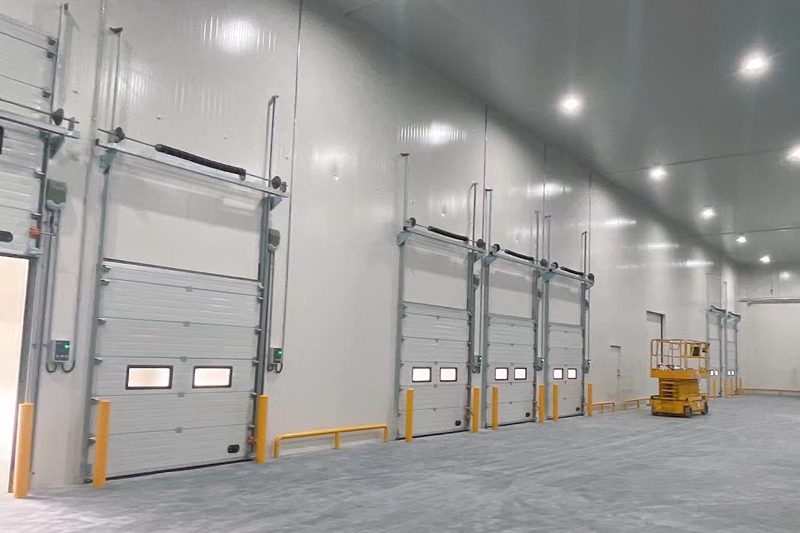
Benchmark Reference Project: 35,000m³ JD E-Commerce Cold Storage Project in Jiangsu, standard multi-temperature high-frequency turnover design for nationwide fresh delivery.
2 Four Core Cost Components of E-Commerce Cold Storage
The total investment is divided into four major modules with fixed industry cost proportion, clearly distinguishing where budget floats:
- Insulation & Enclosure Engineering (30%–40% of total cost)
- Fresh zone (0–4℃): 100mm PU double color steel panel; frozen zone (-18℃): 150–200mm thick insulation
- E-commerce mandatory configuration: full double-layer vapor barrier, anti-collision column guards, heavy-duty anti-freeze ground (≥3t load capacity)
- Price fluctuation: B1 fire-rated panels cost 10%–20% higher than B2 grade
- Refrigeration System (35%–45% of total cost, biggest price gap)
- Small warehouse: Scroll compressors; 3,000㎡+ large park: Parallel screw unit banks
- E-commerce exclusive upgrade: Increase 30% extra cooling load to offset frequent door opening cold loss
- Brand difference: Import Bitzer/Copeland units cost 25%–35% higher than domestic Hanbell brands, with 20% lower annual power consumption
- Electric & Intelligent Control System (10%–18%)
Independent power supply for each temperature zone, secondary power backup for large e-commerce warehouses, multi-point temperature recorder, SMS remote alarm, cloud data traceability platform - Auxiliary Construction & Installation (15%–22%)
Electric cold rolling doors, air curtain buffer halls, drainage defrost system, on-site pipeline installation, equipment commissioning labor cost
3 Key Extra Cost Factors Unique to Fresh E-Commerce Warehouses
3.1 Multi-Temperature Partition Custom Expense
E-commerce needs independent chambers for fresh produce (0–4℃), frozen meat (-18~-25℃), semi-finished food (5–10℃). Each extra temperature zone adds independent refrigeration sets, partition panels and cold doors, raising total cost by 12%–20%.
3. Automation Supporting Facilities Extra Investment
- Basic: Manual pallet racking (low extra cost)
- Mid-to-high: Automated shuttle racking, conveyor sorting lines, AGV handling equipment, WMS warehouse management system, increasing investment by 30%–60%
3. Energy Efficiency Upgrade Options
- Standard fixed-frequency unit: Low upfront cost, high daily power consumption
- Variable frequency screw + waste heat recovery defrost: Extra 12% initial cost, reduce annual electricity bill by 22%–28%
- Solar auxiliary cold storage system: Large park long-term energy-saving solution with higher one-time investment
3. Regional Climate Cost Difference
South China high-temperature rainy regions need oversized condensers and full moisture-proof structure, overall cost increases by 8%–15% vs northern areas.
4 Common Budget Pitfalls for E-Commerce Cold Storage Investors
- Cut insulation thickness to save initial money → Massive cold leakage, electricity expenditure surges year-round
- Omit air curtain buffer doors for sorting entrances → Frequent temperature fluctuation, fresh goods spoilage rate rises sharply
- Match small cooling load without considering e-commerce frequent door opening → Cannot stabilize temperature during peak order periods
- Choose low-quality domestic compressors → High failure rate, goods loss risk during large promotion seasons
- Ignore secondary power backup for 5,000㎡+ large warehouse → Power outage leads to batch fresh product scrapping
5 ROI Simple Calculation For Fresh E-Commerce Cold Park Investors
Core Calculation Formula
Annual Net Profit = (Fresh Spoilage Cost Reduction + Cross-Regional Delivery Freight Saving) − Annual Electricity & Labor Operation Cost
Full Payback Cycle (Years) = Total Turnkey Investment ÷ Annual Average Net Profit
Industry Reference: A 5,000㎡ provincial e-commerce cold warehouse can recover full investment within 3.5–5 years via reduced loss and centralized distribution cost advantages.
6 FAQ For E-Commerce & Logistics Park Investors
Q1 Why e-commerce cold storage costs higher than ordinary fruit cold room of the same area?
A E-commerce warehouses have frequent loading/unloading, requiring extra cooling load, multi independent temperature zones, air curtain buffer halls, heavy anti-freeze ground and backup power supply, all exclusive supporting facilities increase construction cost.
Q2 Is B1 fire insulation panel necessary for fresh e-commerce park?
A Large logistics parks over 3,000㎡ must adopt B1 flame retardant PU panels to pass fire acceptance; small sorting warehouses can choose B2 grade to control budget.
Q3 How much extra cost will automated sorting lines bring?
A Adding complete pallet conveyor & WMS system increases total investment by 30%–60%, suitable for platforms with daily order volume over 50,000 single items.
Q4 What’s the biggest hidden long-term cost after warehouse completion?
Daily power consumption. Low-spec thin insulation and fixed-frequency compressors will increase annual electricity expenditure by over 25%.
Custom E-Commerce Cold Storage Budget Inquiry
If you plan to build multi-temperature fresh sorting cold warehouse for fresh e-commerce platforms, urban distribution parks and agricultural supply chain bases, provide warehouse area, required temperature zones, daily order volume and local summer maximum temperature, we can send itemized cost breakdown and layout drawing free of charge.