 Haocool

“一日色变,二日香变,三日味变“ — this ancient Chinese saying perfectly captures the challenge of storing lychee. At room temperature, lychee turns brown, ferments, and rots in just 2–3 days. Even in standard cold rooms, skin browning ruins marketability within a week.
But with a properly designed lychee cold room, you can:
- Extend shelf life to 20–30 days (or 45+ days with anti-browning treatment)
- Maintain bright red skin and sweet flavor
- Ship by sea—not air—to Europe or the Gulf
- Reduce post-harvest loss from 50% to under 12%
This guide provides a complete breakdown of lychee cold room costs, capacity planning, browning prevention science, and real-world ROI examples.
Why Does Lychee Turn Brown So Quickly?
Lychee browning is primarily caused by polyphenol oxidase (PPO) enzyme activity—triggered by oxygen and warm temperatures. When the fruit’s cells are damaged during harvest or storage, PPO catalyzes the oxidation of phenolic compounds, leading to dark brown pigments.
But the #1 trigger is pericarp dehydration—water loss from the fruit’s porous skin. Lychee skin has a loose, porous structure that allows moisture to escape rapidly. Once the skin loses moisture, browning accelerates quickly.
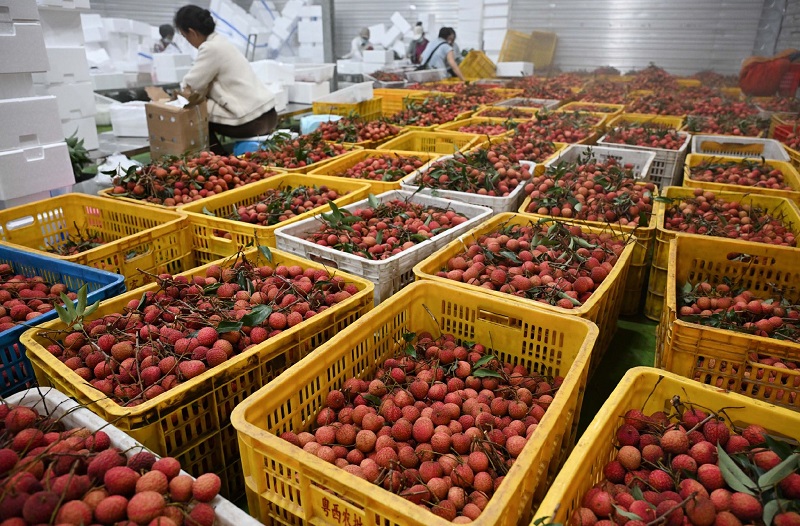
Key Factors That Accelerate Browning:
| Factor | Impact |
|---|---|
| Temperature above 5°C | PPO activity increases exponentially |
| Low humidity (<90% RH) | Accelerates skin dehydration |
| Physical damage | Breaks cells, releases PPO and substrates |
| Oxygen exposure | Enables oxidation reaction |
| Delayed pre-cooling | Allows enzymatic reactions to progress |
Storage Temperature: Finding the Sweet Spot
Different sources and cultivars have different optimal temperatures:
| Source | Recommended Temperature | Notes |
|---|---|---|
| UC Davis Postharvest Center | 5°C (range: 1.5–10°C) | Varies by cultivar and storage duration |
| Academic review | 3–5°C | Optimum low temperature |
| Industry practice | 2–4°C | General recommendation |
| Haocool recommendation | 1–3°C (never above 5°C) | For commercial export |
Important: Temperature below 1°C can cause chilling injury, which accelerates quality deterioration. Always confirm the optimal temperature for your specific cultivar.
Critical Storage Conditions for Lychee
To prevent browning and maximize shelf life, your cold room must maintain these conditions:
| Parameter | Recommended Value | Why It Matters |
|---|---|---|
| Temperature | 2–5°C (depending on cultivar) | Slows respiration and PPO enzyme activity |
| Relative Humidity | 90–95% RH | Prevents skin dehydration—the #1 cause of browning |
| Airflow | Gentle, uniform circulation | No direct cold air on boxes to avoid localized drying |
| Pre-cooling | Must reach 3°C within 2–4 hours of harvest | Rapidly reduces respiration rate |
Pre-Cooling: The Most Critical Step
Pre-cooling is arguably the most important step in lychee preservation. Research shows that:
- Cold air pre-cooling is more effective than ice water pre-cooling for delaying browning and maintaining nutritional quality.
- Combined with nano-cinnamaldehyde treatment, cold air pre-cooling can significantly reduce postharvest disease.
- Some facilities use hydrocooling (cooling with water) to rapidly reduce fruit temperature.
Pro Tip: The faster you can cool lychee after harvest, the longer it will last. Aim for 2–4 hours maximum.
Anti-Browning Treatment Options
Cold storage alone is not enough for long-term lychee export. Combining cold storage with anti-browning treatments can extend marketable life to 45–60 days while keeping skin red.
Comparison of Anti-Browning Methods
| Method | How It Works | Effectiveness | Best For |
|---|---|---|---|
| SO₂ Fumigation | Inhibits PPO enzyme activity | 45–60 days shelf life | Commercial export |
| Citric Acid Dip (1 mol/L, 10 min) | Lowers pH, inhibits enzyme activity | Significantly reduces browning | Small to medium scale |
| Chitosan Coating (1% chitosan + 2% PE) | Forms protective film | 16.5% reduction in browning | Organic/natural markets |
| Spatial Electric Field (SEF) | Physical preservation technology | 4.31% weight loss, 77.9% moisture retention | Premium export |
| Nano-Cinnamaldehyde + Cold Air Pre-cooling | Inhibits disease and browning | 6 days extended shelf life | Long-term storage |
| Gradient Rewarming | Reduces chilling injury | Browning index: 1.50 → 1.00 | Post-storage handling |
Recommended Commercial Protocol
For commercial exporters, the most widely adopted protocol combines:
- Harvest at optimal maturity (not over-ripe)
- Pre-cool within 2–4 hours using cold air or hydrocooling
- SO₂ fumigation or citric acid + ascorbic acid dip
- Store at 2–4°C with 90–95% RH
- Use PE bag packaging to maintain high humidity
- Gradient rewarming before shipping to prevent chilling injury
Lychee Cold Room: Cost & Capacity Guide
Storage Density & Capacity
Lychee storage density is approximately 150–180 kg/m³ due to delicate handling requirements and the need for proper airflow.
| Facility Size | Floor Area | Usable Volume* | Total Cost (USD) | Storage Capacity |
|---|---|---|---|---|
| Small Exporter / Packing House | 150 m² | 600 m³ | $30,000 – $35,000 | 90 – 110 metric tons |
| Regional Hub | 500 m² | 2,000 m³ | $80,000 – $100,000 | 300 – 360 metric tons |
| Large Export Facility | 1,000 m² | 4,000 m³ | $150,000 – $180,000 | 600 – 720 metric tons |
*Assumes 4m clear height and standard export cartons (8–10 kg/box).
Cost per Ton Reference
Based on the above figures:
| Facility Size | Cost per Ton (USD) |
|---|---|
| Small (150m²) | ~$330/ton |
| Regional (500m²) | ~$270/ton |
| Large (1,000m²) | ~$240/ton |
Note: Larger facilities achieve economies of scale, reducing cost per ton. However, lychee cold rooms cost more than standard fruit cold rooms due to:
- Thicker insulation (120mm+ PU panels)
- Precision refrigeration (±0.5°C stability)
- High-humidity control + misting systems
- Rapid pre-cooling capability
What’s Included in a Turnkey Lychee Cold Room?
A comprehensive turnkey solution includes:
- ✅ 120mm PU insulated panels (food-grade, seamless joints)
- ✅ Precision refrigeration system (±0.5°C stability)
- ✅ High-humidity control + misting system
- ✅ Digital monitoring with cloud alerts
- ✅ Insulated high-speed doors
- ✅ Full installation, commissioning & operator training
⚠️ Warning: Avoid low-cost “vegetable chillers”—they lack humidity control and cause rapid browning.
Real-World ROI: A Lychee Exporter in Bac Giang, Vietnam
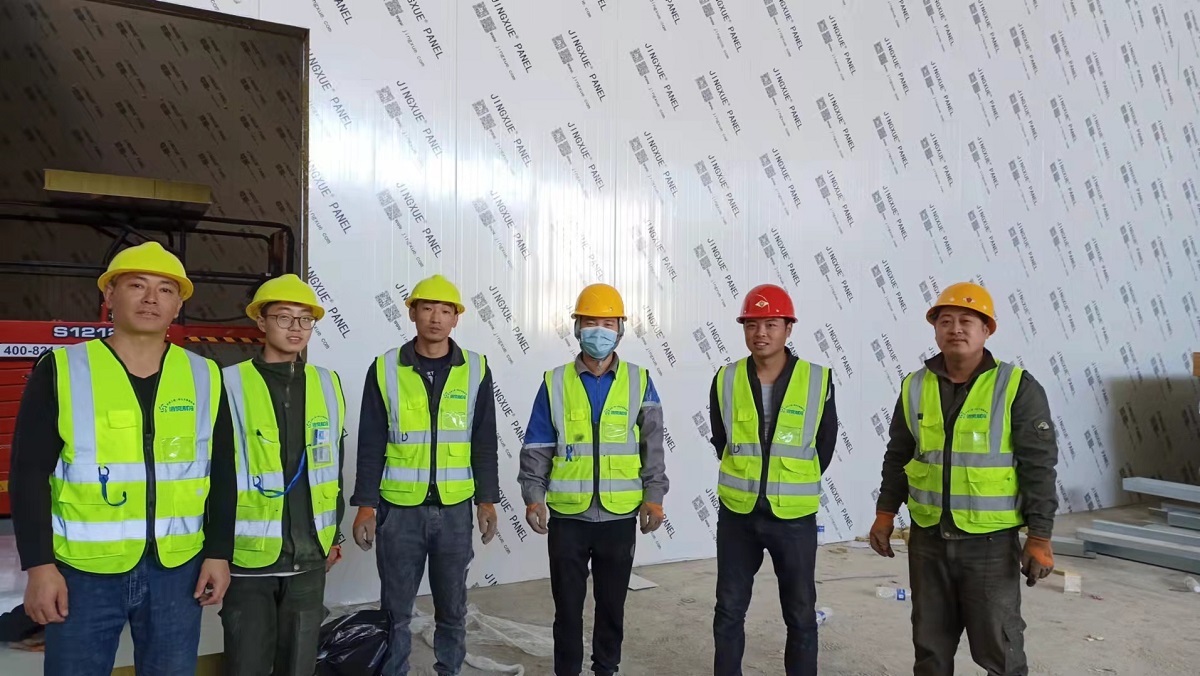
A lychee exporter in Bac Giang, Vietnam built a 500m² cold room to serve Russian supermarkets.
Project Details
| Metric | Value |
|---|---|
| Total Investment | $92,000 USD |
| Storage Capacity | 340 tons of fresh lychee |
| Storage Protocol | SO₂ treatment + 2°C / 93% RH |
Results
| Metric | Before | After |
|---|---|---|
| Shelf Life | ~7 days | 42 days |
| Rejection Rate | 45% | 6% |
| ROI Timeline | — | 9 months |
How the ROI Was Achieved
- Extended shelf life from 7 to 42 days — enabled sea freight instead of expensive air freight
- Reduced rejection rate from 45% to 6% — saved 39% of production value
- Access to new markets — Russian supermarkets require certified cold chain
- Year-round supply capability — stored lychee can be sold during off-season at premium prices
Similar results have been documented across multiple projects. A Guangdong lychee exporter recently invested ¥130 million in processing and cold storage facilities to support global supply chains.
How to Choose the Right Lychee Cold Room Supplier
What to Look For
| Criteria | Why It Matters |
|---|---|
| Experience with tropical fruits | Lychee has specific requirements different from apples or citrus |
| Precision temperature control | ±0.5°C stability is critical for preventing browning |
| Humidity control capability | Must maintain 90–95% RH with misting system |
| Pre-cooling expertise | Can design rapid pre-cooling solutions |
| Turnkey capability | Single contract for design, manufacturing, installation |
| Overseas project experience | Familiar with export logistics and international standards |
| After-sales support | On-site installation guidance and technical support |
Red Flags to Avoid
- No experience with lychee or tropical fruits — generic cold room designs won’t work
- Cannot provide ±0.5°C temperature stability — temperature fluctuations trigger browning
- No humidity control solution — lychee will dehydrate and brown rapidly
- Refuses to provide references or case studies — lack of proven experience
- Vague pricing — hidden exclusions (shipping, installation, training)
Frequently Asked Questions
Q1: Can I use a standard fruit cold room for lychee?
Not recommended. Standard fruit cold rooms typically lack the precise humidity control (90–95% RH) and temperature stability (±0.5°C) that lychee requires. Without these, lychee will brown within days.
Q2: Why is lychee cold storage more expensive than apple cold storage?
Lychee requires:
- Thicker insulation (120mm vs. 100mm for apples)
- Precision temperature control (±0.5°C vs. ±1–2°C for apples)
- Humidity control + misting system
- Rapid pre-cooling capability
- Specialized anti-browning treatment integration
These factors increase both construction and operating costs.
Q3: Is SO₂ treatment safe for lychee?
SO₂ fumigation is widely used in commercial lychee export and is approved by many regulatory authorities when applied correctly. However, some markets prefer non-SO₂ alternatives like chitosan coating or citric acid treatment. Always check your target market’s import requirements.
Q4: What is the daily operating cost of a lychee cold room?
Operating costs depend on:
- Local electricity rates
- Cold room size
- Ambient temperature
- Door opening frequency
As a rough estimate, a 500m² lychee cold room typically consumes 150–250 kWh per day, depending on climate conditions.
Q5: Can I store different lychee varieties in the same cold room?
Different varieties have different optimal temperatures. Optimal storage temperature ranges from 1.5°C to 10°C depending on cultivar. Always confirm the specific requirements for your variety.
Q6: What happens if the temperature drops below 1°C?
Temperatures below 1°C can cause chilling injury, which damages the fruit’s cell structure and actually accelerates browning and quality deterioration. Maintain temperature above 1°C at all times.
Ready to Invest?
A lychee cold room is a proven investment for exporters and large-scale producers. With a $30,000–180,000 upfront cost (depending on scale) and typical ROI in 9–12 months, it’s one of the most effective ways to enter high-value export markets.
Next steps:
1. Define your target market and required shelf life
2. Confirm your lychee variety and optimal storage temperature
3. Determine your annual volume and peak season capacity needs
4. Request a site-specific quote from a supplier with lychee experience
The storage parameters provided above are for reference only. Optimal cold room conditions vary depending on cultivar, harvest maturity, growing region, and market requirements. Consult with a cold storage specialist for a customized solution.
This guide was updated in August 2026. Prices are in USD and subject to exchange rate fluctuations and market conditions.