 Haocool

Storing lettuce, tomatoes, carrots, and peppers in the same facility sounds efficient—until you realize they all need different temperatures. Mix them wrong, and you’ll lose 30% of your crop to rot, wilting, or chilling injury. The solution? A multi-zone vegetable cold room—designed to store diverse produce safely and profitably under one roof.
This guide provides a complete breakdown of multi-zone cold room costs, capacity planning, crop-specific storage parameters, and real-world ROI examples.
Why One Temperature Doesn’t Fit All Vegetables
Different vegetables have different optimal storage temperatures because of their biological makeup. Leafy greens have high respiration rates and wilt quickly at warm temperatures. Root crops are more durable but sprout if too warm. And tomatoes? They suffer from chilling injury—a physiological disorder where cold temperatures damage cell walls, causing pitting, water-soaked spots, and decay.
Vegetable Storage Parameters at a Glance
| Vegetable Type | Examples | Ideal Temp | Humidity | Storage Life | Risk if Stored Wrong |
|---|---|---|---|---|---|
| Leafy Greens | Lettuce, Spinach | 0–2°C | 90–95% RH | 2–3 weeks | Wilts fast above 4°C |
| Root Crops | Carrots, Potatoes | 2–4°C | 90–95% RH | 4–8 months | Sprouts if too warm |
| Fruit Veggies | Tomatoes, Eggplant | 10–13°C | 85–90% RH | 2–4 weeks | Chilling injury below 8°C → pitting, decay |
| Peppers, Cucumbers | Bell Peppers, Cucumbers | 10–12°C | 90–95% RH | 2–3 weeks | Water-soaked spots if too cold |
⚠️ Critical Warning: Storing tomatoes at 2°C (the ideal temperature for lettuce) causes irreversible chilling injury within 48 hours.
Multi-Zone Cold Room: Cost & Capacity Guide
Storage Density Reference
A common industry rule of thumb for mixed fresh produce is 4–4.5 m³ per metric ton, depending on the vegetable type and how it is stacked. Leafy greens are lighter per volume; root vegetables are denser.
| Facility Size | Floor Area | Usable Volume* | Total Cost (USD) | Mixed Vegetable Capacity |
|---|---|---|---|---|
| Small Farm / Co-op | 100 m² | 400 m³ | $20,000 – $25,000 | 80 – 100 metric tons |
| Regional Packing Hub | 500 m² | 2,000 m³ | $90,000 – $120,000 | 400 – 500 metric tons |
| Export-Ready Facility | 1,000 m² | 4,000 m³ | $160,000 – $210,000 | 800 – 1,000 metric tons |
*Assumes 4m clear height and standard palletized/carton storage. Capacity varies by crop density.
Single-Zone vs. Multi-Zone: Cost Comparison
| Configuration | Key Features | Total Cost (1,000m² Example) | Best For |
|---|---|---|---|
| Single-Temp (0–4°C) | One chamber, basic insulation | $120,000 – $150,000 | Single crop type (e.g., only root vegetables) |
| Dual-Zone (0–2°C + 10–13°C) | Two insulated compartments, separate evaporators | $160,000 – $210,000 | Leafy greens + fruit vegetables (covers 90% of export crops) |
| Triple-Zone (+ humidity control) | Three zones + dehumidifiers for dry crops | $220,000 – $260,000 | Diversified exporters, distribution hubs |
💡 ROI Logic: Multi-zone systems cost 20–30% more upfront—but reduce spoilage by 40–60%, enabling higher-margin sales and often paying for themselves within months.
Why Multi-Zone Costs More
The price difference isn’t arbitrary. Here’s what you’re paying for:
- Insulated partitions: Extra insulation walls and sealed doors between temperature zones
- Independent refrigeration: Each zone needs its own evaporator and temperature controls
- More complex controls: Multi-zone PLC systems are more sophisticated than single-zone controllers
- Humidity management: Some zones may require dehumidifiers or misting systems
How Multi-Zone Cold Rooms Actually Work
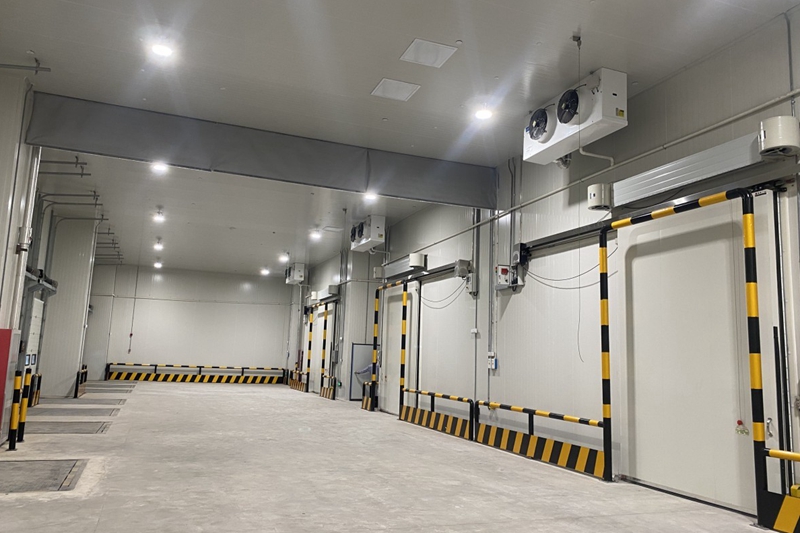
A multi-zone cold room isn’t just one big room with different temperatures—it’s a carefully engineered facility with:
- Physical separation: Insulated walls and sealed doors between zones prevent temperature crossover
- Independent evaporators: Each zone has its own cooling unit, allowing precise temperature control
- Temperature buffer zones: Some designs include a “buffer” area between hot and cold zones to reduce energy loss
- Separate airflow systems: Air from different zones never mixes, preventing cross-contamination and temperature interference
Real-World ROI: A Vegetable Exporter in Nairobi, Kenya
A vegetable exporter in Nairobi, Kenya built a 500m² dual-zone cold room to serve EU supermarkets.
Project Details
| Metric | Value |
|---|---|
| Total Investment | $105,000 USD |
| Zones | 300m² at 1°C (kale, spinach) + 200m² at 12°C (avocados, tomatoes) |
| Capacity | 450 tons per month |
Results
| Metric | Before | After |
|---|---|---|
| Rejection Rate | 28% | 5% |
| Export Capability | Limited | High-value tomatoes (previously impossible) |
| ROI Timeline | — | 10 months |
How the ROI Was Achieved
- Reduced rejection rate from 28% to 5% — saving 23% of total production value
- Enabled tomato exports — previously impossible due to chilling injury risk at 2°C
- Access to premium EU supermarket contracts — requiring certified cold chain
“Before, we stored everything at 2°C—and lost half our tomatoes. Now, every crop gets its perfect climate.” — Operations Lead, East Africa Fresh Produce Co-op
Pro Tip: Start with Dual-Zone—Scale Later
Most diversified farms only need two zones:
- Zone A: 0–2°C for leafy greens, broccoli, carrots
- Zone B: 10–13°C for tomatoes, eggplant, peppers, avocados
This covers 90% of common export vegetables at minimal extra cost. Start with two zones, and add a third when your product mix demands it.
How to Choose the Right Multi-Zone Cold Room Supplier
What to Look For
| Criteria | Why It Matters |
|---|---|
| Experience with mixed vegetables | Different crops have different requirements; generic designs won’t work |
| Zone separation expertise | Proper insulation and sealing between zones is critical |
| Precision temperature control | ±1°C stability is essential for preventing chilling injury |
| Turnkey capability | Single contract for design, manufacturing, installation |
| Overseas project experience | Familiar with export logistics and international standards |
| After-sales support | On-site installation guidance and technical support |
Red Flags to Avoid
- No experience with multi-zone designs — single-zone experience doesn’t translate directly
- Cannot guarantee temperature stability across zones — temperature fluctuations cause crop loss
- Vague pricing — hidden exclusions (shipping, installation, training)
- No references or case studies — lack of proven experience
Frequently Asked Questions
Q1: Dual-zone or triple-zone—which should I choose?
Start with dual-zone if you’re growing a mix of leafy greens and fruit vegetables (tomatoes, peppers). This covers 90% of common export crops. Add a third zone only if you’re also storing crops that need a third temperature range (e.g., tropical fruits at 15°C+).
Q2: How much more does a multi-zone cold room cost to operate?
Multi-zone systems typically consume 15–25% more energy than single-zone systems of the same size, due to multiple evaporators and more frequent door openings between zones. However, the reduction in spoilage usually far outweighs the extra energy cost.
Q3: Will different vegetables absorb odors from other zones?
Properly sealed zones prevent air exchange, so odors don’t cross-contaminate. This is one of the key reasons for physical separation between zones.
Q4: My vegetable isn’t in the table—how do I find its storage temperature?
Consult the FAO’s storage recommendations or ask your supplier for a crop-specific storage chart. Different varieties of the same vegetable can also have different optimal temperatures.
Q5: Can I build a single-zone cold room now and convert it to multi-zone later?
Conversion is possible but expensive—it requires adding insulation walls, new evaporators, and separate controls. If you anticipate needing multiple zones, it’s more cost-effective to build multi-zone from the start.
Ready to Invest?
A multi-zone vegetable cold room is a proven investment for diversified farms and exporters. With upfront costs ranging from $20,000–260,000 (depending on scale) and typical ROI in 10–12 months, it’s one of the most effective ways to reduce spoilage and access premium export markets.
Next steps:
1. List your crop types and annual volumes
2. Identify which temperature zones you need (start with two)
3. Determine your target markets and quality requirements
4. Request a site-specific quote from a supplier with multi-zone experience
The storage parameters provided above are for reference only. Optimal cold room conditions vary depending on cultivar, harvest maturity, growing region, and market requirements. Consult with a cold storage specialist for a customized solution.
This guide was updated in August 2026. Prices are in USD and subject to exchange rate fluctuations and market conditions.