 Haocool

Pumpkin is a common vegetable that many people love. It’s sweet, nutritious, and can be used in soups, pies, and side dishes. But pumpkin has a hidden risk. Its flesh is high in sugar. If you store it the wrong way – especially at room temperature for too long – the flesh starts to ferment without oxygen. This produces alcohol. Eating such pumpkin can cause dizziness, tiredness, vomiting, and diarrhoea (mild poisoning symptoms).
Proper cold storage solves this problem. A good pumpkin cold storage not only extends shelf life but also slows down enzymes, kills most microbes, and lets you sell pumpkins off‑season for better prices.
In this guide, I’ll walk you through the exact steps for storing pumpkins in a cold room – from harvest to temperature and humidity control.
For the best results, a dedicated vegetable cold storage unit gives you the stable conditions that pumpkins need.
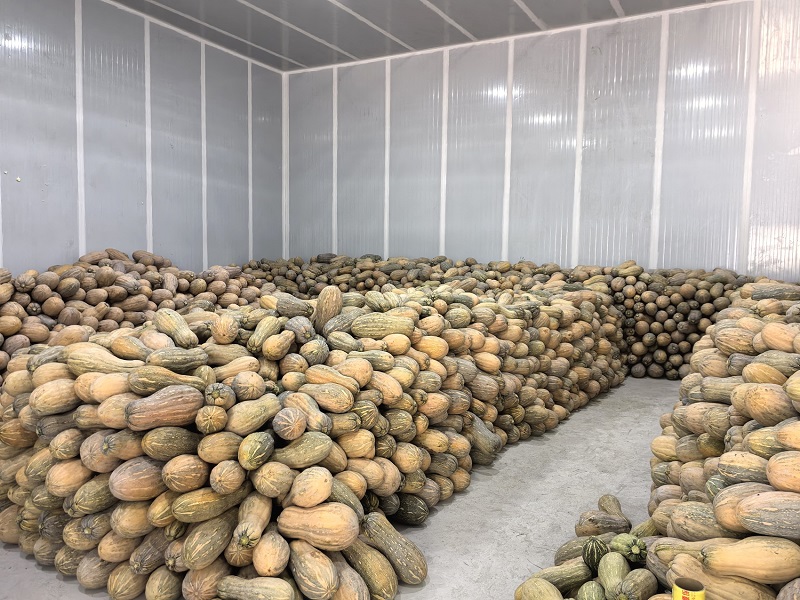
How Long Can Pumpkins Be Stored in Cold Storage?
Under the right conditions – temperature at 0–3°C (32–37°F) and humidity at 80–85% – pumpkins can stay fresh for 3 to 4 months. After that, they still look good and taste almost like fresh harvest. The nutrients remain intact.
Without cold storage, pumpkins might last only 1–2 months at room temperature, and the risk of fermentation increases.
Step‑by‑Step: Pumpkin Cold Storage Method
Follow these four steps carefully.
1. Harvest at the Right Time
Pick pumpkins on a dry, sunny or cloudy day. Never harvest in the rain – moisture on the skin leads to rot inside storage. If the skin is wet when picked, let it air‑dry in a shaded, well‑ventilated area before moving to the next step.
2. Sorting and Selection
After harvest, go through each pumpkin. Remove any that have:
- Insect damage or disease spots
- Misshapen or bruised skin
- Soft spots or cuts
Only store pumpkins with thick flesh, low water content, and hard skin. These varieties store much longer than thin‑skinned, high‑moisture types.
3. Pre‑Cooling – Important for Pumpkins
Pre‑cooling pulls field heat out of the pumpkins quickly. It’s not as critical as for leafy greens, but it helps. You can pre‑cool by placing pumpkins directly into the cold room with good air circulation. The faster you cool them, the better they keep. Pre‑cool within 24 hours of harvest.
4. Storage Temperature and Humidity
Now enter the main pumpkin cold storage phase.
Temperature
Keep the cold room at 0°C to 3°C (32–37°F) .
- The safe fluctuation range is ±1°C.
- Avoid swings larger than 2°C – big temperature changes cause condensation, which leads to mould and rot.
If the temperature goes above 3°C, pumpkins may start to ferment or sprout. Below 0°C, you risk chilling injury (soft, watery flesh).
Humidity
Maintain 80% – 85% relative humidity (RH) .
Pumpkins don’t like very high humidity – that encourages mould on the skin. But too dry (below 70%) makes them shrivel and lose weight. At 80–85% RH, the skin stays firm and the flesh remains juicy.
If the air gets too dry, use a regular air humidifier or a micro‑mist humidifier. Never spray water directly on the pumpkins – that promotes rot.
What to Expect After 3–4 Months in Storage
After three to four months in a proper pumpkin cold storage, the pumpkins should still have hard skin, bright colour, and sweet flesh. No fermentation smell, no soft spots. You can take them out and sell them in winter or early spring, when prices are higher than autumn harvest.
Extra Tips for Best Results
- Don’t stack pumpkins too high. Heavy stacks crush the bottom ones. Use single layers or shallow bins.
- Leave space between pumpkins. Good air circulation prevents moisture pockets and mould.
- Check every few weeks. Remove any pumpkin with soft spots or mould immediately – it can spread to neighbours.
- Keep the door closed. Frequent opening lets in warm, humid air and disturbs temperature stability.